
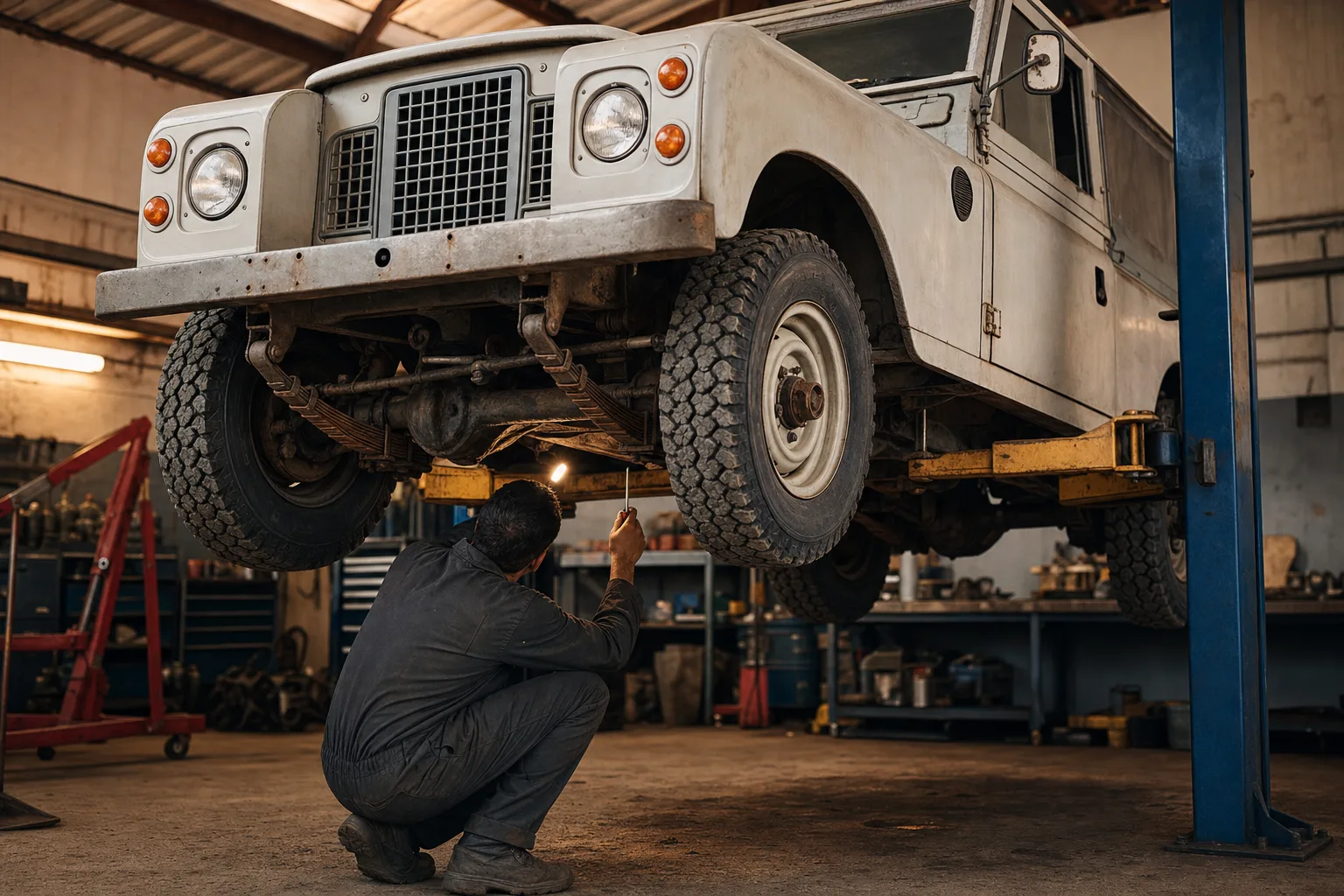

The Land Rover Series III (built 1971–1985) is the last of the true leaf-sprung, farm-bred Landys, and it remains one of the most restorable, most usable classic 4x4s you can own in South Africa. The honest truth: mechanically it is simple and almost indestructible, but the bodywork and chassis are where the money hides.
Nearly every Series 3 fault is rust-related or a worn wear item, and because the running gear barely changed for decades, quality used and reconditioned parts are plentiful and cheap here compared with a full restoration bill. Below are the six problems our workshop sees most often on the Series III, what they cost to sort in rand, and how to tell a solid one from a rolling welding project.
- The Series III's biggest weak spot is rust in the chassis, bulkhead and outriggers — the aluminium body panels don't rot, but the steel underneath does, and that is where a "cheap" Landy becomes expensive.
- The mechanicals are tough: the 2.25 petrol and diesel engines and the four-speed gearbox are simple to fix, with worn synchros and oil leaks the usual complaints, not blow-ups.
- Most repairs are far cheaper with used or reconditioned parts — a reconditioned 2.25 engine runs about R18,000–R35,000 versus a fortune for a fresh rebuild plus dealer-sourced bits.
- Check the swivel balls, drum brakes and Lucas wiring before you buy — pitted swivels, seized wheel cylinders and brittle looms are common and easy to spot.
- None of these faults are reasons to avoid a Series III — they're reasons to buy on chassis condition first and budget for the parts smartly.
1. Chassis, bulkhead and outrigger rust
If a Series III has a horror story, it is almost always rust in the steel structure. The aluminium body panels stay clean, which lulls buyers into a false sense of security, but the ladder chassis, the steel bulkhead behind the engine and the outriggers that tie the body to the chassis all rot from the inside out.
The classic danger spots are the front dumb-irons, the spring hangers, the rear crossmember and the footwells at the base of the bulkhead. Poke around with a screwdriver — if it goes through, walk away or negotiate hard.
The good news is that the Series III was designed to be repaired panel by panel. Outriggers and crossmembers can be cut out and replaced individually, and full galvanised chassis are available if the original is too far gone.
Sourcing sound Series 3 body and chassis parts is the key to a sensible restoration rather than a bottomless pit. A galvanised replacement chassis is the big-ticket item; most cars need only local sections, which keeps the job affordable if you catch it early.
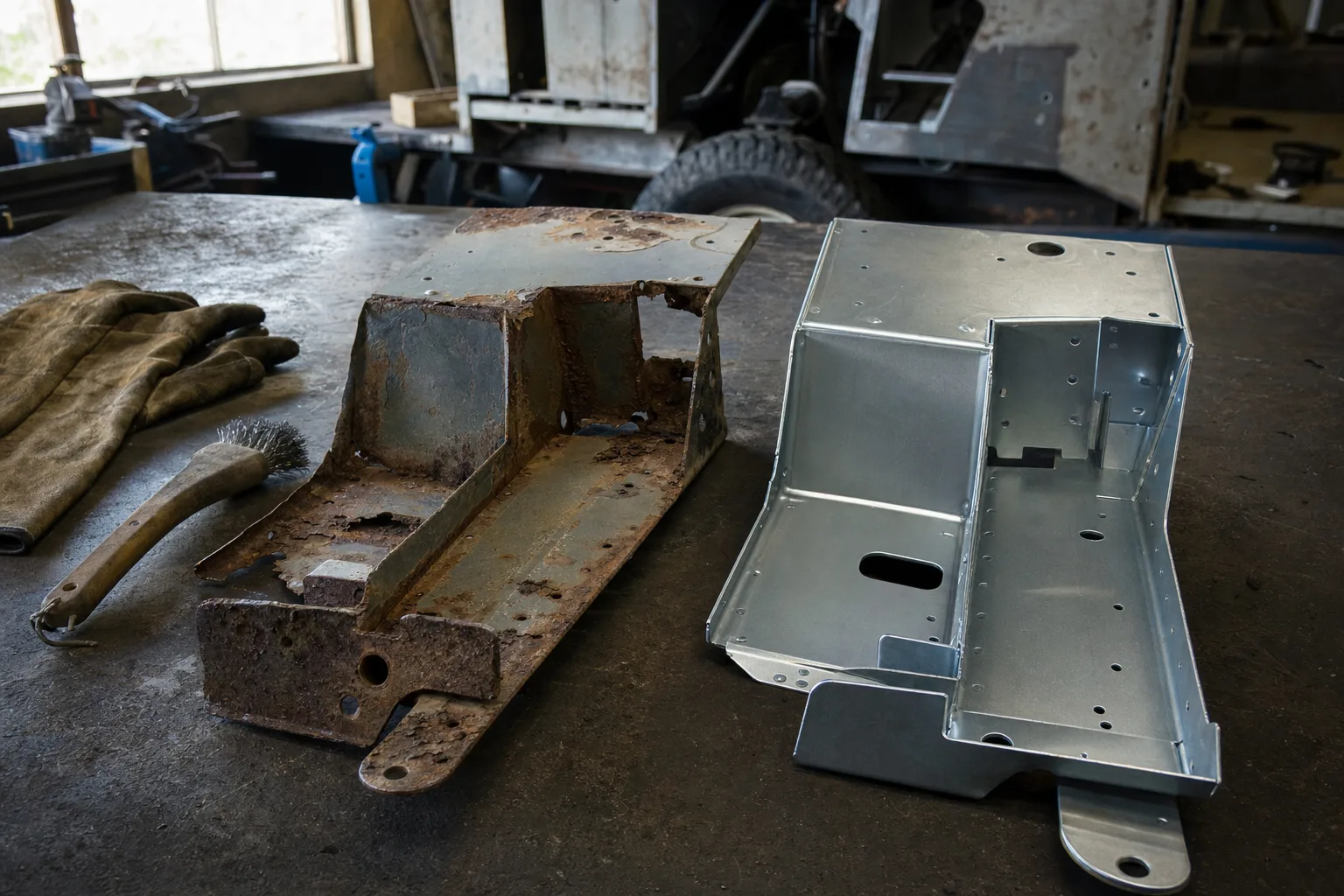
Series 3 Chassis & Bulkhead Parts
Outriggers, crossmembers, bulkhead footwells and repair sections for the Series III — the panels that fix hidden structural rust. Tell us your wheelbase (88 or 109) and we'll match the exact section.
Get a Quote2. Swivel ball wear and front hub oil leaks
The Series III steers through big chrome swivel balls at the front hubs, and these are a known wear point. The balls should be smooth and shiny; once they pit or the chrome flakes, the swivel seals can no longer keep the oil in.
You'll see oil weeping down the back of the wheels, hear or feel notchy steering, and eventually the constant-velocity joints inside start to suffer from running dry. On a Landy that has done real farm or coastal work in SA, pitted swivels are almost a given.
The fix is straightforward and not expensive by classic-car standards: reface or replace the swivel balls, fit new seals and top up with the correct swivel oil (or the grease conversion many owners prefer here).
It is a job worth doing properly because a neglected swivel eventually wrecks the CV joint and the hub. If you're weighing up a Series III against the later coil-sprung trucks, the same axle wisdom carries over to the Defender 90's known weak spots, which inherited a very similar front end.
3. The 2.25 engine: overheating, oil leaks and tired bottom ends
The 2.25-litre petrol and diesel four-cylinder engines are simple, slow and tough, which is exactly why they are still running fifty years on. They rarely fail catastrophically, but they do develop age-related niggles — the same complaints owners of the earlier Series II will recognise, since the engine barely changed between them.
Overheating is common and usually traces to a furred-up radiator, a stuck thermostat or a tired water pump rather than the engine itself. Oil leaks from the rear main, the timing cover and the rocker cover are almost a Series III trademark. On high-hour engines you'll get low compression, blue smoke and a rattly bottom end.
Because these engines are so plentiful, a reconditioned unit or a good used one is often cheaper and quicker than chasing a full rebuild. Sort the cooling system first, then decide whether the engine needs refreshing. Browse our Series 3 engine parts or send us your symptoms and we'll tell you honestly whether you need a head gasket and a radiator, or a whole reconditioned engine. Either way it is one of the most forgiving powerplants Land Rover ever fitted.
4. Gearbox synchromesh and transfer box wear
The Series III four-speed gearbox is robust, but it is not immortal, and the synchromesh is its weak point. Worn synchros mean a crunch going into second and third, especially when cold, and a really tired box will jump out of gear on the overrun.
The transfer box adds its own noises — whining, or a clunk when engaging low range or the difflock. Bearings wear, and the mainshaft can develop play. None of it is dangerous, but it gets tiresome on a daily driver.
Rebuilding a Series III gearbox is well-trodden territory, and reconditioned units come with fresh synchros and bearings. Many owners fit an overdrive at the same time to make the truck more bearable at open-road speeds.
If the box only crunches into one gear, a synchro kit may be all you need; if it whines and jumps, a reconditioned box is the sensible reset. Get the diagnosis right before you buy parts, because a "noisy gearbox" is sometimes a worn clutch or dry transfer box instead.
Series 3 Engine & Gearbox
Reconditioned 2.25 petrol and diesel engines, gearbox rebuild kits, synchros and transfer box parts for the Series III. Tell us petrol or diesel and your wheelbase and we'll quote the right unit.
Get a Quote5. Drum brakes: fade, seized cylinders and weak stopping
The Series III runs drum brakes all round, and while they are perfectly adequate when serviced, they are the system most owners neglect. Left standing, wheel cylinders seize and weep, the shoes glaze, and the flexible hoses perish and swell shut.
The result is a pedal that goes long, a truck that pulls to one side, or brake fade on a long descent. On a heavy old 4x4 that is not something to shrug off, and it is one of the first things to check before any purchase.
The fix is cheap and satisfying: new wheel cylinders, shoes, a master cylinder, fresh hoses and a proper bleed transform how a Series III stops. Everything is available and inexpensive. Inspect the pipework for corrosion and any leaks from the master or wheel cylinders while you are in there.
It is a job a competent home mechanic can do in a weekend, and it is the single biggest safety upgrade you can make to a tired Series III — well worth budgeting for before you drive it far.
6. Lucas wiring, earths and electrical gremlins
Rounding out the list is the electrical system, which on a Series III is refreshingly simple but shows its age. Early looms suffer from brittle insulation, corroded bullet connectors and poor earths, and the symptoms are maddeningly intermittent: lights that flicker, a fuel gauge that lies, wipers that stop, or a car that won't start on a damp morning.
Nine times out of ten it is a bad earth or a corroded connector rather than a failed component — the old joke about Lucas being the "Prince of Darkness" is really a joke about neglected connections.
The fix is patience: clean or replace the earths, renew tired connectors, and on a really crusty truck fit a new loom, which is available off the shelf. Many Series IIIs were upgraded from dynamo to alternator, which is a worthwhile improvement for reliability. You'll find replacement looms, switches and connectors across our range of parts for the Land Rover Series III. If you're chasing a starting fault, sort the earths and connections before you condemn any expensive part.
How much do Series 3 repairs cost in SA?
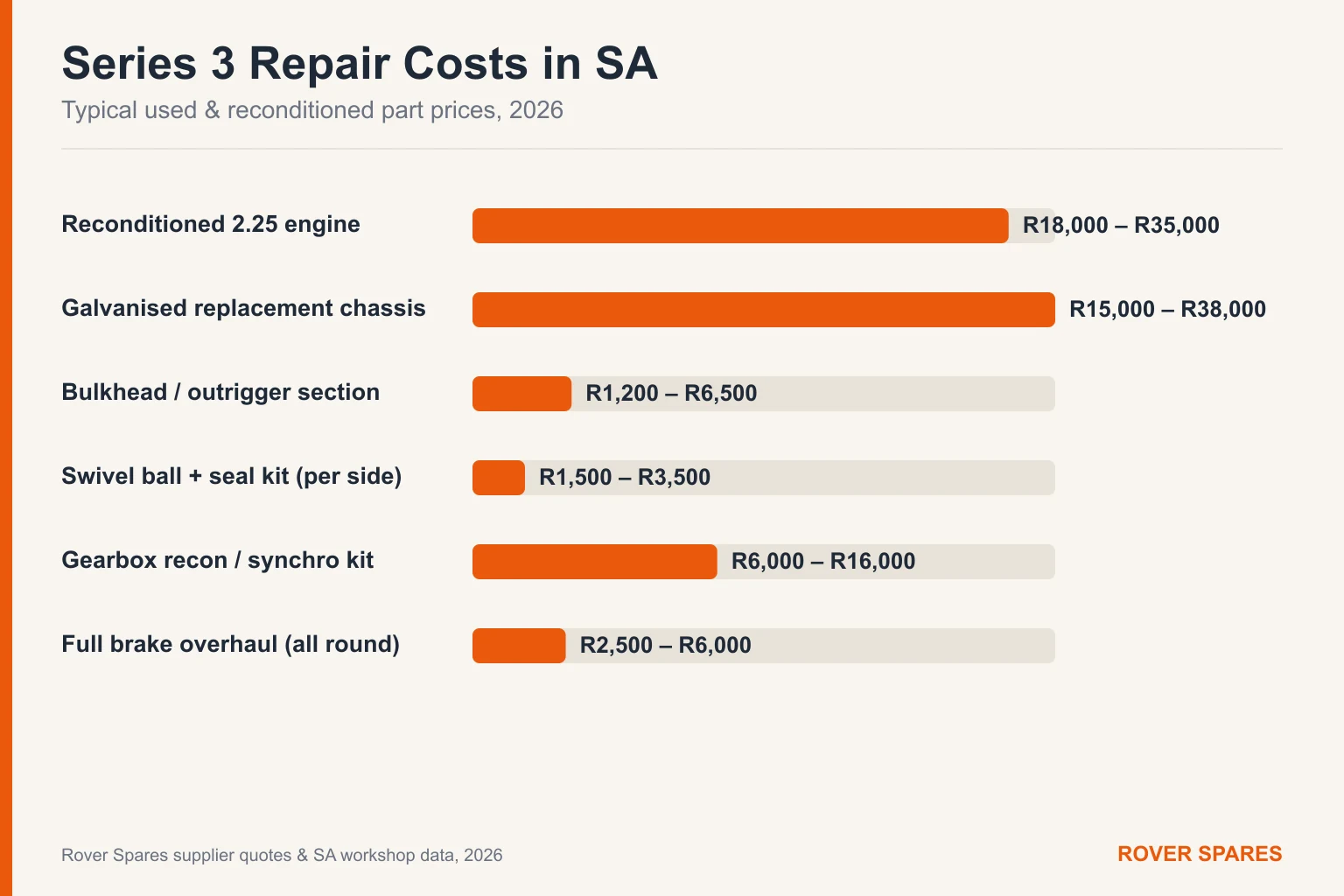
Here's a realistic guide to what these repairs run using quality used or reconditioned parts at an independent workshop — not a full nut-and-bolt restoration. Actual figures depend on your exact model, wheelbase, condition and labour rates, but this is the ballpark our suppliers quote in 2026.
| Repair | Typical part price (used / recon) | Notes |
|---|---|---|
| Reconditioned 2.25 engine | R18,000 – R35,000 | Petrol or diesel, exchange |
| Galvanised replacement chassis | R15,000 – R38,000 | Vs local outrigger sections |
| Bulkhead / outrigger repair section | R1,200 – R6,500 | Per section, welding extra |
| Swivel ball + seal kit (per side) | R1,500 – R3,500 | Reface or replace |
| Gearbox recon / synchro kit | R6,000 – R16,000 | Kit cheaper than full recon |
| Full brake overhaul (all round) | R2,500 – R6,000 | Cylinders, shoes, hoses |
What we see in the workshop
Most Series III work that reaches us starts with a failed roadworthy, and the failure list is usually brakes plus a rotten outrigger. Owners get one turnkey quote for the lot and assume that is the price of the job. It rarely is. Split it up: source the brake components and outrigger sections yourself, have the welding done locally, and the total drops sharply for exactly the same result. These trucks were designed to be repaired in sections, and the parts supply for them in South Africa is still one of the better ones we deal with.
Need Series 3 parts? Get a same-day quote.
We supply tested used and reconditioned Land Rover Series III parts across South Africa — chassis and bulkhead sections, 2.25 engines, gearboxes, brakes and electrics — with nationwide delivery. Send us your wheelbase and the part you need.
Frequently asked questions
Is the Land Rover Series III reliable?
Mechanically, yes — refreshingly so. The 2.25 engine, four-speed gearbox and simple axles are tough and easy to fix, and there is almost nothing on a Series III a competent mechanic can't repair at the roadside. The catch is the steel chassis and bulkhead, which rust and can be costly to put right.
Buy one with a sound structure and keep on top of the brakes, swivels and wiring, and it will be a dependable classic that runs for decades. Buy a rotten one on price alone and it will drain you.
What is the most common Series 3 problem?
Rust in the chassis, bulkhead and outriggers, by a distance. The aluminium body doesn't rot, so buyers focus on the panels and miss the steel structure underneath. Always inspect the outriggers, the base of the bulkhead and the rear crossmember with a screwdriver before you buy. It is the single fault most likely to turn a cheap Series III into an expensive one, so it should shape your whole buying decision.
Which engine is best in a Series 3, petrol or diesel?
Both are the 2.25 four-cylinder and both are slow and durable. The petrol is smoother, revs more freely and is easier to live with day to day; the 2.25 diesel is more economical and torquey at low revs but noisier and even slower. For South African open roads many owners fit an overdrive whichever engine they have. Parts for both are plentiful and affordable here, so buy on the condition of the individual engine rather than the fuel type.
Are Series 3 parts expensive in South Africa?
Not compared with modern Land Rovers. Because the design barely changed for decades and so many were built, used and reconditioned Series III parts are widely available and cheap. A brake overhaul is a few thousand rand, a swivel kit less than that, and even a reconditioned engine is a fraction of a modern LR repair. The expensive part is bodywork and welding on a rotten chassis, which is why structure matters more than mechanicals when buying.
Should I buy an 88 or a 109 Series 3?
The short-wheelbase 88 is more nimble, easier to park and the classic Landy shape most people picture; the long-wheelbase 109 carries more, tows better and rides a little more settled. Mechanically they share almost everything, so parts and repairs are the same. Choose on how you'll use it — an 88 for a fun weekend truck, a 109 if you need the load bay — and prioritise a sound chassis over wheelbase every time.
Can a Series 3 be used as a daily driver in SA?
It can, with realistic expectations. It is slow, the brakes and steering are old-school, and it is noisy at highway speed — an overdrive helps a lot. But it is dead simple to maintain, parts are cheap and plentiful, and there is nothing quite like it for character and off-road ability. Sort the brakes, swivels and wiring first for safety, keep the cooling system healthy, and a good Series III makes a perfectly usable, deeply satisfying daily.
Sources
- Wikipedia — Land Rover Series III model history and specifications: en.wikipedia.org
- Honest John — Land Rover Defender / Series buyer notes and common faults: honestjohn.co.uk
- Haynes — Land Rover Series maintenance and known problem areas: haynes.com