
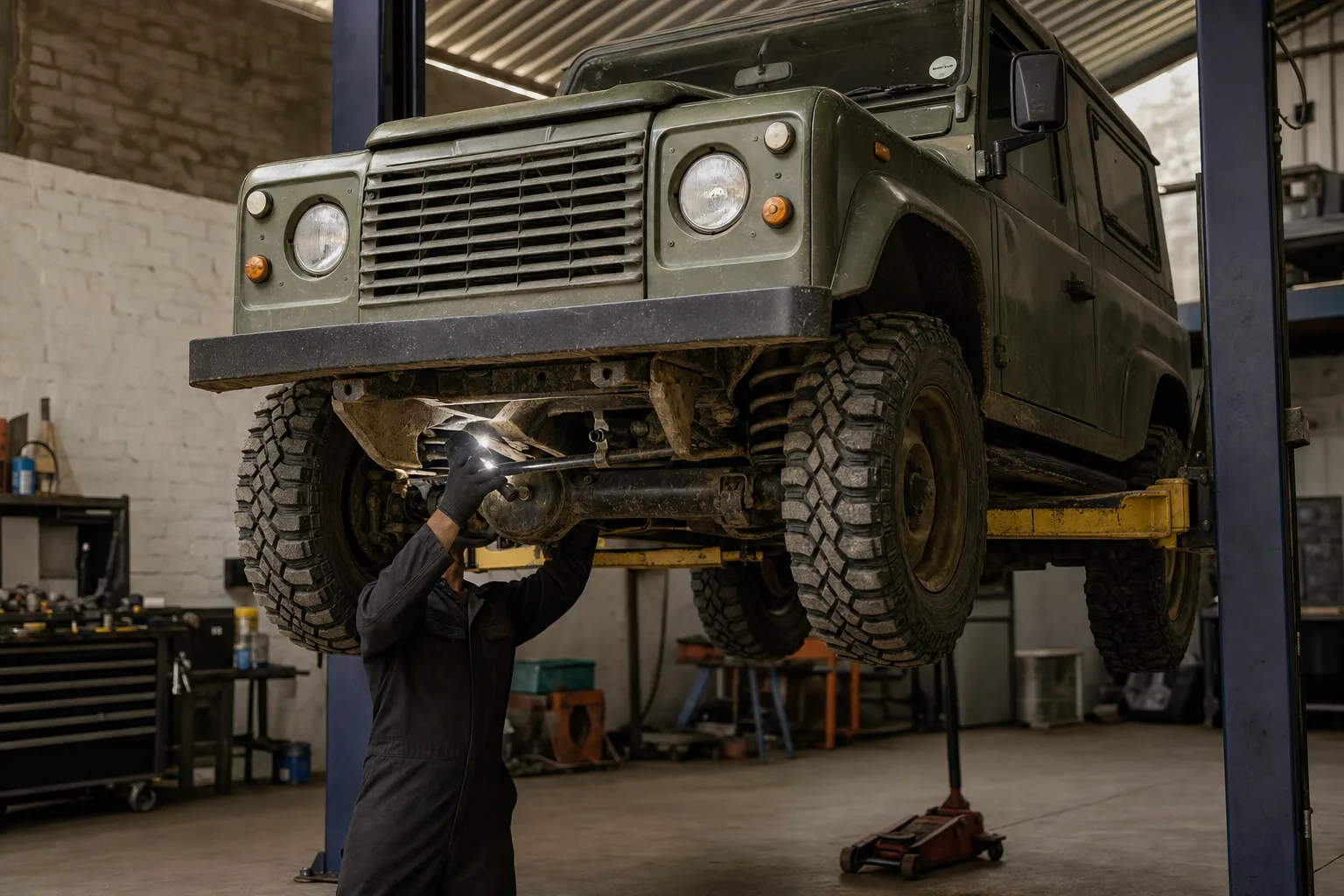

The short-wheelbase Land Rover Defender 90 is one of the most desirable used 4x4s in South Africa, and one of the most stubbornly analogue — which is exactly why owners love it. The catch is that a Defender 90 rusts and leaks in very predictable places, and the two diesels most people buy (the Td5 and the later 2.4 and 2.2 Puma TDCi) each have their own well-known weak spots.
Buy on condition and you'll own a vehicle that runs for decades; buy on emotion and you'll pour rand into a rotten chassis. Below are the six problems our workshop sees most on the Defender 90, honest cost ranges using good used and reconditioned parts, and how to tell a solid truck from a project.
- The Defender 90's biggest hidden cost is rust — chassis outriggers, the rear crossmember and the steel bulkhead corrode long before the aluminium body ever will.
- On the Td5, watch for engine oil migrating up the injector harness into the ECU plug; on the 2.4/2.2 Puma TDCi, the thermostat, vacuum pump seal and dual-mass flywheel are the usual culprits.
- The Defender leaks oil from many places — transfer box, swivels, and diff pinion seals — so a few drips are normal, but a steady flow is not.
- Most repairs are far cheaper with quality used or reconditioned parts: a good transfer box runs about R6,500–R14,000 instead of dealer money.
- A proper chassis and bulkhead inspection tells you more about a Defender 90 than any test drive — get underneath before you buy.
1. Chassis rust — outriggers, crossmember and dumb irons
The Defender 90 rides on a steel ladder chassis, and while the aluminium body panels shrug off corrosion, the chassis does not. The classic rot spots are the rear crossmember, the body-mount outriggers along each side, and the front dumb irons where the bumper bolts on.
On coastal cars in Durban or Cape Town, or farm bakkies that wade through mud, these areas trap water and quietly rust from the inside out. A chassis that looks fine from a standing glance can be paper-thin once you push a screwdriver into the seams.
The good news is that the chassis is repairable and even fully replaceable, and rusty crossmembers and outriggers are a routine weld-in job rather than a write-off. What matters is catching it early and knowing what you're buying.
Before you commit to any Defender 90, get it on a ramp and inspect every mount. Solid body panels for the Land Rover Defender 90 are easy to source used, but a fresh galvanised chassis is a serious spend — so factor structural condition into the price you pay.
2. Bulkhead corrosion (the expensive one)
If the chassis is the Defender's spine, the steel bulkhead is its most expensive weak point. It corrodes around the windscreen frame, in the footwells, and around the fresh-air vent flaps, and because the aluminium body bolts straight onto steel, the dissimilar-metal contact drives electrolytic corrosion at every join.
Symptoms are wet carpets after rain, flaking paint around the vents, and in bad cases you can see daylight through the footwell. A rotten bulkhead is a big labour job because so much has to come off to replace or repair it.
This is the single item that separates a cheap Defender 90 from a fair one. A galvanised replacement bulkhead or a good used one, plus the seals, vent flaps and fasteners, turns a leaky truck back into a dry one.
Because water ingress here also rots wiring and floor sections, don't put it off. Quality used Defender body and bulkhead parts make the repair affordable, but always price the whole job, not just the panel, before you buy a car with a soft bulkhead.
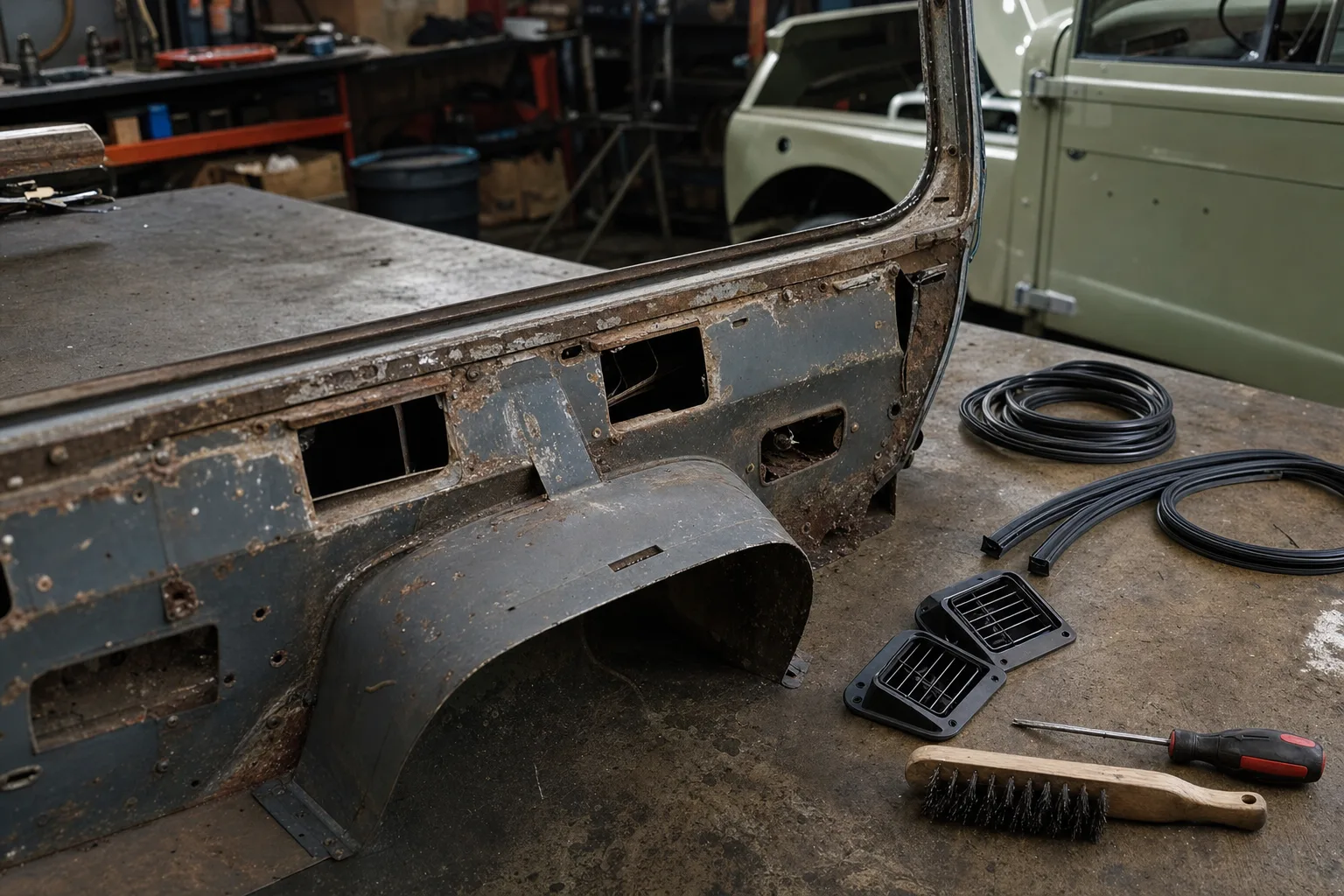
Defender 90 Bulkhead & Body Parts
Used and reconditioned bulkheads, footwell sections, vent flaps and door seals for the Defender 90 — the parts that fix the leaks and rot. Send us your VIN and we'll match the exact fitment.
Get a Quote3. Td5 engine — oil in the ECU and head/coolant issues
The five-cylinder Td5 (fitted to the Defender from 1998 to 2007) is a tough, torquey engine, but it has a signature fault: engine oil creeps up the injector wiring harness and pools inside the ECU plug under the seat. Left alone it causes erratic running, misfires and eventually ECU damage.
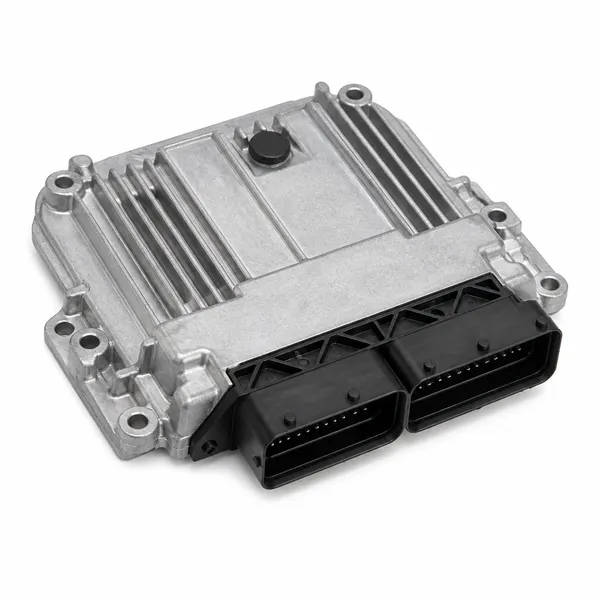
The other Td5 items to watch are coolant loss and, on neglected or overheated examples, a warped cylinder head. None of these are reasons to avoid a Td5, but a car with no service history deserves a careful look at the harness and cooling system.
Sorting a Td5 is usually cheaper than owners fear. A new injector harness and a clean, resealed ECU plug cures the oil-migration problem for good, and a reconditioned head or a good used Td5 long-block is readily available here.
We go deeper into these five-cylinder faults in our guide to the Td5 engine's known problems. If you're comparing the SWB with its bigger sibling, many of these same engine notes apply to the Defender 110, which uses the identical driveline — and the same Defender 110 parts often cross over between the two. Send us your fault codes and we'll tell you honestly whether it's a harness, a sensor, or something deeper.
4. 2.4 and 2.2 Puma TDCi faults
The Ford-derived 2.4 TDCi Puma (2007–2011) and the later 2.2 (2011–2016) modernised the Defender but brought their own niggles. The thermostat commonly sticks open, so the engine never reaches temperature and economy suffers. The camshaft-driven vacuum pump seal fails and leaks oil into the bay. Split intercooler hoses cause boost loss and limp mode, and the dual-mass flywheel and clutch wear out, especially on hard-worked cars. EGR carbon build-up and injector return-pipe leaks round out the list.
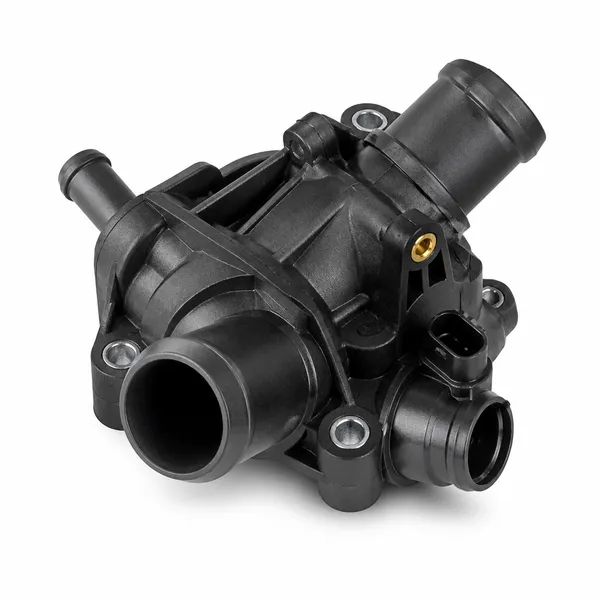
The reassuring part is that most Puma faults are cheap to diagnose and fix once you know where to look. A thermostat, a vacuum pump seal kit or a fresh intercooler hose are modest parts; the clutch and dual-mass flywheel are the bigger tickets, best done together.
A proper scan and a boost test point you at the real fault before you spend. Browse our Defender engine parts for Td5 and Puma components, or send us the symptoms and we'll help you avoid buying parts you don't need.
Td5 & Puma TDCi Engine Parts
Injector harnesses, thermostats, vacuum pumps, intercooler hoses and reconditioned long-blocks for the Defender 90. We test our engine stock before it leaves the shelf.
Get a Quote5. Transfer box and axle/diff seal leaks
The Defender's permanent four-wheel-drive system is rugged but leaky by nature. The LT230 transfer box seeps from its seals and gaskets, and if fluid changes are neglected the bearings whine and the box wears.
Out at the axles, the diff pinion seals and the swivel hubs weep oil, and a blocked axle breather is a common root cause of a pinion seal that keeps failing. A few drips under a Defender are normal; puddles and a low transfer-box level are not.
The fix is straightforward maintenance rather than disaster. Reseal the transfer box, replace tired pinion and swivel seals, clear or extend the axle breathers, and keep the fluids fresh. A whining or worn LT230 is best swapped for a good reconditioned unit rather than nursed along. Regular oil changes on all the driveline components are the cheapest insurance you can buy on a Defender 90, and catching a leak early keeps a minor seal job from becoming a bearing rebuild.
6. Door seals, water ingress and aftermarket wiring gremlins
Defenders were never watertight from the factory, and a 90 that's had a hard life shows it. Perished door seals, tired window channels and worn tailgate weatherstrips let water under the mats, which then rots the floor and corrodes wiring. Many Defenders also carry a lifetime of aftermarket electrics — winches, spotlights, dual batteries, radios — often wired in with scotch-locks and no fuses. Those add-ons are the usual source of flat batteries, blown fuses and mystery faults.
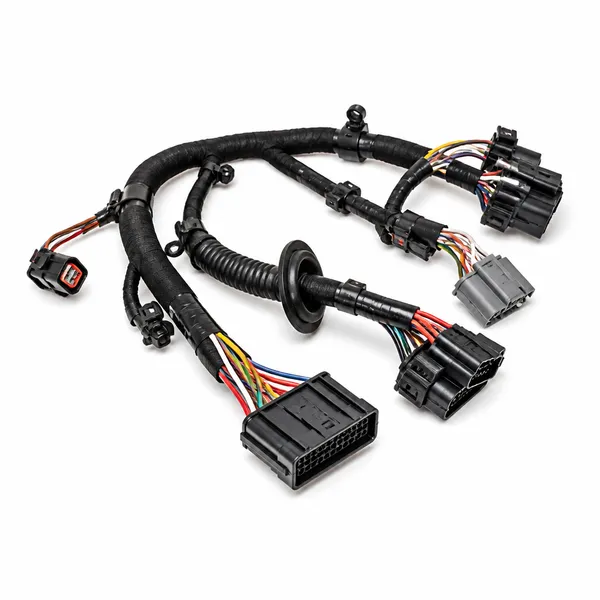
The cure is unglamorous but cheap: renew the door and window seals, clear the drain channels, dry the truck out properly, and tidy or re-loom any bodged aftermarket wiring back to a fused, sensible standard. Corroded connectors and earth points are worth cleaning while you're in there.
You'll find switches, looms, relays and connectors among our Defender electrical parts. Sorting the water ingress first is key — there's no point chasing electrical gremlins in a truck that's still letting rain in.
How much do Defender 90 repairs cost in SA?
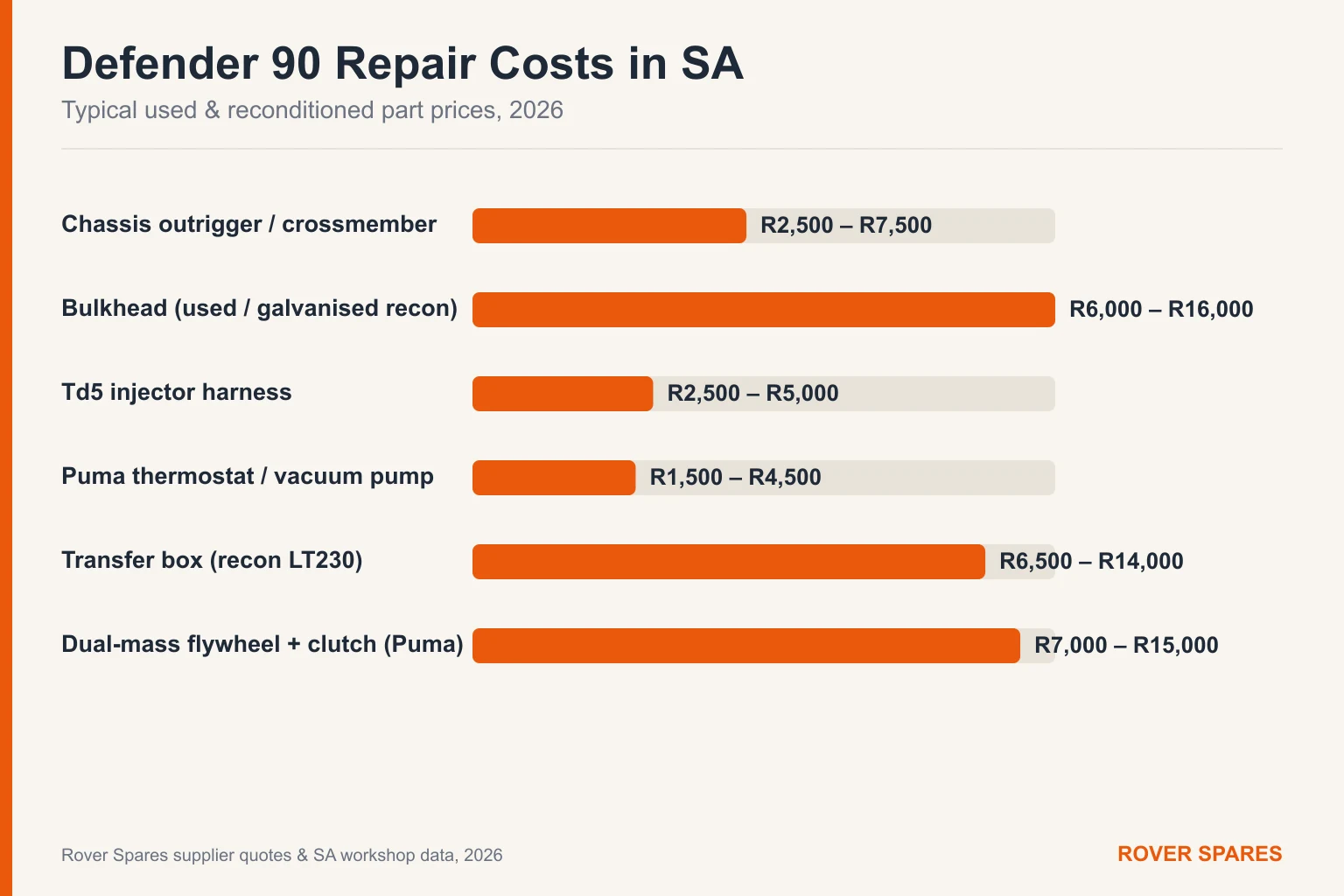
Here's a realistic guide to what these repairs run using quality used or reconditioned parts at an independent workshop — not dealer pricing. Actual figures depend on your exact model, engine and labour rates, but this is the ballpark our suppliers quote in 2026.
| Repair | Typical part price (used / recon) | Notes |
|---|---|---|
| Chassis outrigger / crossmember (weld-in) | R2,500 – R7,500 | Per section, before labour |
| Bulkhead (used / galvanised recon) | R6,000 – R16,000 | Big labour job on top |
| Td5 injector harness | R2,500 – R5,000 | Clean ECU plug too |
| Puma thermostat / vacuum pump | R1,500 – R4,500 | Common Puma leaks |
| Transfer box (recon LT230) | R6,500 – R14,000 | Vs dealer money |
| Dual-mass flywheel + clutch (Puma) | R7,000 – R15,000 | Do as a set |
What we see in the workshop
With a 90, the chassis decides everything else. We regularly speak to owners weighing up an engine or gearbox spend on a truck whose rear crossmember and outriggers are already going, and that is the wrong order of work. Get underneath first. Poke the chassis rails behind the rear wheels and the bulkhead footwells with a screwdriver, and price that before anything mechanical. Running gear for a Tdi or Puma 90 is plentiful and sensible money secondhand. Structural steel and the labour to weld it in are not. Sort the metal, then spend on the mechanicals.
Need Defender 90 parts? Get a same-day quote.
We supply tested used and reconditioned Land Rover Defender 90 parts across South Africa — chassis and bulkhead sections, Td5 and Puma engine parts, transfer boxes and electrics — with nationwide delivery. Send us your VIN and the part you need.
Frequently asked questions
Is the Land Rover Defender 90 reliable?
Mechanically the Defender 90 is simple and long-lived, but reliability comes down to condition, not luck. The faults — chassis and bulkhead rust, the Td5 oil-in-ECU quirk, Puma thermostat and clutch wear, and leaky transfer boxes — are all well documented and repairable.
A 90 that's been looked after and kept dry will run for decades. One that's rotted and neglected will cost you. Buy on structural condition and service history, and budget for a couple of catch-up jobs in the first year.
What is the most common Defender 90 problem?
Rust, and specifically the chassis and steel bulkhead. Because the aluminium body hides the steel underneath, corrosion in the outriggers, rear crossmember and bulkhead footwells is the single most common and most expensive issue. It's also the one thing you can only judge by getting the vehicle on a ramp, so never buy a Defender 90 without inspecting the chassis and bulkhead first.
Which is better, the Td5 or the 2.4 Puma?
Both are good engines with different characters. The five-cylinder Td5 is torquey and much loved, with the injector-harness oil migration as its main watch-point. The 2.4 Puma is more modern and refined but adds the thermostat, vacuum pump and dual-mass flywheel niggles. For simplicity many owners prefer the Td5; for a slightly newer feel the Puma is fine. Parts for both are readily available used and reconditioned in South Africa.
Are Defender 90 parts expensive in South Africa?
New dealer parts are pricey, but that's not your only option. Quality used and reconditioned parts cut the cost sharply — a reconditioned LT230 transfer box for around R6,500–R14,000 instead of dealer money, or a Td5 injector harness for a few thousand rand. Buying from a specialist that tests its stock is the key to running a Defender 90 affordably, especially for structural and driveline items.
How do I check a Defender 90 chassis before buying?
Get it on a ramp or drive it over a pit. Inspect the rear crossmember, the body-mount outriggers along both sides, and the front dumb irons, and probe any suspicious seams with a screwdriver — solid steel won't give. Check the bulkhead footwells and vent areas for rot and wet carpets. Surface rust is normal on an older Defender; flaking, holed or freshly over-plated sections hiding rot are the red flags to walk away from.
How many kilometres will a Defender 90 do?
The engines and driveline are genuinely durable — a well-maintained Td5 or Puma will pass 300,000 km without drama, and the bodies are essentially rust-proof aluminium. What ends most Defender 90s is neglected structural rust and deferred maintenance on seals and cooling, not worn-out mechanicals. Keep it dry, keep the fluids fresh, and sort the known items with quality parts, and it will outlast almost anything else on the road.
Sources
- Honest John — Land Rover Defender owner-reported good & bad points and known faults: honestjohn.co.uk
- Wikipedia — Land Rover Defender model history, Td5 and Puma engine details: en.wikipedia.org
- Haynes — Land Rover Defender maintenance and common problem guidance: haynes.com