
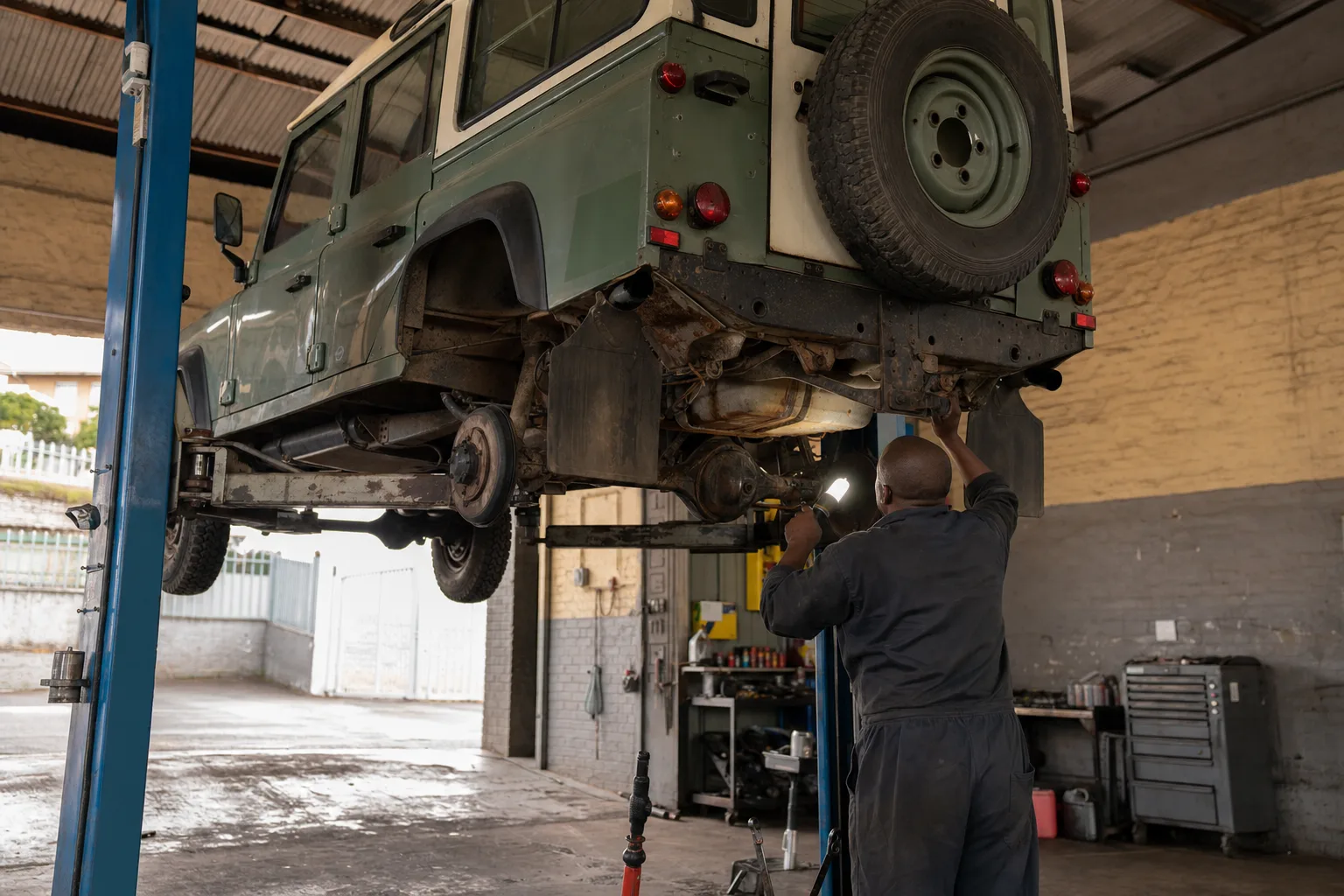

The Land Rover Defender 110 is the workhorse everyone wants and few understand before they buy. The Puma-era 110 (the TDCi models built 2007–2016) is tough, hugely capable and easy to keep going for decades — but it has a short list of well-known weak spots that will bite you if you skip them. The single biggest one isn't the engine at all: it's chassis and bulkhead corrosion.
Sort that, keep on top of the 2.4 and 2.2 diesel's known niggles, and a Defender 110 is close to unstoppable. The good news for SA owners — from farm 110s in the Cape to buyers around Kempton Park and Johannesburg — is that almost every part is available used or reconditioned here at a fraction of dealer money.
Below are the six problems our workshop sees most on the Defender 110, what they cost to fix, and how to spot a bargain from a project.
- The Defender 110's biggest weak spot is chassis and bulkhead corrosion — the rear crossmember, outriggers and footwells rust, and it's the first thing to check on any used 110.
- On the 2.2 TDCi, early cars are known to blow the intercooler and turbo hoses off under boost; the 2.4 can suffer oil-pump and clutch trouble on high-mileage examples.
- The MT82 six-speed gearbox is prone to output-shaft spline wear where it meets the transfer box — a known, fixable fault.
- Most repairs are far cheaper with quality used or reconditioned parts: a recon turbo runs roughly R9,000–R18,000 fitted versus dealer pricing well north of that.
- None of these faults are reasons to avoid the 110 — they're reasons to inspect properly, budget sensibly and buy the parts smart.
1. Chassis and bulkhead corrosion (the big one)
If a Defender 110 is going to cost you serious money, it's almost always rust. The galvanised-look reputation is a myth on these cars — the box-section chassis and the steel bulkhead both corrode, especially on Puma models that owners feel got less protection from the factory than the older TD5.
The usual rot spots are the rear crossmember, the outriggers that carry the body mounts, the chassis rails around the rear axle, and the bulkhead footwells and door pillars where water sits. On a coastal or farm 110 it can be advanced while the paint still looks fine.
The important thing is that this is repairable, section by section, and a good chassis is what separates a keeper from a project. Budget for a proper inspection under the car and behind the bulkhead trim before you buy. When panels or crossmembers need replacing, quality Defender body and chassis parts keep the repair affordable and correct. Never buy a 110 on the strength of a shiny bodywork — it's what's underneath that decides the price.
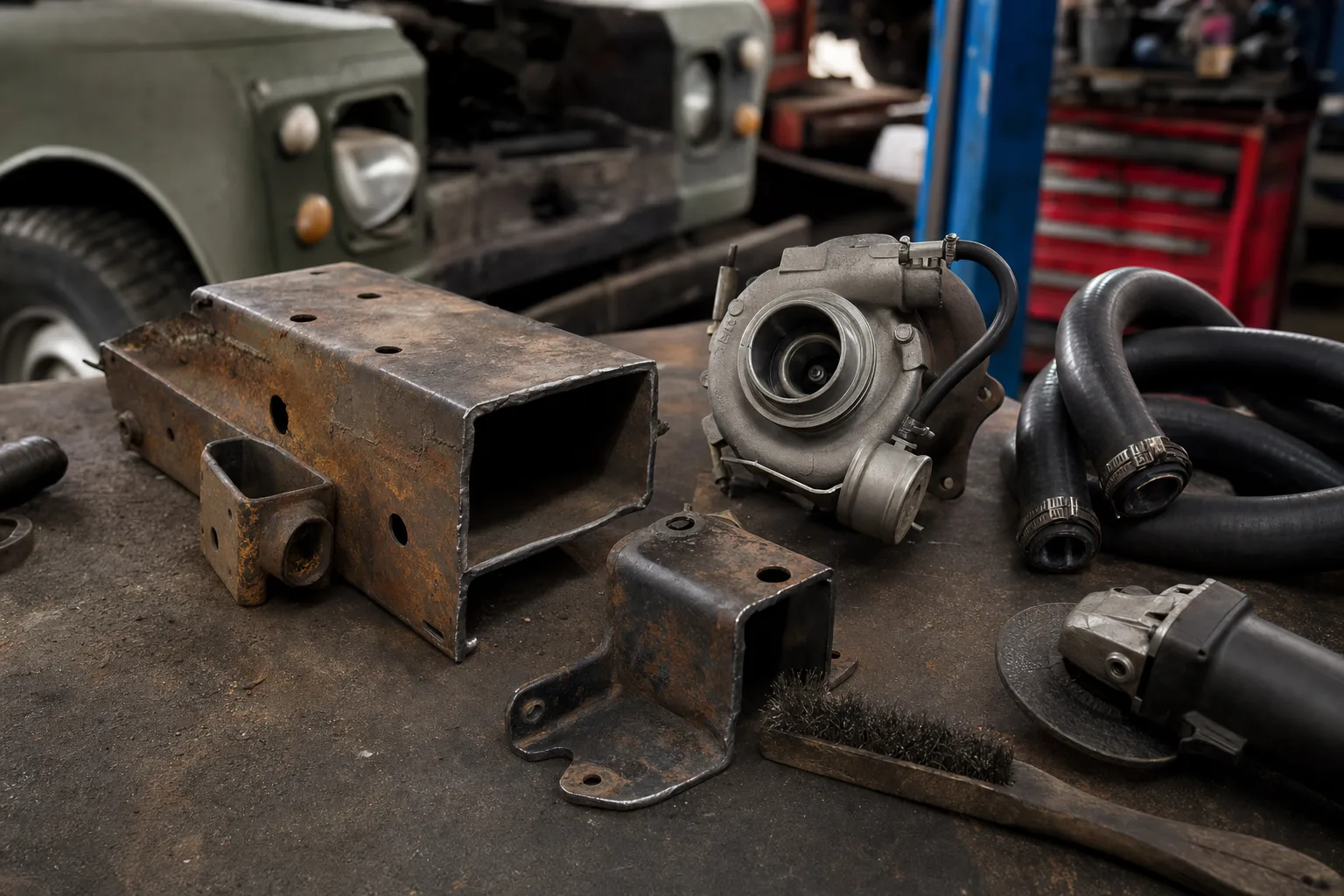
Defender 110 Chassis & Body Parts
Rear crossmembers, outriggers, bulkhead panels and footwell sections for the Puma 110 — the parts that beat corrosion. Tell us your VIN and year and we'll match the exact panel.
Get a Quote2. Turbo and intercooler hose blow-off on the 2.2 TDCi
The 2.2 TDCi Puma (2012–2016) has a habit that catches owners out: it blows its intercooler and turbo hoses off under hard boost, giving you a sudden loss of power, a cloud of smoke and limp mode. It was common enough that Land Rover addressed the plumbing on later cars.
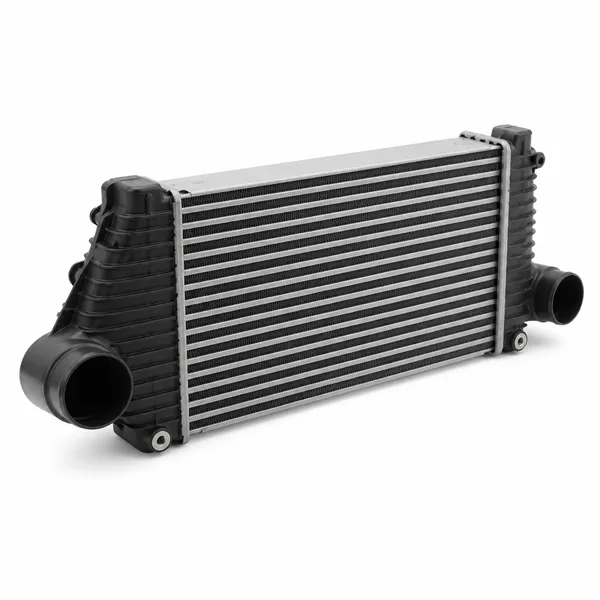
Sometimes it's simply a clamp or a split hose; sometimes a tired turbo is over-boosting and forcing the pipe off. The variable-geometry turbo itself can also wear or stick, giving whistling, fluttering or power loss under load.
Don't assume every power loss means a new turbo. On the Puma it's often a cheap hose or clamp, a boost leak, or a sticking actuator first — a proper diagnostic scan usually points straight at it. When a turbo genuinely is worn, a reconditioned unit fitted properly restores full performance for far less than new. Browse our Defender TDCi engine parts or send us the fault codes and we'll tell you honestly what you actually need.
3. 2.4 TDCi oil-pump and early-engine niggles
The earlier 2.4 TDCi (2007–2011) is a strong, torquey engine and the pick for many buyers, but the early cars had a known weakness around oil supply. A blocked oil-control passage or a tired oil pump can starve the engine and, left unchecked, lead to a knock and eventual failure.
Post-2010 examples were largely sorted, so service history and a listen for any bottom-end knock matter more than the year on the plate. The 2.4 also drives a heavy clutch that many owners find doesn't survive far beyond 70,000–100,000 km of hard use.
The sensible approach is preventative: keep the oil and filter changes religious, and if you're buying a high-mileage 2.4 with no history, budget to inspect the oil pump and pickup while you're in there. A tired clutch is a straightforward job and a good used or reconditioned kit is affordable. For a lighter, simpler diesel some buyers prefer the older TD5 — we cover its own quirks in our guide to the Land Rover TD5's known problems.
4. MT82 gearbox output-shaft spline wear
The Puma Defenders use the MT82 six-speed manual, and its best-known fault is wear on the output-shaft splines where the gearbox mates to the transfer box. Inadequate lubrication at that joint lets the splines wear over time, and the symptom is a clunk, a shudder on take-up, or in bad cases drive being lost.
It's a well-documented issue on the TDCi 110 and worth checking for on any test drive by feeling for a clunk when you take up drive from a standstill.
The fix ranges from re-shimming and re-greasing the joint to replacing the output shaft or the mainshaft, depending on how far the wear has gone. Caught early it's cheap insurance; ignored, it can chew the transfer-box input as well. A reconditioned gearbox or transfer box is a sensible buy when the wear is advanced, and matching the exact ratio to your 110 matters — send us your VIN so we get it right first time.
5. Swivel, axle and diff seal leaks
Like every live-axle Land Rover, the Defender 110 leaks oil from the places it always has: the swivel housings up front, the axle and hub seals, and the differential pinion seals. On a hard-working 110 you'll see weeping around the swivel balls, oily hubs, and diff fronts that never quite stay dry. It rarely leaves you stranded, but neglected swivels can let water and grit into the CV joints, and a dry hub bearing will eventually howl and fail.
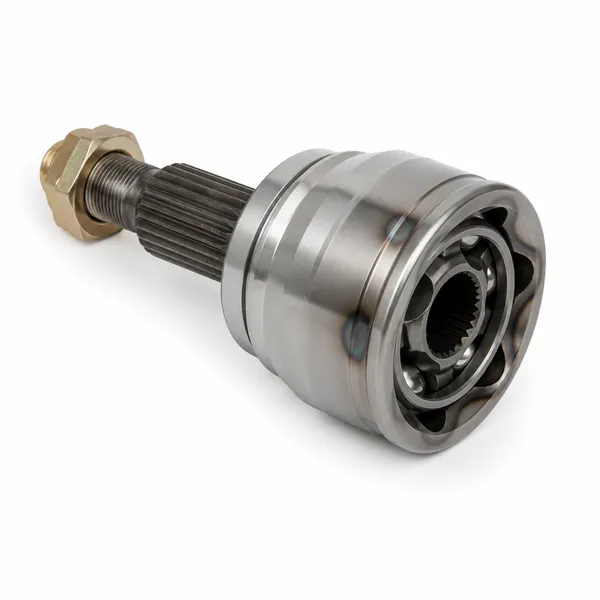
The cure is honest maintenance rather than big money: reseal the swivels, renew the hub and axle seals, and keep the diffs topped up and dry. Good used and reconditioned Defender axle and suspension parts make this affordable, and doing a swivel rebuild properly once is far cheaper than replacing chewed CVs and bearings later. It's exactly the kind of preventative work that keeps a 110 cheap to run for decades.
6. Water leaks, wiring and the usual Defender gremlins
Rounding out the list are the leaks and electrical niggles every Defender develops with age: water getting past the door seals, windscreen surround and roof vents into the footwells, plus corroded earth points and connectors that cause flickering lights, wonky instruments and the odd non-starter. None are unique to the 110, but a wet footwell speeds up bulkhead rot, so a leak is never just a nuisance — it's the start of a corrosion problem.
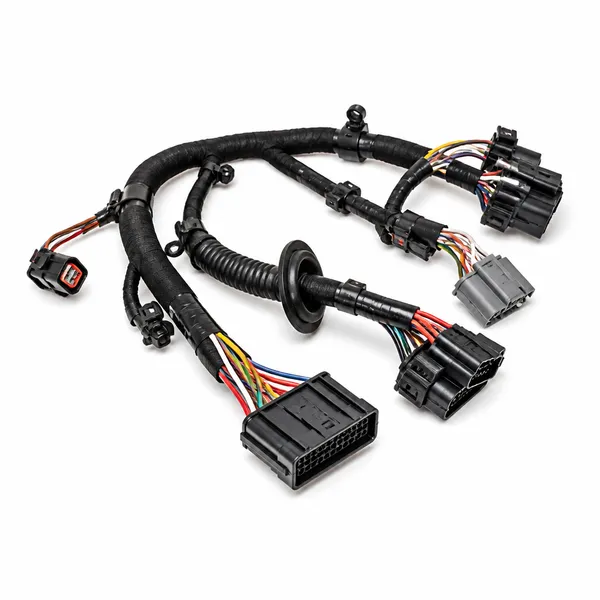
The fix is to chase leaks down properly — reseal the screen and vents, renew door seals, dry the carpets out — and to clean and protect the earth points rather than chasing symptoms. If you're comparing the 110 with its shorter sibling, the same principles apply to the Defender 90, which shares the bulkhead, chassis design and driveline. Keeping water out is the cheapest long-term investment you can make in a Defender.
How much do Defender 110 repairs cost in SA?
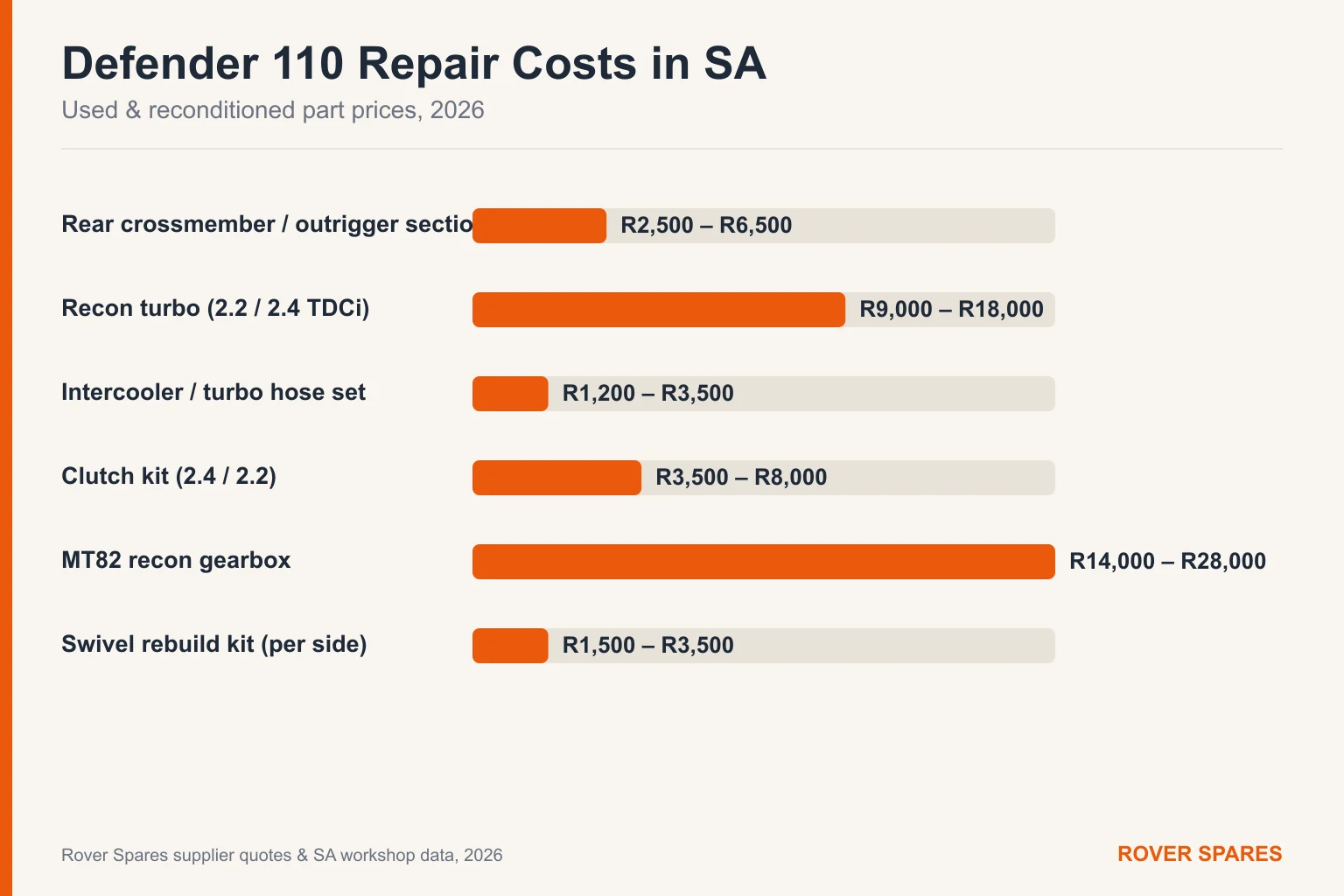
Here's a realistic guide to what these repairs run using quality used or reconditioned parts at an independent workshop — not dealer pricing. Actual figures depend on your exact model, condition and labour rates, but this is the ballpark our suppliers quote in 2026.
| Repair | Typical part price (used / recon) | Notes |
|---|---|---|
| Rear crossmember / outrigger section | R2,500 – R6,500 | Plus welding labour |
| Recon turbo (2.2 / 2.4 TDCi) | R9,000 – R18,000 | Check hoses first |
| Intercooler / turbo hose set | R1,200 – R3,500 | Common 2.2 fix |
| Clutch kit (2.4 / 2.2) | R3,500 – R8,000 | Single-mass flywheel |
| MT82 recon gearbox | R14,000 – R28,000 | Spline wear repair cheaper |
| Swivel rebuild kit (per side) | R1,500 – R3,500 | Seals, balls, bearings |
What we see in the workshop
Two very different faults get treated the same way on a 110, and the expensive one tends to get blamed first. A sudden loss of power with a boost fault is not proof of a dead turbo. Pull the pipework and look for a split hose, a popped clamp or a leaking intercooler before agreeing to anything, because those give you the identical limp mode for a tiny fraction of the money. Work along the whole pressure side properly. Where a turbo genuinely has gone, a tested used unit bolts on exactly like a new one.
Need Defender 110 parts? Get a same-day quote.
We supply tested used and reconditioned Land Rover Defender 110 parts across South Africa — chassis and body panels, TDCi engine parts, turbos, gearboxes and axles — with nationwide delivery. Send us your VIN and the part you need.
Defender 110 TDCi Turbo & Engine Parts
Reconditioned 2.2 and 2.4 turbos, intercooler hose sets, clutch kits and oil-pump parts for the Puma 110. Send us your fault codes and we'll tell you what you actually need.
Get a QuoteFrequently asked questions
Is the Land Rover Defender 110 reliable?
Mechanically the Puma-era 110 is tough and the engines are long-lived when serviced. Its reputation for trouble comes mostly from corrosion and deferred maintenance rather than the driveline. A 110 with a sound chassis, a good service history and the known items sorted — turbo hoses, clutch, gearbox splines — is a genuinely dependable vehicle that will run for hundreds of thousands of kilometres. Buy on the condition of the chassis first and the engine second.
What is the most common Defender 110 problem?
Chassis and bulkhead corrosion, by a distance. The rear crossmember, outriggers and footwells rust, especially on coastal and farm vehicles, and it's the single most expensive thing to put right if you miss it when buying. Always inspect under the car and behind the bulkhead trim before you commit — a shiny body over a rotten chassis is a trap.
Does the Defender 110 have a dual-mass flywheel?
No. Unlike some vehicles using related engines, Land Rover fitted the TDCi Defender with a single-mass flywheel for durability, so you don't have the classic dual-mass rattle to worry about. What you do need to watch is clutch wear on hard-worked 2.4 and 2.2 examples, which is a straightforward and affordable job with a good used or reconditioned kit.
Which is the best Defender 110 engine, the 2.4 or 2.2 TDCi?
Both are Ford-derived Puma diesels and both are solid. The 2.4 (2007–2011) has strong low-down torque and a following among off-roaders; the later 2.2 (2012–2016) meets tighter emissions and is smoother, but early 2.2s can blow their intercooler hoses. Buy on condition and history rather than capacity, and check the turbo plumbing on any 2.2.
Are Defender 110 parts expensive in South Africa?
New dealer parts are pricey, but that's not your only option. Quality used Land Rover spares cut the cost dramatically — a recon turbo for around R9,000–R18,000, a clutch kit for a few thousand rand, chassis sections rather than a whole galvanised chassis. Buying from a specialist that tests its stock is the key to keeping a Defender 110 affordable to run.
How many kilometres will a Defender 110 do?
A well-maintained Puma 110 will comfortably pass 300,000 km, and many working examples do far more. The engines and axles are genuinely long-lived; what ends most Defenders is a neglected chassis, not a worn-out engine. Keep water out, keep the chassis protected and stay on top of the known items with quality parts, and a 110 will outlast almost anything on the road.
Sources
- Honest John — Land Rover Defender owner-reported good & bad points: honestjohn.co.uk
- Wikipedia — Land Rover Defender (Puma / TDCi) model overview and specifications: en.wikipedia.org
- Haynes — Land Rover Defender buying and maintenance guidance: haynes.com