
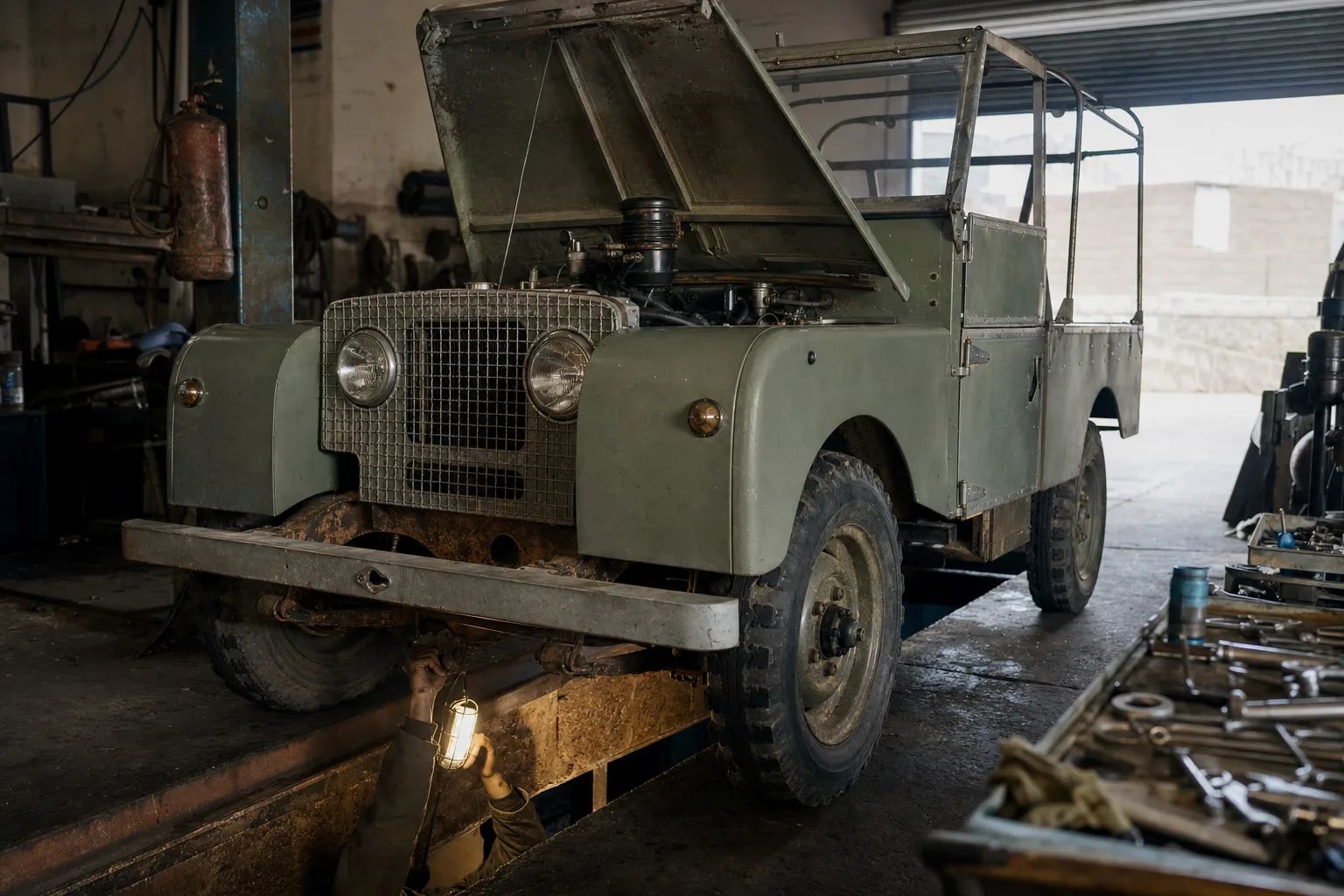

The Land Rover Series 1 (built 1948–1958) is the vehicle that started it all, and today it's as much a restoration project and collector's piece as a working bakkie. Buy a solid, honest one and it's astonishingly simple to keep going. Buy a rough one and the bills come from three places: the steel box-section chassis, the steel bulkhead, and the worn running gear underneath that aluminium body.
The good news is that none of it is mysterious — a Series 1 is a bolt-together vehicle with no electronics to defeat you, and most of what wears out is remanufactured or available used here in SA. Below are the six problems that come up most often on a Series 1, what they cost to sort, and how to tell a keeper from a money pit.
- The Series 1's body is aluminium and won't rust — but the steel chassis and bulkhead underneath it do, and that's where the real money hides.
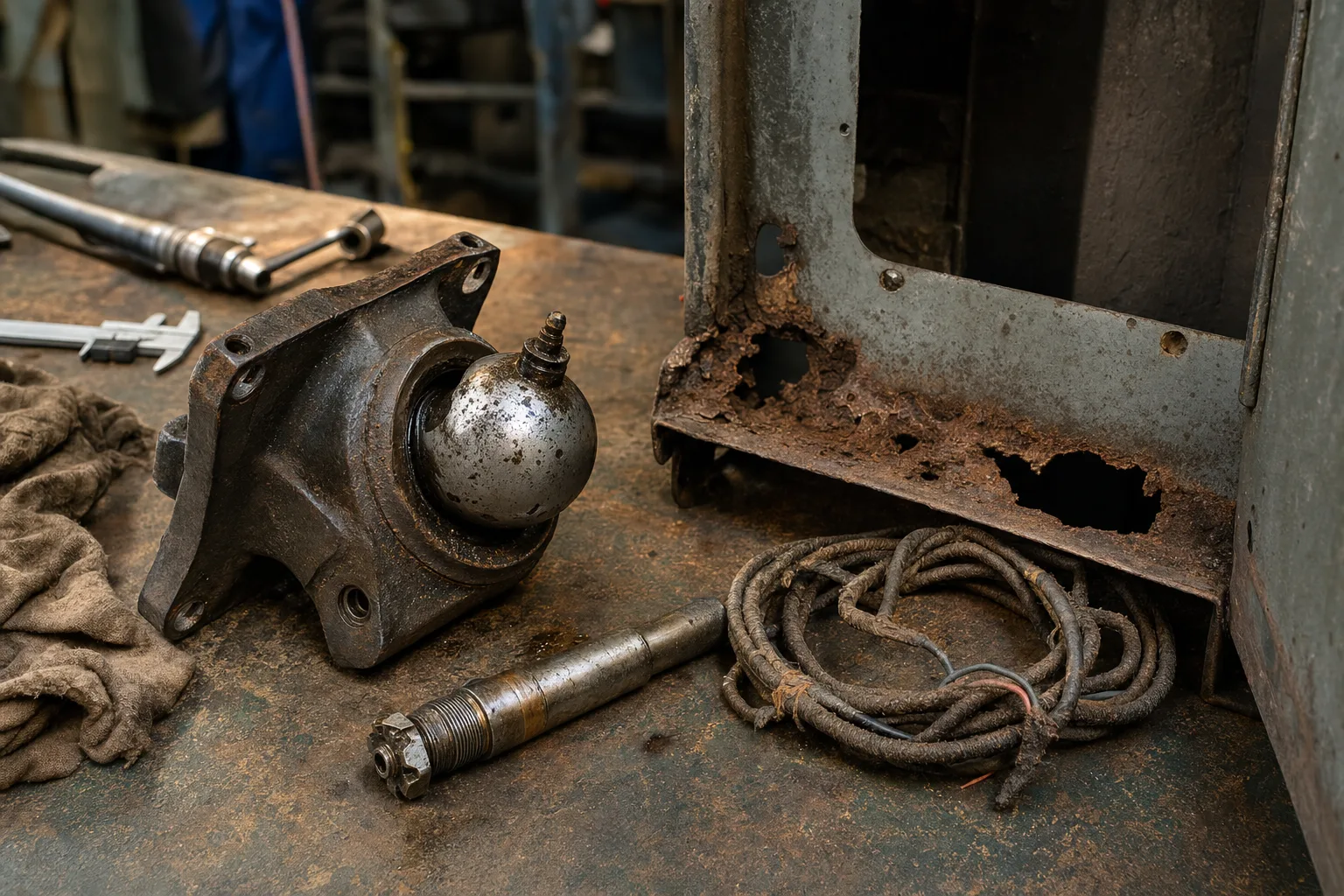
- Worn swivel balls and kingpins on the front axle are near-universal on old Landys — look for pitting, play and oil weeping past the seals.
- Old cloth-braided wiring, weak drum brakes and general oil leaks are age items, not deal-breakers, on a 60-plus-year-old vehicle.
- Parts scarcity is real for the earliest 80-inch cars, but most mechanical spares are remanufactured — a chassis swap runs R18,000–R45,000 versus far more for a full body-off rebuild.
- Buy on chassis and bulkhead condition first, everything else second — the running gear is cheap to sort, rotten steel is not.
1. Chassis rot (the steel box-section frame)
If a Series 1 is going to cost you serious money, it starts here. The body panels are aluminium alloy (Birmabright) and don't corrode, which fools a lot of first-time buyers into thinking a shiny Landy is a sound one. Underneath, the chassis is a welded steel box-section frame, and box-section steel rusts from the inside out where you can't easily see it.
The classic rot spots are the outriggers, the spring hangers front and rear, the rear cross-member, and the main rails behind the rear spring hangers. Mud, water and decades of river crossings collect inside the sections and eat them hollow.
Tap suspect areas with a small hammer — sound steel rings, rotten steel thuds or crumbles. A galvanised or fully remanufactured replacement chassis is available, but fitting one is a body-off job. If you're weighing up a Series 1 against its successors, the same inspection logic carries straight over to the later Series 2, which shares the box-section design. Buy the best chassis you can afford; everything else is comparatively cheap.
Series 1 Chassis & Bulkhead Parts
Remanufactured box-section chassis, outrigger repair sections and steel bulkhead panels for the 80in, 86in and 107in Series 1. Tell us your wheelbase and year and we'll match the right frame.
Get a Quote2. Bulkhead corrosion (the footwells and A-posts)
The bulkhead is the big painted steel structure the windscreen, doors and dash all hang off, and it's the second-worst rust trap on the Series 1. Water runs down the screen and collects in the footwells, in the base of the ventilation flaps, and around the lower A-post corners and top door-hinge areas.
Corroded footwells are the tell-tale sign of a bulkhead that's on its way out. Because everything mounts to it, a rotten bulkhead throws door gaps and screen fit out, so poor panel alignment is often a rust warning.
A tired bulkhead can be repaired with new footwell and A-post repair sections if the rot is localised, or replaced outright if it's gone through. It's fiddly rather than impossible — a patient job with the right pressed panels.
Good repair steel for the Series 1 keeps an original bulkhead alive, which matters on a vehicle where originality adds value. If the bulkhead is beyond saving, budget for a full remanufactured unit and factor in the labour to transfer everything across.
3. Worn swivel balls and kingpins (front axle)
Every old Land Rover front axle carries two big chrome swivel balls that the steering pivots on, and on a Series 1 they're almost always due for attention. Look for pitting or scoring on the chrome surface, oil weeping past the swivel seals, and play when you rock the top and bottom of the wheel with the front jacked up.
Pitted swivels tear the seals, which lets the oil out and grit in, and the wear accelerates. Left long enough you get vague, heavy steering and a constant oily mess on the inside of the wheels.
The fix is a proper overhaul: new swivel balls, kingpins, bearings and seals per side. It's a satisfying job on a simple beam axle and the parts are all remanufactured, so it's one of the cheaper things to put right. Sorting the swivels also cures a lot of the wandering, imprecise steering people wrongly blame on the steering box. Do both sides together while you're in there — if one is worn, the other won't be far behind.
4. Old wiring and electrical gremlins
The Series 1's electrics are about as simple as a motor vehicle gets — a 6-volt or later 12-volt system with a cloth-braided wiring loom and a handful of switches. The trouble is age. Original looms are brittle, the cloth insulation cracks, earths corrode, and decades of previous owners' bodged additions leave a tangle of dubious joints. The symptoms are intermittent lights, a dead ammeter, blown points or, at worst, a wiring fire risk from chafed or overloaded cables.
The honest answer on a car this old is usually a full replacement loom rather than chasing one fault at a time. A new reproduction harness is inexpensive and turns the electrical system from a liability back into something you can trust.
You'll find looms, switches and lighting among our body and trim parts for the Series range. While you're at it, sort the earths properly — most "electrical gremlins" on a Landy are really a bad earth, not a bad component.
5. Weak drum brakes
Series 1 Land Rovers run drum brakes all round, and by modern standards they were never strong — on a neglected example they can be genuinely alarming. The usual culprits are seized or leaking wheel cylinders, glazed or contaminated shoes, a perished flexible hose, or brake fluid that hasn't been changed in living memory.
Oil weeping from a failed axle seal onto the shoes is a common cause of a pull to one side, and it ruins the shoes into the bargain.
A full brake overhaul — new cylinders, shoes, hoses and a fluid flush per axle — transforms how the vehicle stops and is well within the reach of a home mechanic. It's cheap insurance on a vehicle you actually want to drive.
Don't be tempted to just top up the fluid and hope; brakes are the one system on a Series 1 where "near enough" isn't good enough. If you're comparing the Series 1 with the later cars, the same drum-brake principles apply right through to the Series 3, which finally gained front discs late in its life.
6. Oil leaks and engine wear
A dry Series 1 engine is a rare thing, and a few drips are part of the character. The petrol units (the early 1.6, the later 2.0, and the 2.0 diesel from 1957) predate modern sealing, so weeps from the rocker cover, timing cover, rear main and the axle pinion and swivel seals are normal.
What you're really checking is the difference between a light film and a serious leak, and whether the engine has been run low on oil for years. Blue smoke, low oil pressure and heavy crankcase breathing point to real wear rather than tired gaskets.
Resealing the common leak points is straightforward and cheap, and worth doing as a batch when you've got things apart. A genuinely worn engine can be reconditioned or swapped — these are simple, tough units and remanufactured spares are available. Browse our Series engine parts or, for a full sympathetic restoration, good used and reconditioned components for the Land Rover Series 1 keep it turning without breaking the bank.
How much do Series 1 repairs cost in SA?
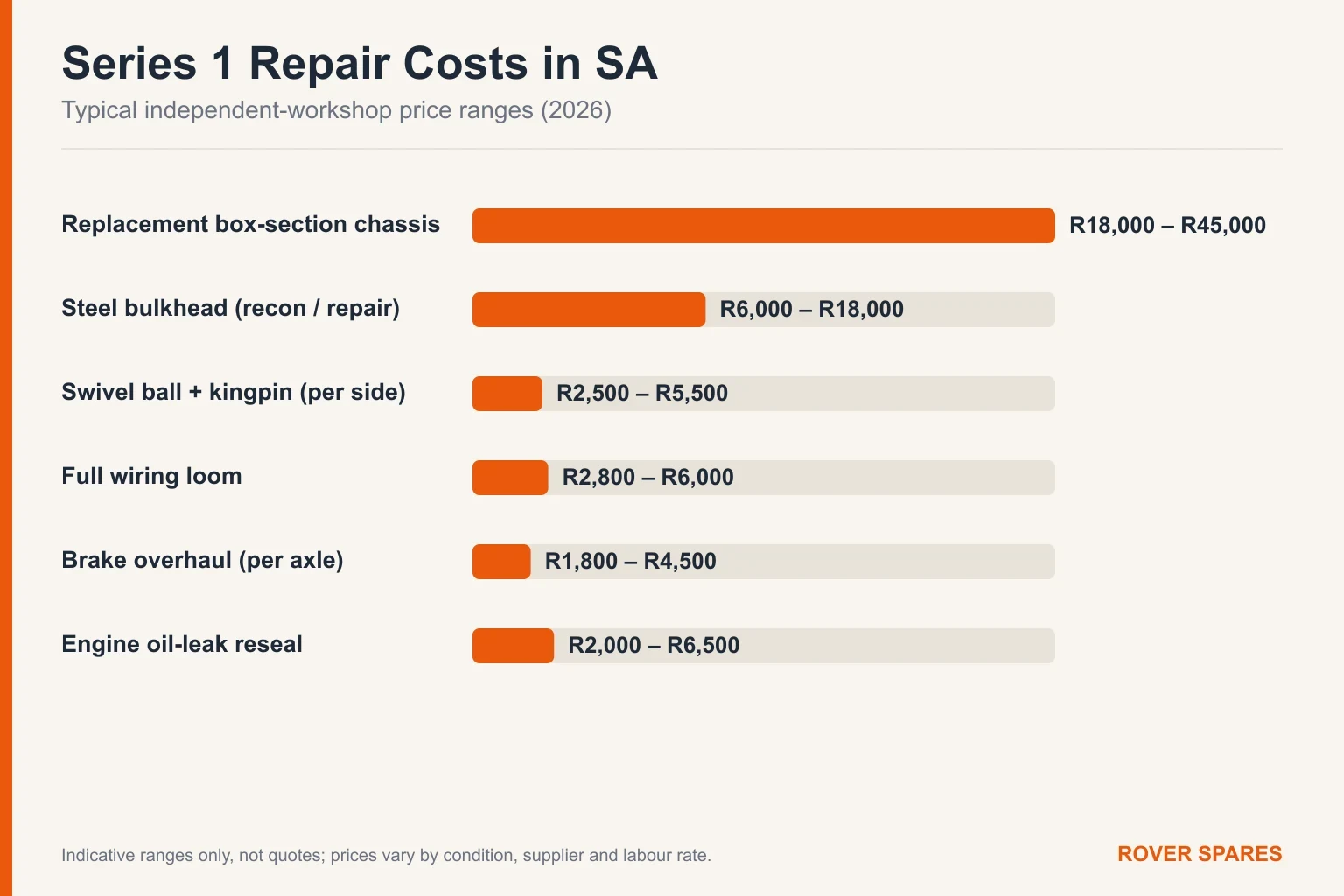
Here's a realistic guide to what these jobs run using remanufactured, quality used or reconditioned parts at an independent workshop — not concours-restorer pricing. Actual figures depend on your exact wheelbase, year, condition and labour rates; these are indicative ranges only, not quotes.
| Repair | Typical part price (recon / used) | Notes |
|---|---|---|
| Replacement box-section chassis | R18,000 – R45,000 | Body-off fitment job |
| Steel bulkhead (recon / repair) | R6,000 – R18,000 | Repair sections cheaper |
| Swivel ball + kingpin (per side) | R2,500 – R5,500 | Do both sides together |
| Full wiring loom | R2,800 – R6,000 | Whole-loom is the smart fix |
| Brake overhaul (per axle) | R1,800 – R4,500 | Cylinders, shoes, hoses |
| Engine oil-leak reseal | R2,000 – R6,500 | Batch the gaskets |
Series 1 Running Gear & Brakes
Swivel ball kits, kingpins, wheel cylinders, brake shoes and axle seals for the 80in, 86in and 107in Series 1. Send us the axle and year and we'll get you the right kit.
Get a QuoteBefore you buy parts
On a Series 1 the decision worth getting right is chassis repair versus chassis replacement, and it should only be made once the vehicle is stripped enough to see the outriggers and spring hangers properly. Restorers tend to quote for a full frame-off because it is the safe quote to give. Very often the bulkhead and the aluminium body are sound and only sections of steel actually need renewing. Buy the chassis parts the truck needs, keep the original panels where they are still solid, and you protect the budget and the originality at the same time.
Need Series 1 parts? Get a quote.
We supply remanufactured, used and reconditioned Land Rover Series 1 parts across South Africa — chassis, bulkheads, swivel and brake kits, wiring looms and engine spares — with nationwide delivery. Send us your wheelbase, year and the part you need.
Frequently asked questions
Is the Land Rover Series 1 reliable?
Mechanically, yes — the Series 1 is about as simple and tough as a vehicle gets, with a beam-axle chassis, a basic petrol or diesel engine and no electronics to fail. What lets it down is age rather than design: rotten steel in the chassis and bulkhead, worn swivels, brittle wiring and weak old brakes.
A Series 1 that's had those known items sorted is genuinely dependable and easy to keep going. Buy on condition and history, budget for a couple of catch-up jobs, and it'll outlast most modern cars.
Do Series 1 Land Rovers rust?
The body doesn't — it's aluminium alloy (Birmabright), which is exactly why buyers get caught out. The steel underneath does. The box-section chassis rusts from the inside out at the outriggers, spring hangers and cross-members, and the steel bulkhead rots in the footwells and A-posts. A gleaming body over a rotten frame is the classic Series 1 trap, so always inspect the steel, not the paint.
Are Series 1 parts hard to find in South Africa?
Most mechanical parts are surprisingly available — swivels, brakes, engine spares, wiring and body panels are remanufactured and stocked. The genuinely scarce items are early-only trim and correct bits for the first 80-inch cars, where originality matters to collectors. For anything mechanical or structural, remanufactured and good used parts keep a Series 1 on the road affordably; you just need a supplier who knows the wheelbase and year differences.
Which Series 1 engine is best?
The later 2.0-litre petrol (from about 1952) is the more usable of the petrols, with a bit more torque than the early 1.6. The 2.0 diesel arrived in 1957 and is characterful but slow. For most owners the petrol is the easier live-with, and parts for it are more plentiful. Whichever you choose, check for oil leaks, blue smoke and low oil pressure — these are simple engines, so real wear is easy to spot and cheap to rebuild.
How much does it cost to restore a Series 1?
It depends entirely on the chassis and bulkhead. A mechanically sorted example needing brakes, swivels and a reseal might be a few thousand rand in parts. One needing a new chassis is a different story — a remanufactured box-section frame runs R18,000–R45,000 before the body-off labour. That's why the pre-purchase inspection of the steel matters more than anything: it's the single biggest variable in what a Series 1 will cost you.
Can I still use a Series 1 as a daily vehicle?
You can, but temper your expectations. It's slow, the brakes are drum all round, and there's no comfort to speak of. As a weekend, farm or classic-event vehicle it's brilliant and simple to maintain. If you want to drive one regularly, get the brakes, swivels and wiring properly sorted first — those three jobs turn a nerve-wracking old Landy into a trustworthy one for not much money.
Sources
- Hagerty UK — Buying Guide: Land Rover Series 1 (1948–1958): hagerty.co.uk
- Land Rover Series FAQ — what to look for (chassis, bulkhead, swivels, brakes): lrfaq.org