
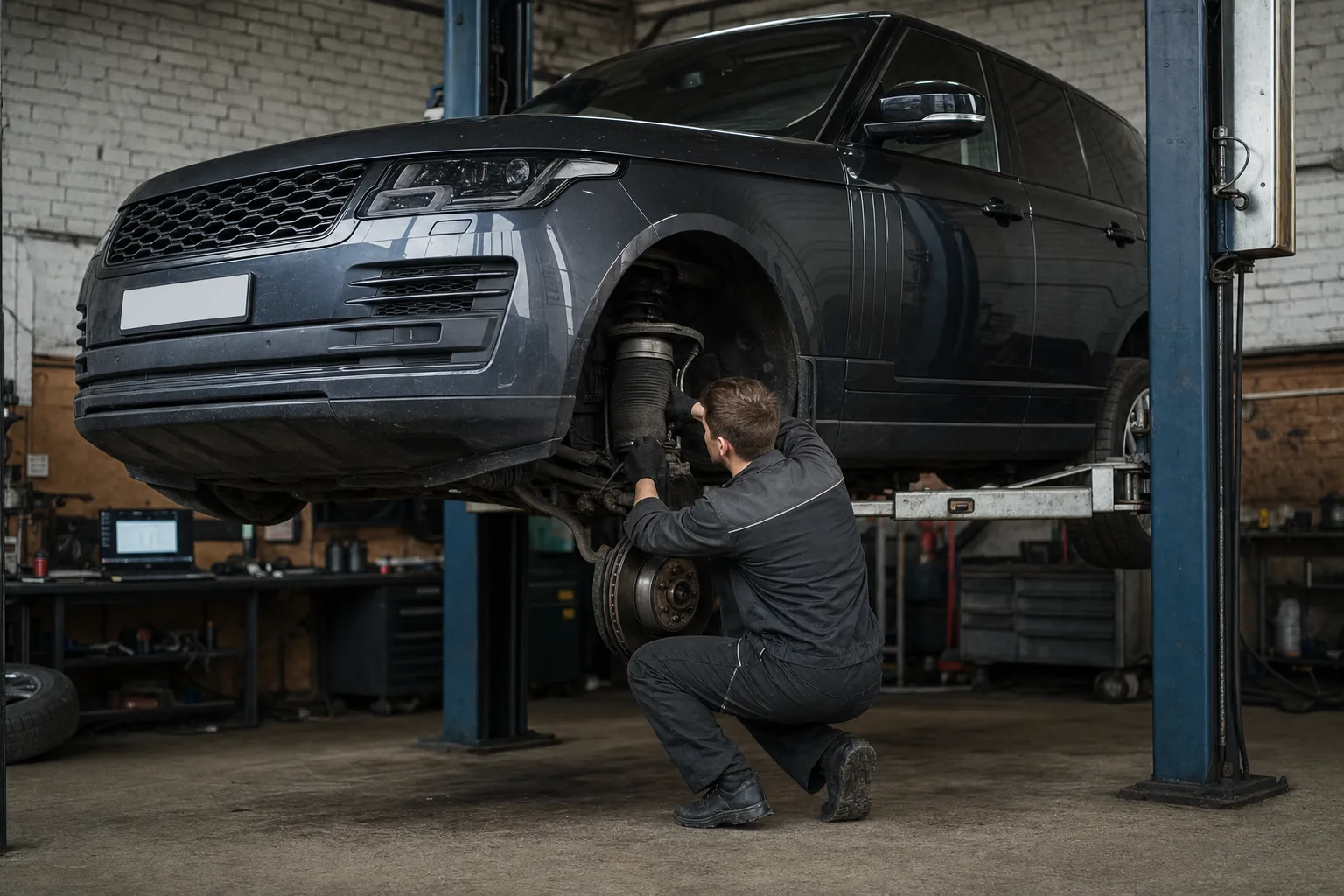

The fourth-generation Range Rover (the L405, built 2013–2022) is a genuinely brilliant luxury 4x4 — light, quiet, hugely capable — and, on a neglected example, one of the fastest ways to empty a bank account in South Africa. The good news is that almost every serious L405 fault is well documented, and the parts are widely available used and reconditioned here at a fraction of main-dealer money.
If you're also weighing up the previous-generation car, our guide to the L322 Range Rover's known problems is worth a read. Buy on condition and history rather than badge, budget for a couple of catch-up repairs, and it becomes a very rewarding car.
Below are the six problems our workshop sees most often on the L405, what they cost to sort, and how to spot a bargain from a money pit before you hand over a cent.
- The L405's biggest weak spot is its air suspension — the EAS compressor and front air springs are wear items, and a "vehicle sitting low" or diagonal droop after standing overnight is the classic symptom.
- On the diesels, the 3.0 TDV6/SDV6 timing chain (or timing belt on the wet-belt units) and crank bearings are the failures to check first — cheap to catch early, catastrophic to ignore.
- Pre-facelift cars use a MOST optical infotainment ring where one failed node blanks the whole screen, the reverse camera and the climate display.
- Most repairs are far cheaper with quality used or reconditioned parts: an EAS compressor runs roughly R6,000–R12,000 fitted versus R20,000+ at a dealer.
- A pre-purchase scan for stored fault codes (EAS, engine, parking brake, infotainment) tells you far more than any test drive.
1. Air suspension failure (the "sitting low" fault)
If an L405 owner has a horror story, it usually starts with the air suspension. The car rides on four air springs fed by an electronic EAS compressor, and both are wear items rather than lifetime parts.
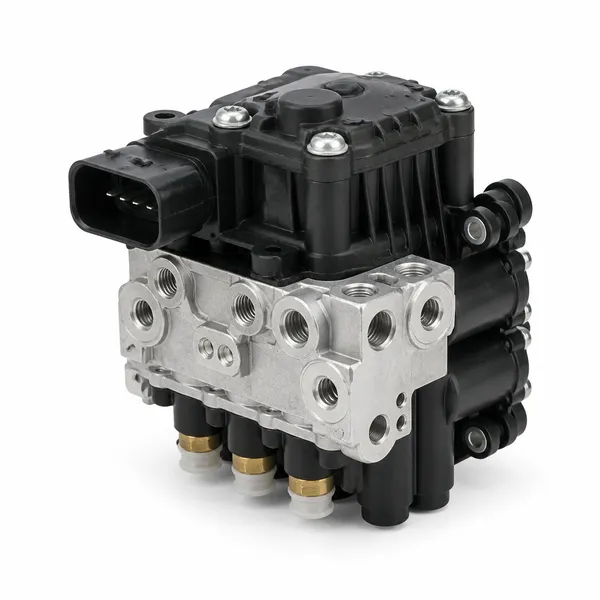
The tell-tale signs are the car sitting low on one corner or nose-down after standing overnight, a diagonal front droop, an "air suspension fault" message, or the compressor running for ages without lifting the car to height. Front air springs fail more often than the rears because the steering articulation stresses the lower sleeve, and a tired compressor eventually overheats and hits its thermal cut-out.
The important thing to understand is that this is repairable corner by corner — it is maintenance, not a design disaster. A single air spring is inexpensive; the compressor is the bigger ticket, and the reservoir and valve block occasionally join the party. Fitting quality reconditioned Range Rover air suspension parts keeps the ride exactly as intended without dealer pricing.
Always confirm the car raises and holds all four corners on a test drive — a scan will also flag a stored EAS code even when the warning light is not showing on the day.
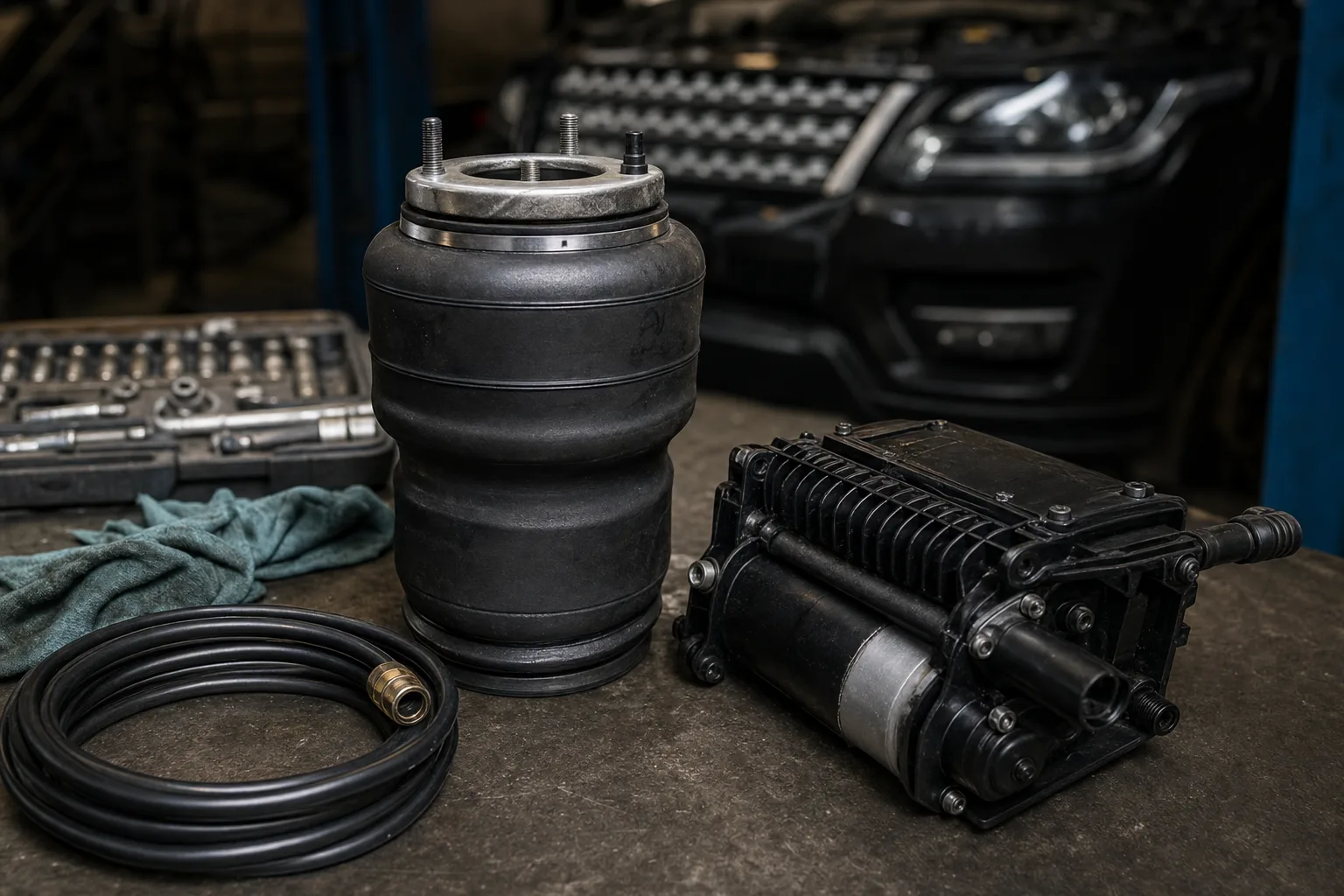
Range Rover L405 Air Suspension Parts
Reconditioned EAS compressors, new front and rear air springs, valve blocks and height sensors for the L405 — the parts that fix the "sitting low" fault. Tell us your VIN and we'll match the exact unit.
Get a Quote2. Timing chain and timing belt failures on the diesels
This is the one that turns a bargain into a rebuild. The 3.0-litre TDV6 and SDV6 diesels are strong engines, but the timing drive is the item to check before anything else. Early cars use a chain at the rear of the block whose tensioner and guides wear, giving a rattle on cold start-up; leave it and a stretched chain or broken guide can jump timing and bend valves.
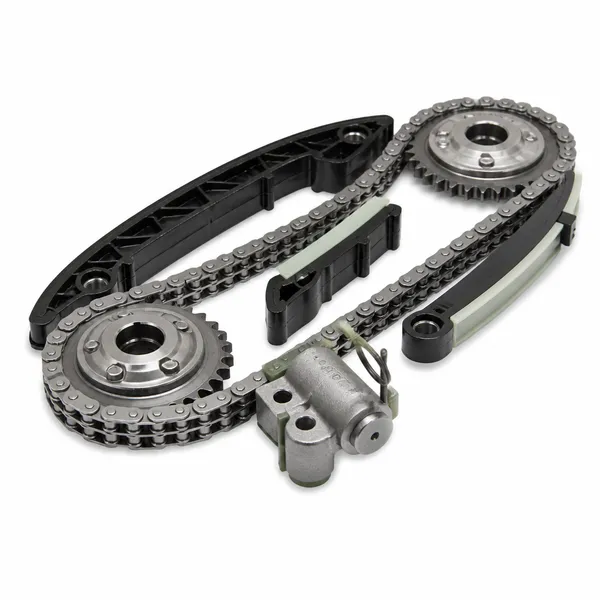
Later diesels moved to a wet timing belt that lives inside the engine and must be changed strictly on schedule — if it lets go, the pistons meet the valves and you are looking at a serious engine bill.
The fix is discipline rather than genius: replace the belt or chain kit on time and never skip it on a car with no history. If you are cross-shopping the earlier V8 diesel, the 4.4 TDV8's known weak spots are worth reading too, because the timing philosophy is similar. On any L405 diesel with unknown service records, budget to do the timing drive, water pump and belt tensioner together as one sensible reset job.
3. Crankshaft bearing wear and engine knock
Related to the diesels, but worth its own warning: on high-mileage or oil-starved TDV6/SDV6 engines the crankshaft bearing shells can spin in their housings. The oil film collapses, the crank journal wears rapidly, and you get a low rhythmic knock from the bottom of the engine, dropping oil pressure and metal in the oil. It is far less common than the air suspension, but it is the fault that ends engines, so it belongs on every buyer's checklist.
Prevention is straightforward: keep oil changes short (no more than 15,000 km), use the correct low-SAPS specification oil, and never ignore a low-oil-pressure warning. If an engine is already knocking, a reconditioned unit is usually the honest answer rather than chasing bearings on a tired block.
Browse our Range Rover engine parts or send us your fault codes and mileage — we'll tell you straight whether you need a bearing kit, a recon engine, or simply a diagnosis before you spend.
4. MOST ring and infotainment failures
Pre-facelift L405s route their infotainment, navigation, reverse camera and audio through a MOST optical ring — a fibre-optic loop where every module has to pass the signal on. The catch is that a single failed node or a dirty connector breaks the whole ring, so a blank media screen, no reverse camera and a missing climate display often all appear together.
It looks catastrophic on the test drive, but the underlying fault is frequently one weak module or a poor fibre connection rather than the whole system.
Diagnosis matters here more than parts: a proper scan and a ring-integrity check point straight at the failed node, whether that is the head unit, the amplifier or a rear screen module. Post-facelift cars moved to an Ethernet-based system and behave differently.
When a genuine module has died, a tested reconditioned unit is a fraction of dealer pricing — you'll find head units, amplifiers and screens among our Range Rover electrical and module parts. Don't let a blank screen scare you off an otherwise good car until it's been scanned.
5. Electronic parking brake faults
The L405 uses an electronic parking brake with a motor-driven actuator on the rear calipers. Age, water and mud take their toll, and the actuator or its wiring corrodes, giving a "park brake fault" warning, a brake that won't release, or a grinding noise as it engages. It is a common gripe on cars that have seen coastal or off-road duty, and it can leave the car stuck if it seizes on.
The repair is usually a replacement parking-brake actuator and, occasionally, wiring or a caliper. It's an electrical-plus-mechanical job rather than a bank-breaker, and a reconditioned actuator is a sensible buy. As with the suspension, a pre-purchase scan will flag a stored parking-brake code even if the warning light isn't lit on the day you view the car — so always insist on a full diagnostic read before money changes hands.
6. Oil cooler leaks, coolant loss and age-related niggles
Rounding out the list are the leaks a heavy luxury 4x4 develops with age. The engine oil cooler is a well-known seep point on the diesel and SDV8 cars — you'll see oil weeping at the front of the engine, and on some cars fumes find their way into the cabin.
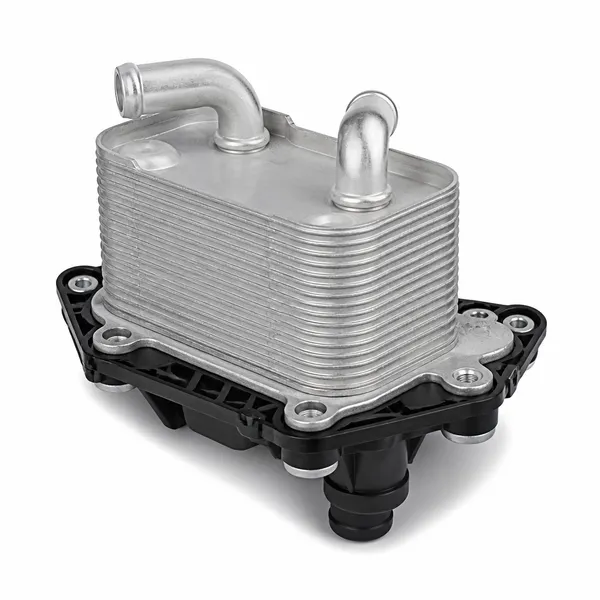
Alongside that, plastic coolant pipes and the thermostat housing go brittle, hoses harden, and steady coolant loss appears. None are unique to the L405, but on an engine that runs hot when towing, cooling-system health matters a great deal.
The fix is preventative: replace a leaking oil cooler with a quality unit and refresh tired coolant pipes, hoses and the thermostat housing as a batch when the front is already apart, rather than chasing one leak at a time. Good used and reconditioned parts make this affordable, and doing it properly once is far cheaper than overheating a diesel and warping a head down the line.
How much do Range Rover L405 repairs cost in SA?
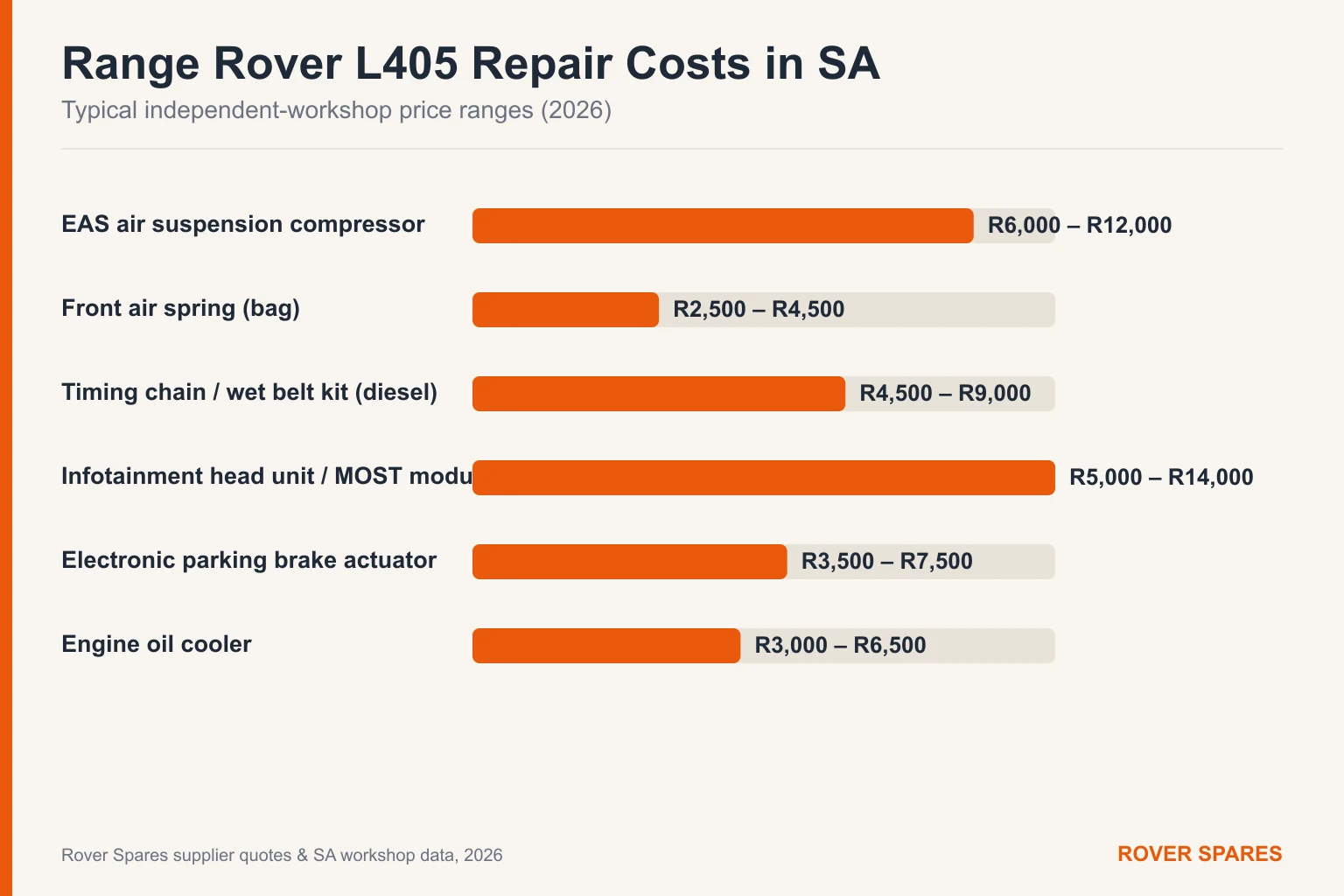
Here's a realistic guide to what these repairs run using quality used or reconditioned parts at an independent workshop — not dealer pricing. Actual figures depend on your exact model, engine, condition and labour rates, but this is the ballpark our suppliers quote in 2026.
| Repair | Typical part price (used / recon) | Notes |
|---|---|---|
| EAS air suspension compressor | R6,000 – R12,000 | Vs R20,000+ new at dealer |
| Front air spring (bag) | R2,500 – R4,500 | Per corner |
| Timing chain / wet belt kit (diesel) | R4,500 – R9,000 | Do with water pump |
| Infotainment head unit / MOST module | R5,000 – R14,000 | Often one node, not all |
| Electronic parking brake actuator | R3,500 – R7,500 | Plus wiring if corroded |
| Engine oil cooler | R3,000 – R6,500 | Common seep point |
Range Rover L405 Diesel Engine Parts
Timing chain and wet-belt kits, water pumps, oil coolers and reconditioned TDV6/SDV6 engines for the L405 — the parts that keep the diesel alive. Send us your VIN and mileage for an exact match.
Get a QuoteWhat we see in the workshop
The word owners hear most often on an L405 is “system”, and it is usually the wrong word. Infotainment faults on these are typically one failed node or one screen rather than the whole network, and a competent auto-electrician can isolate the guilty unit in an afternoon. The same thinking applies underneath. One tired air spring on one corner does not justify a full set of four. Before agreeing to anything replaced in multiples, insist on knowing exactly which component was diagnosed and how it was tested. Individual modules and struts come out of donor vehicles readily and can be bench-tested first.
Need Range Rover L405 parts? Get a same-day quote.
We supply tested used and reconditioned Range Rover L405 parts across South Africa — air suspension, TDV6/SDV6 engine parts, infotainment modules and electronics — with nationwide delivery. Send us your VIN and the part you need.
Frequently asked questions
Is the Range Rover L405 reliable?
The L405 has a mixed reputation, but the truth is more encouraging than the horror stories suggest. Its faults — air suspension, the diesel timing drive, crank bearings, the MOST infotainment ring, the parking brake and oil cooler leaks — are all well documented and repairable.
An L405 with a service history and those known items sorted is a genuinely dependable luxury 4x4. One that's been neglected will nickel-and-dime you fast. Buy on condition and history, not just badge, and budget for a couple of catch-up repairs in the first year.
What is the most common Range Rover L405 problem?
Air suspension, by a distance. The EAS compressor and front air springs are wear items, so a "vehicle sitting low", a diagonal droop or a "suspension fault" message is the single most common complaint. It's also one of the more affordable faults to fix with reconditioned parts, so it shouldn't scare you off — but always check the car raises and holds all four corners during a test drive.
Which L405 engine is best to buy in South Africa?
For SA conditions the 3.0 TDV6/SDV6 diesel is the sensible all-rounder — strong torque for towing and far better economy than the supercharged V8 petrols, which are smooth but thirsty and expensive to run. Whichever you choose, check the timing drive first on the diesels and the suspension on all of them. Parts for the diesel are more plentiful and affordable here than for the supercharged petrol.
Are Range Rover L405 parts expensive in South Africa?
New dealer parts are expensive, yes — but that's not your only option. Quality used and reconditioned parts cut the cost dramatically: an EAS compressor for around R6,000–R12,000 instead of R20,000+, an oil cooler for a few thousand rand rather than dealer money. Buying from a specialist that tests its stock is the key to keeping an L405 affordable to own.
Why is my Range Rover L405 screen and reverse camera blank?
On pre-facelift L405s the infotainment runs on a MOST optical ring, so a single failed module or a poor fibre connection can blank the whole screen, kill the reverse camera and drop the climate display all at once. It looks dramatic but is often one weak node rather than the entire system. A proper scan and ring-integrity check will identify the exact faulty module, which can usually be replaced with a tested reconditioned unit.
How many kilometres can a Range Rover L405 do?
A well-maintained L405 diesel will comfortably pass 250,000–300,000 km, and plenty do more. The engines are tough when serviced on time; what ends most L405s is deferred maintenance on the suspension, timing drive and cooling system, not the bottom end. Keep on top of the known items with quality parts and it will keep going.
Sources
- Honest John — Land Rover Range Rover (L405) owner-reported good & bad points: honestjohn.co.uk
- Wikipedia — Range Rover (L405) model overview, engines and specifications: en.wikipedia.org
- Haynes — Land Rover common problems and buying advice: haynes.com