
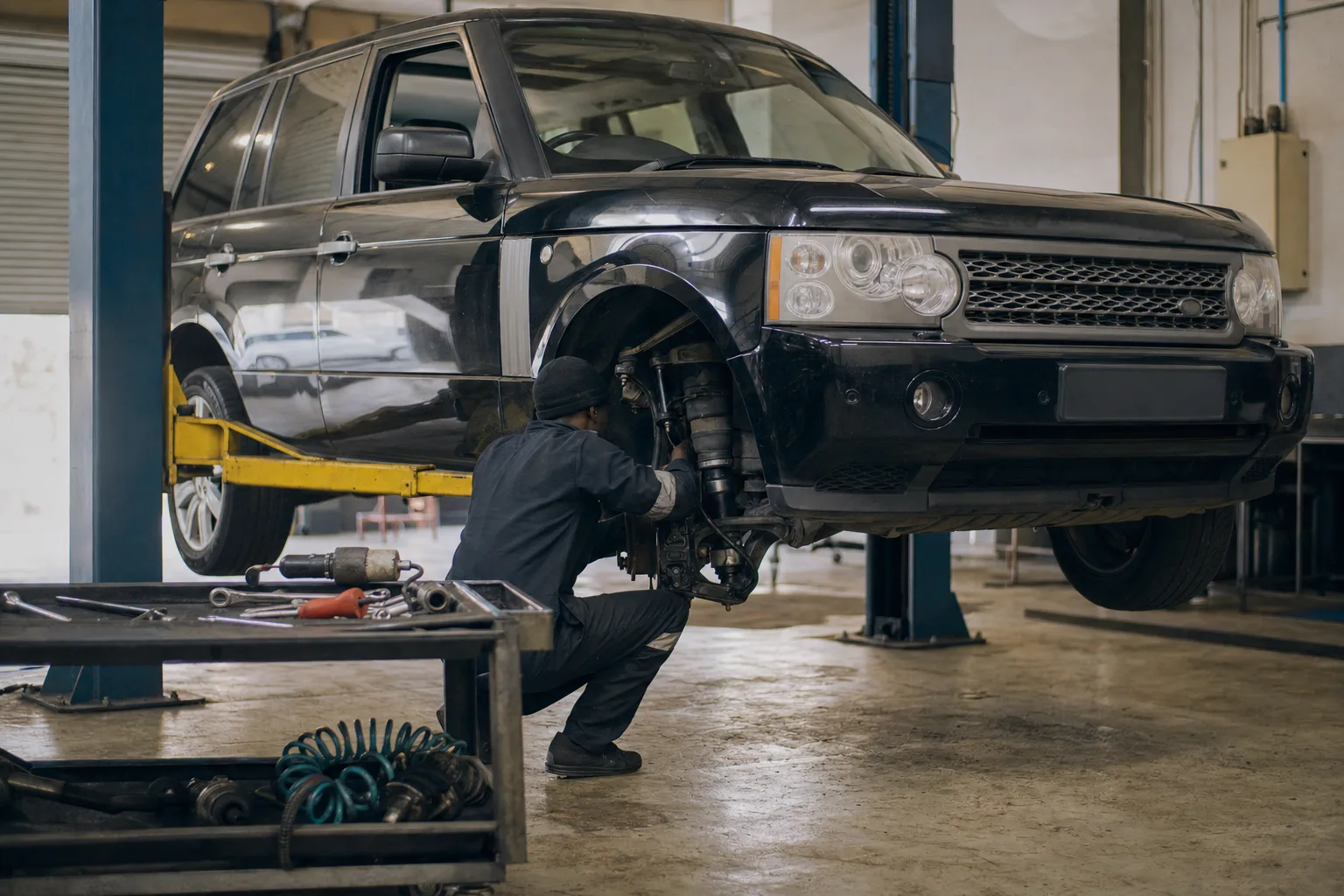

The Range Rover L322 (built 2002–2012) is the generation that turned the Range Rover into a proper luxury flagship — and it is one of the great used-car bargains and money pits in South Africa, depending entirely on which one you buy.
A well-kept L322 rides like a magic carpet and looks a million rand for a fraction of that. A neglected one will bleed you dry through its air suspension, its electronics and, on the diesels, its engine.
The reassuring part is that every common L322 fault is well documented, and the Land Rover spares are widely available used and reconditioned here in SA at a fraction of main-dealer prices. Below are the six problems that come up most on the L322, what they cost to sort, and how to tell a good one from a trap.
- The L322's biggest weak spot is its air suspension — the compressor and air struts are wear items, and a car "sitting low" overnight is the classic warning sign.
- On the early BMW M62 4.4 V8 petrol (2002–2005), watch the cooling system and timing chain guides; on the 3.6 TDV8 diesel (2006 on), watch the EGR, turbos and crankshaft.
- Most repairs are far cheaper with quality used or reconditioned parts: an air compressor runs roughly R5,000–R11,000 fitted versus R18,000+ at a dealer.
- A pre-purchase diagnostic scan (EAS, engine, ABS, parking brake, TFT dash) reveals more than any test drive can.
- None of these faults are reasons to avoid the L322 — they are reasons to budget properly and buy the parts smart.
1. Air suspension failure (the "sitting low" fault)
If an L322 owner has a horror story, it almost always starts with the air suspension. The Range Rover rides on four air struts fed by an electric compressor, and both wear out. The tell-tale signs are the car sitting low on one corner (or nose-down) after standing overnight, a "suspension fault" message on the dash, or the compressor running for ages without ever bringing the car up to height.
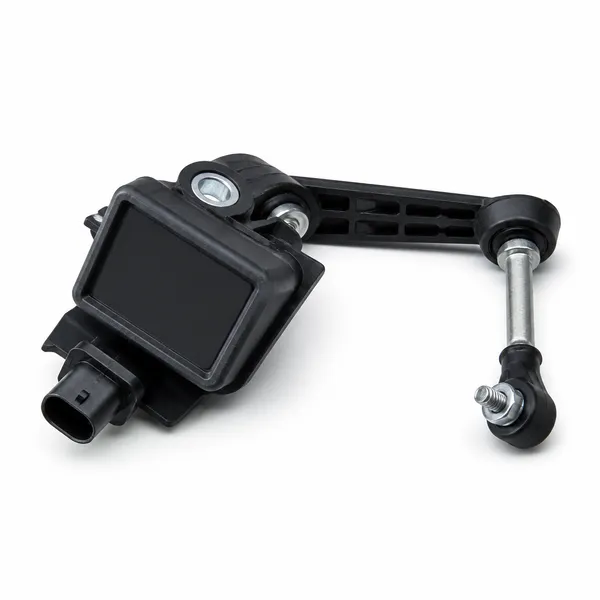
Causes range from a perished air strut leaking air, to a tired compressor that can no longer hold pressure, to a failed height sensor or a corroded valve block feeding the module bad data.
The important thing to grasp is that this is a maintenance system, not a design disaster — it is repairable corner by corner. A single air strut is a manageable spend; the compressor is the bigger ticket. Fitting quality reconditioned air suspension parts keeps the L322 riding exactly as Land Rover intended, without dealer pricing.
Be wary of the very cheapest aftermarket compressors, which often fail again within a year — a properly tested reconditioned unit is the smarter buy on a car this heavy.
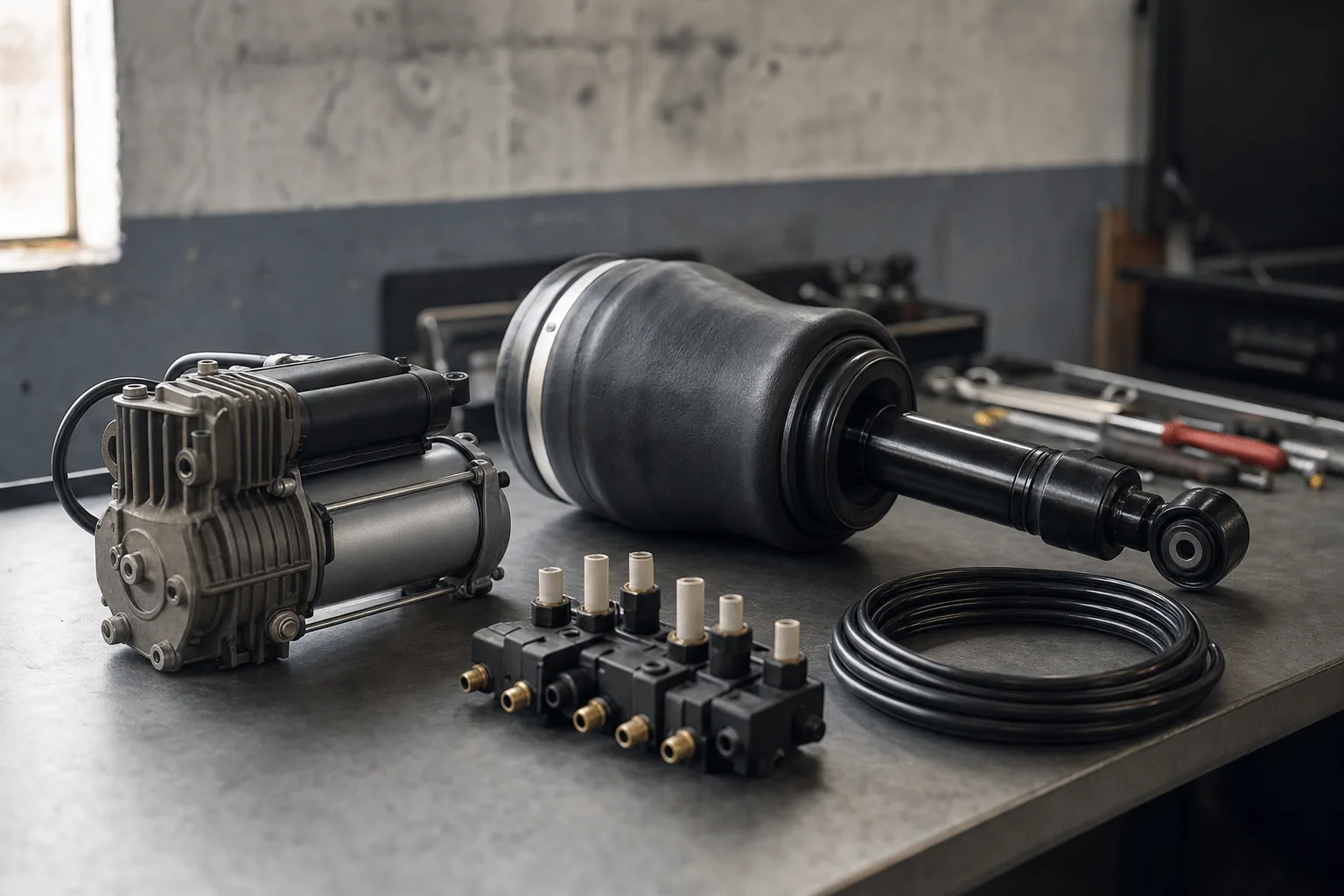
Range Rover L322 Air Suspension Parts
Reconditioned compressors, new air struts, valve blocks and height sensors for the L322 — the parts that cure the "sitting low" fault. Send us your VIN and we will match the exact unit.
Get a Quote2. BMW M62 4.4 V8 petrol cooling and timing issues (early cars)
The 2002–2005 L322 uses BMW's M62 4.4-litre V8 petrol engine and BMW electronics, a legacy of the years Land Rover was owned by BMW.
The M62 is a strong engine, but it has BMW's familiar age-related weaknesses: a cooling system full of plastic parts that turn brittle (the expansion tank, thermostat housing and pipes crack and weep), and timing chain guides that can wear on a high-mileage, poorly-serviced unit. Overheating a V8 is how a manageable coolant leak becomes a warped cylinder head, so cooling health matters a great deal here.
The sensible approach on an early V8 is preventative: refresh the cooling system as a batch — expansion tank, thermostat, hoses and water pump — rather than chasing one leak at a time.
If you are cross-shopping the earlier body, many of these BMW-era traits carry over from the P38 Range Rover's known faults, which used related running gear. A good set of reconditioned V8 engine parts makes this affordable, and doing it once properly is far cheaper than a head job later.
3. 3.6 TDV8 diesel: EGR, swirl flaps and turbo problems
From 2006 the L322 gained the 3.6-litre TDV8 twin-turbo diesel, the engine most South African buyers chase for its effortless torque and better economy. It is a wonderful engine when healthy, but it breathes exhaust gas back through EGR valves and an inlet with swirl flaps, and over years of stop-start driving these clog with an oily carbon sludge.
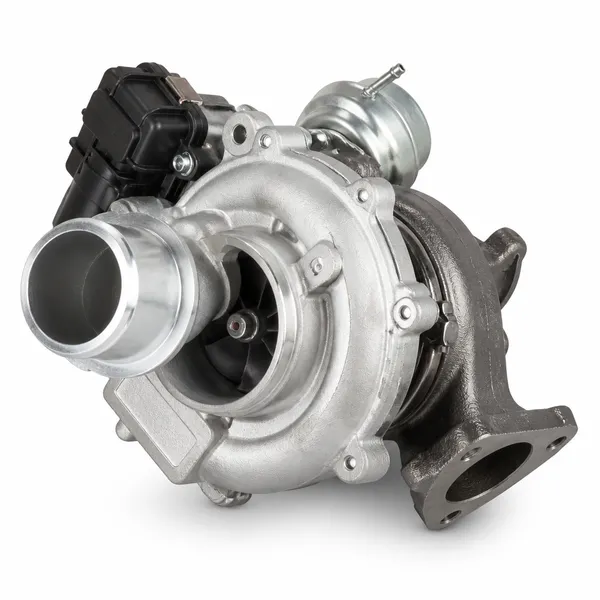
Symptoms are rough idle, hesitation, limp mode, a whistle or flutter under load and poor economy. Sometimes it is a sticking turbo actuator or a split intercooler hose rather than a tired turbo — a proper diagnosis before you buy parts saves thousands.
Don't assume every power loss means a new turbo. On the TDV8 it is often the cheaper EGR, swirl-flap or actuator fault first. When a turbo genuinely is worn, a reconditioned unit fitted by a competent workshop restores full performance for far less than new. The same diesel-breathing principles apply across the range, including the later L405 Range Rover. Send us your fault codes and we will tell you honestly what you actually need before you spend.
4. TDV8 crankshaft and bottom-end concerns
The 3.6 TDV8 has one serious reputation issue South African buyers must understand: a small but real number of these engines have suffered crankshaft failure, usually on units that ran low on oil, saw extended oil-change intervals or were worked hard while cold.
It is not a fault that strikes every TDV8, and a well-serviced example can cover very high mileage, but it is the reason a full service history and an oil analysis matter so much on this engine. A knocking noise from the bottom end, or metal in the oil, is a stop-driving-now warning.
The practical takeaway is that the TDV8 rewards discipline: frequent oil and filter changes with the correct grade, never running it low, and warming it before you lean on it. If you are buying, treat "no service history" as a red flag on this engine specifically.
When the worst happens, a tested reconditioned engine or short block for the Land Rover Range Rover range is far cheaper than a dealer rebuild, and we match the right unit to your VIN.
5. Electronic parking brake and electrical gremlins
The L322 uses an electronic parking brake with a motor and cable module under the vehicle, and like the rest of the car's electronics it does not love age, water or coastal humidity. The module or its cables corrode, giving you a "park brake fault" warning, a brake that will not release, or a grinding noise as it engages.
Alongside it, the L322 can throw a range of electrical niggles — window regulators, door modules, the parking-aid system and wiring in the tailgate that flexes and fractures over time.
Most of these are electrical-plus-mechanical jobs rather than bank-breakers, and reconditioned modules are sensible buys. You will find these among our electronic module and electrical parts. As with the suspension, a pre-purchase scan will flag a stored parking-brake or module fault code even when the warning light is not showing on the day you view the car — which is exactly why we never buy an L322 on looks alone.
6. TFT instrument cluster and infotainment faults
Later L322s moved to a TFT (thin-film-transistor) digital instrument cluster and a more complex infotainment stack, and both develop age-related faults. The classic one is a dash that flickers, blanks intermittently or shows a blank speedo, which is unnerving but usually a cluster or connection fault rather than anything mechanical.
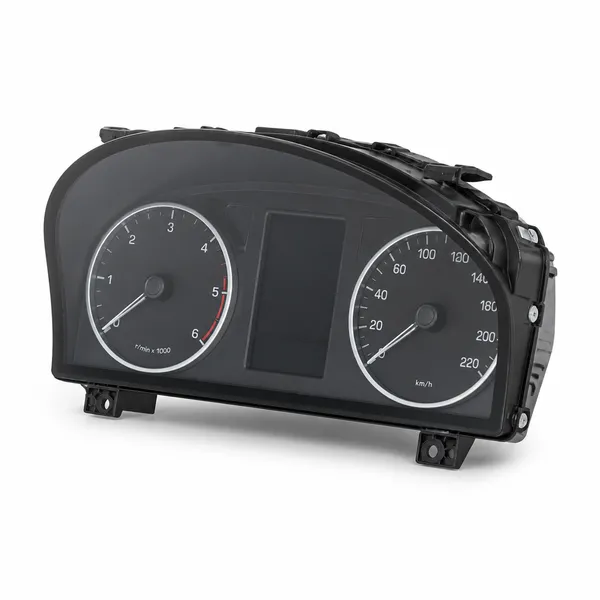
The Logic 7 audio amplifier, the touchscreen and the satellite navigation module can also fail or drop out, and a tired battery or a poor earth will trigger a cascade of unrelated electrical warnings that look far scarier than they are.
The fix is rarely dramatic: a reconditioned instrument cluster or amplifier, and very often sorting the basics first — a healthy battery and clean earths cure a surprising number of "electrical" L322 faults. When a cluster or amp genuinely has failed, a tested reconditioned unit coded to your car restores everything for a fraction of dealer pricing.
How much do Range Rover L322 repairs cost in SA?
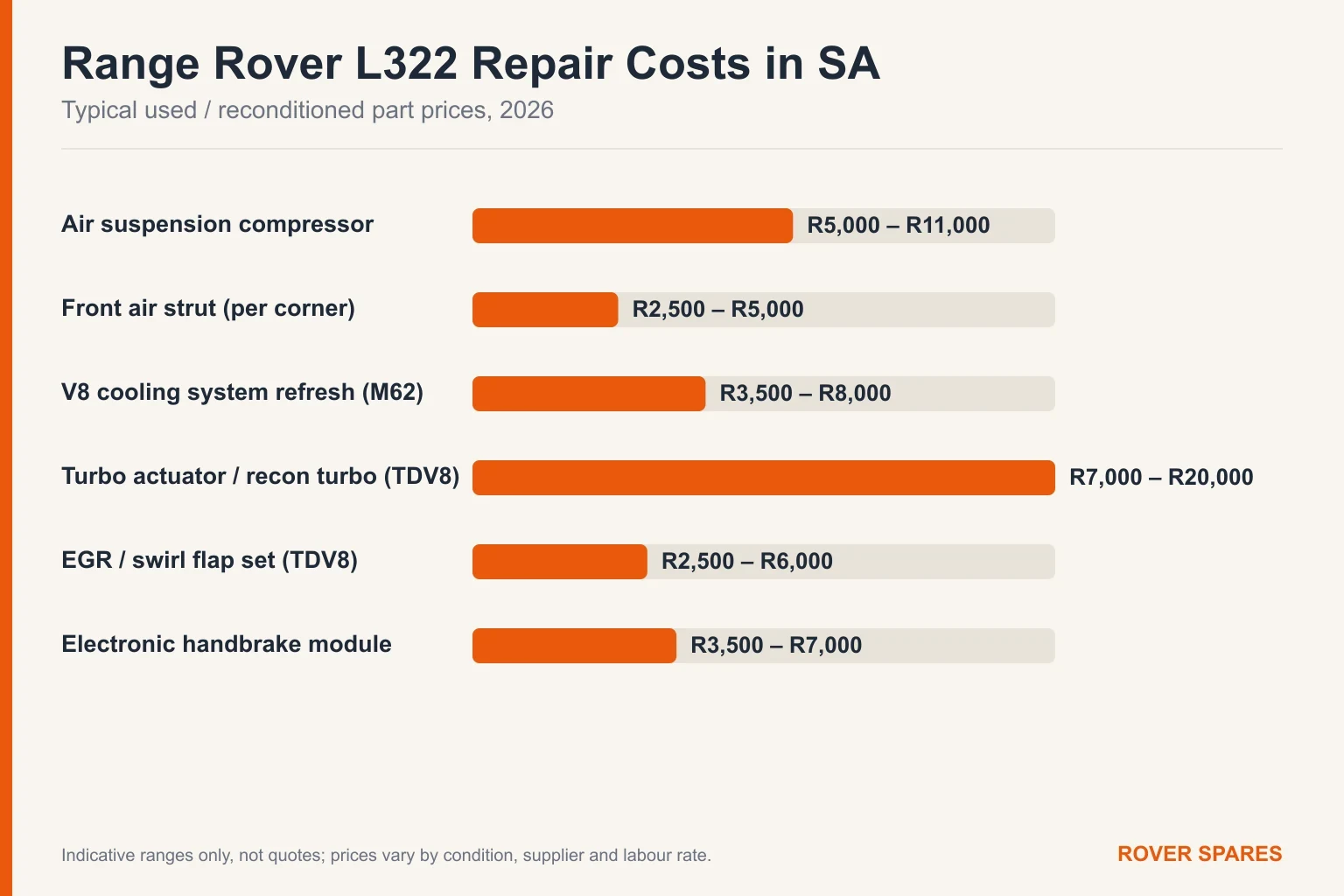
Here is a realistic guide to what these repairs run using quality used or reconditioned parts at an independent workshop — not dealer pricing. Actual figures depend on your exact model, engine, condition and labour rates; these are indicative ranges only, not quotes.
| Repair | Typical part price (used / recon) | Notes |
|---|---|---|
| Air suspension compressor | R5,000 – R11,000 | Vs R18,000+ new at dealer |
| Front air strut (per corner) | R2,500 – R5,000 | Per corner |
| V8 cooling system refresh (M62) | R3,500 – R8,000 | Tank, thermostat, hoses, pump |
| Turbo actuator / recon turbo (TDV8) | R7,000 – R20,000 | Actuator often enough |
| EGR / swirl flap set (TDV8) | R2,500 – R6,000 | Clean can be cheaper |
| Electronic handbrake module | R3,500 – R7,000 | Plus cables if corroded |
Range Rover L322 Engine & Turbo Parts
Reconditioned 3.6 TDV8 turbos, EGR valves, swirl-flap sets and tested engines — plus M62 V8 cooling parts for the early petrol cars. We match the exact unit to your VIN and engine number.
Get a QuoteBefore you buy parts
There is an order to an air suspension job on an L322, and skipping it is what makes the bill big. Air escapes from the bags, the valve block and the pipe fittings long before the compressor itself gives up. The compressor then cooks trying to keep pace, so fitting a new one without finding the leak buys a few months at best. Have the system leak-tested cold and left overnight first, fix whatever is actually losing air, and only then decide about the compressor. Tested reconditioned compressors are plentiful, so that part of the job need never be the expensive part.
Need Range Rover L322 parts? Get a quote.
We supply used and reconditioned Land Rover Range Rover L322 parts across South Africa — air suspension, TDV8 and V8 engine parts, turbos and electronics — with nationwide delivery. Send us your VIN and the part you need.
Frequently asked questions
Is the Land Rover Range Rover L322 reliable?
The L322 has a mixed reputation, but the truth is more encouraging than the horror stories suggest. Its faults — air suspension, the early BMW V8's cooling system, the TDV8's EGR and turbos, the electronic handbrake and the TFT dash — are all well documented and repairable.
An L322 with a full service history and those known items sorted is a genuinely dependable luxury 4x4. A neglected one will nickel-and-dime you. Buy on condition and history, not just price, and budget for a couple of catch-up repairs in the first year.
What is the most common Range Rover L322 problem?
Air suspension, by a distance. The compressor and air struts are wear items, so a "vehicle sitting low" or "suspension fault" message is the single most common complaint. It is also one of the more affordable faults to fix with reconditioned parts, so it should not scare you off — but always check the suspension raises and holds height during a test drive.
Which L322 engine is best in South Africa, the petrol V8 or the TDV8 diesel?
For South African conditions the 3.6 TDV8 diesel (2006 on) is usually the sensible choice — huge torque and far better economy than the thirsty 4.4 petrol V8. The catch is that the TDV8 demands strict oil-change discipline because of its crankshaft reputation, so buy only with a full service history.
The earlier BMW V8 is smooth and simpler in some ways, but thirsty and prone to cooling-system age issues. Whichever you choose, budget for the known items.
Are Range Rover L322 parts expensive in South Africa?
New dealer parts are expensive, yes — but that is not your only option. Quality used and reconditioned parts cut the cost dramatically: an air compressor for around R5,000–R11,000 instead of R18,000+, or an EGR and swirl-flap set for a few thousand rand rather than dealer money. Buying from a specialist that tests its stock is the key to keeping an L322 affordable.
Should I be worried about the TDV8 crankshaft failures?
You should be aware, not scared. Crankshaft failure on the 3.6 TDV8 is a real but not universal fault, and it is strongly linked to poor servicing, low oil and hard cold running. A TDV8 with a documented history of frequent oil changes is a very different proposition to one with gaps. Insist on service records, budget for a proper pre-purchase inspection, and treat "no history" as a reason to walk away on this engine.
Why is my L322 dashboard flickering or going blank?
A flickering, blanking or blank TFT instrument cluster on a later L322 is usually a cluster or connection fault rather than anything mechanical, and it is often triggered or worsened by a tired battery or a poor earth. Start with the basics — a healthy battery and clean earth points cure a surprising number of these — before buying a replacement cluster.
When the cluster itself has genuinely failed, a reconditioned unit coded to your car sorts it for far less than dealer pricing.
Sources
- Honest John — Land Rover Range Rover (2002–2012) owner-reported good & bad points: honestjohn.co.uk
- Haynes — Land Rover common problems and buying advice: haynes.com