
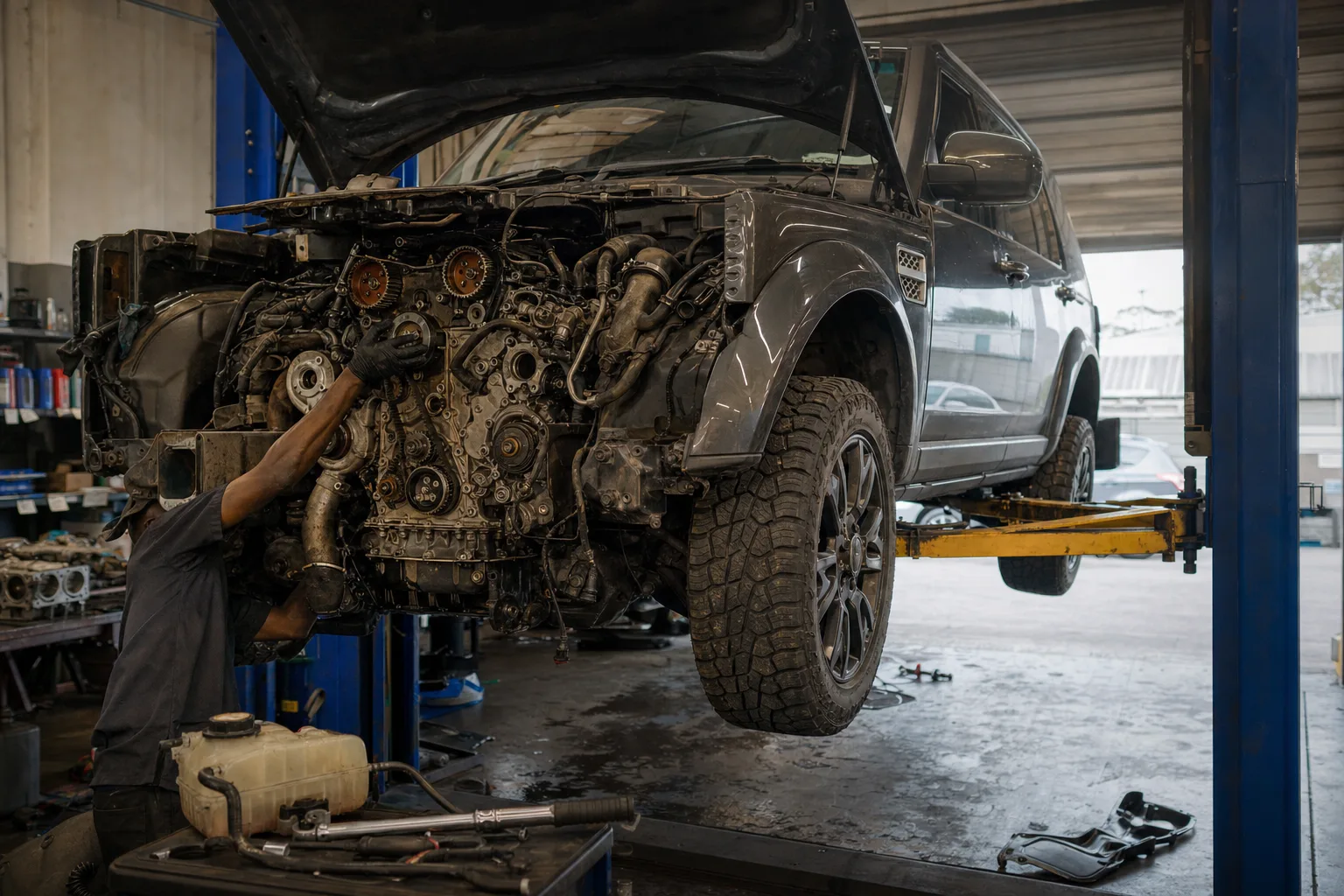

The 3.0 TDV6 (the twin-turbo 306DT diesel fitted to the Discovery 4, Range Rover Sport and Range Rover from around 2009) is a strong, torquey engine that suits South African towing and long-distance driving well. The honest verdict: one with a proper service history and its known items sorted is a superb used buy, but you must budget for preventative work.
Most repairs are far cheaper with quality used or reconditioned parts here in SA than at a main dealer. Below are the six problems that come up most on the 3.0 TDV6, what they cost, and how to spot a bargain from a money pit.
- The 3.0 TDV6's most serious risk is crankshaft bearing wear on hard-worked, towing or oil-neglected engines — Land Rover issued a technical service bulletin about it, so oil discipline matters more than anything.
- The timing belt (front and rear) is a service item, not a lifetime part — this is an interference engine, so a snapped belt usually means a rebuilt or replacement engine.
- Watch the twin turbochargers, EGR coolers and DPF — all soot- and heat-related, all cheaper to catch early than to ignore.
- Quality used and reconditioned parts cut costs dramatically: a reconditioned turbo runs roughly R9,000–R22,000 fitted versus far more at a dealer.
- A pre-purchase scan and an oil-pressure check tell you more about a 3.0 TDV6 than any test drive — buy on evidence, not gut feel.
1. Crankshaft bearing wear and bottom-end failure
This is the headline fault and the one worth understanding first. On hard-worked 3.0 TDV6 engines — especially those used for heavy towing, off-road work or run on stretched oil-change intervals — the crankshaft main bearings can wear prematurely. Land Rover acknowledged increased bearing wear under high-load conditions in a technical service bulletin, so this is a documented pattern rather than internet folklore.
The warning signs are a low or fluctuating oil-pressure reading, a deep knock from the bottom of the engine, or metal traces on the sump plug.
The critical takeaway is prevention: change the oil early and often with the correct low-SAPS specification, and never ignore an oil-pressure warning light — stop and investigate immediately.
When the bottom end has already gone, a good reconditioned engine or short block is the sensible fix. Quality reconditioned 3.0 TDV6 engine parts and full units restore the vehicle for far less than a dealer rebuild. If you are buying, insist on a cold-start listen and an oil-pressure check before money changes hands.
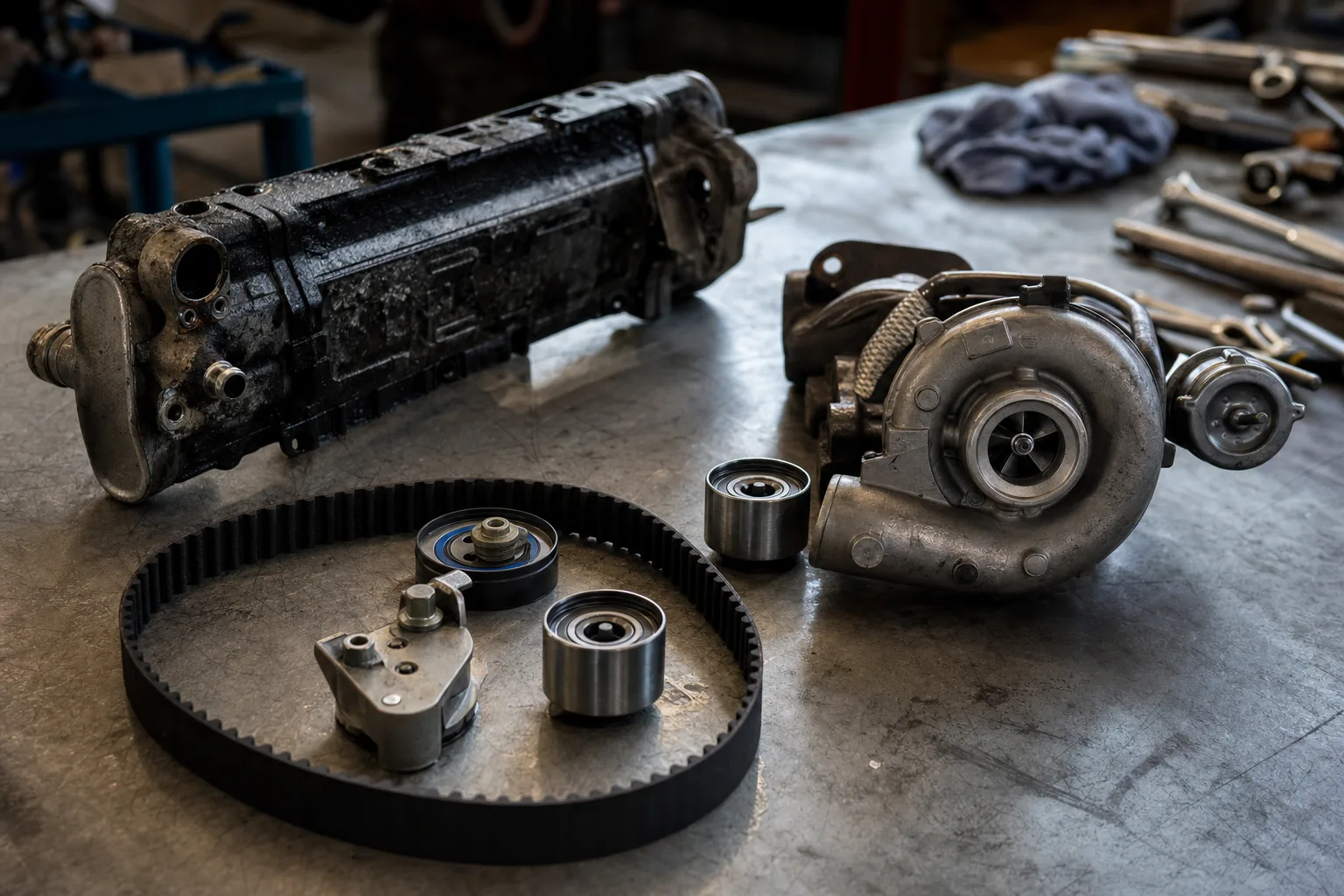
3.0 TDV6 Engine & Turbo Parts
Reconditioned engines, short blocks, timing belt kits and turbos for the 306DT — the parts that keep a 3.0 TDV6 alive. Tell us your VIN and we'll match the exact unit.
Get a Quote2. Timing belt failure (front and rear)
The 3.0 TDV6 uses a timing belt at the front driving the camshafts and a second belt at the rear driving the high-pressure fuel pump, with internal chains in each cylinder head. Both belts are wear items and both must be replaced together with their tensioners and idlers.
This matters enormously because the 306DT is an interference engine: if the front belt snaps or jumps teeth, the pistons meet the valves and you are looking at a rebuild or a replacement engine, not a roadside belt swap.
Our advice is simple — treat the belt as scheduled preventative work, not a wait-and-see item. If you buy a 3.0 TDV6 with no belt-change record, budget to do both belts, tensioners and idlers as a package straight away. It is cheap insurance against a five-figure catastrophe. The same discipline applies to the earlier 2.7, and we go into the belt in more depth alongside the 2.7 TDV6's known weak spots, which shares much of this architecture.
3. Twin turbocharger problems
Most 3.0 TDV6 engines run a sequential twin-turbo setup, and turbos are a common failure area as the kilometres climb. Symptoms include limp mode, a loss of power, a whistling or fluttering under load, blue smoke, or a rattle from a worn turbo bearing. Sometimes the fault is a sticking variable-vane actuator or a split intercooler hose rather than the turbo itself, so a proper diagnosis before you buy parts is essential — it can save you thousands.
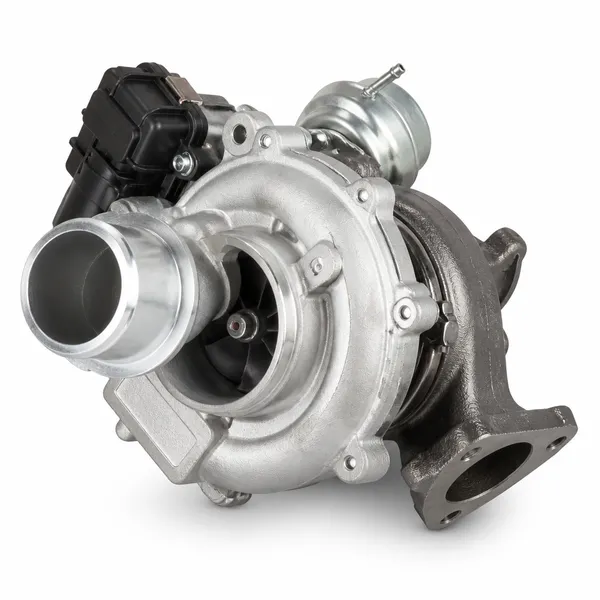
When a turbo is genuinely worn, a quality reconditioned unit fitted correctly restores full performance for a lot less than a new one. Because it is a twin-turbo system it is worth checking both, and confirming the oil feed and return lines are clear so the replacement does not suffer the same fate.
Send us the fault codes and boost readings and we will tell you honestly whether you need a turbo, an actuator or just a hose. Deferred turbo faults also load the emissions system, so catching them early protects the DPF too.
4. EGR cooler cracks and clogging
The 3.0 TDV6 recirculates exhaust gas through EGR coolers, and these are a known trouble spot. Over years of stop-start driving the coolers clog with oily carbon and, worse, can crack internally — letting coolant into the exhaust or air side. Typical symptoms are white smoke, coolant loss with no obvious external leak, rough running, poor economy and an engine warning light. Because the coolant loss can be gradual, it is easy to miss until the engine starts running hot.
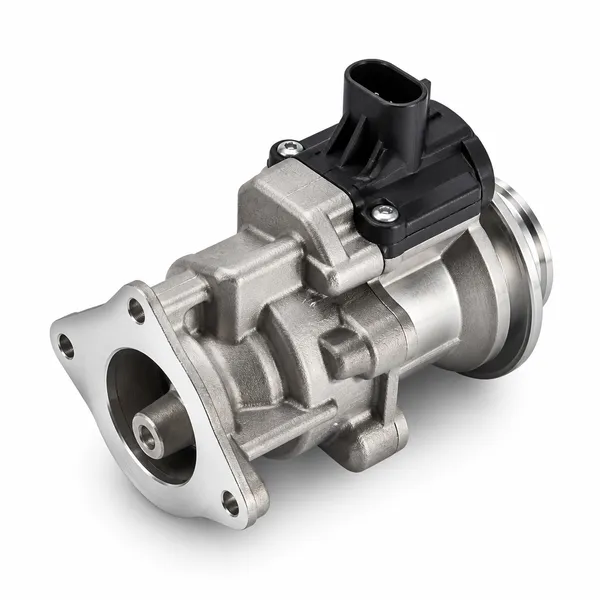
A blocked or cracked EGR cooler usually needs replacement rather than just a clean, and it is worth doing the EGR valves at the same time while the parts are accessible. The later twin-turbo 3.0 suffers this more than the earlier engines, and the same breathing principles apply right across the range, including the Discovery 4 that this engine powered. A regular proper motorway run genuinely helps keep the whole EGR and DPF system healthier for longer.
5. DPF blockage and regeneration faults
The diesel particulate filter traps soot and periodically burns it off in a regeneration cycle. On a 3.0 TDV6 used mostly for short, slow, urban trips, the DPF never gets hot enough to regenerate cleanly and slowly blocks. The result is a DPF warning light, repeated failed regenerations, limp mode and rising fuel use.
A blocked DPF is often the downstream symptom of another fault upstream — a tired turbo, a leaking EGR cooler or a lazy injector — so it pays to find the root cause rather than just clearing the filter.
Many DPFs can be professionally cleaned and restored rather than replaced, which is much cheaper. Where a filter is genuinely spent, a quality replacement plus a proper forced regeneration sorts it. The single best preventative habit is a regular sustained run at motorway speed so the filter can complete a full regeneration — short-trip-only 3.0 TDV6s are the ones that give trouble. Fix any upstream fault first, or the new DPF will simply block again.
6. Injectors, oil pump and age-related niggles
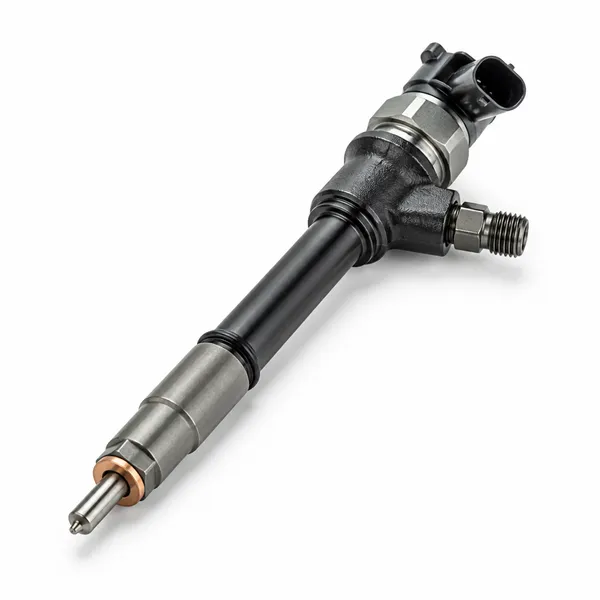
Rounding out the list are the fuel and oil-system faults that come with age and kilometres. The 3.0 TDV6's injectors can wear, causing a lumpy idle, a diesel knock, smoke or a hard cold start; a leak-off test quickly points to a tired one.
On the oil side, the oil pump and its housing are worth watching, because any loss of oil pressure feeds straight back into the crankshaft-bearing risk covered above. Add the usual brittle plastic coolant pipes and hardened hoses of a high-mileage diesel and you have the full picture.
The fix is preventative and batched: replace worn injectors as a set rather than one at a time, keep the oil pressure honest, and renew tired coolant pipes and hoses when you have the front of the engine apart for belt work. Good used and reconditioned parts for the Land Rover Discovery range make this affordable, and doing it properly once is far cheaper than chasing faults repeatedly or, worse, overheating the engine.
How much do 3.0 TDV6 repairs cost in SA?
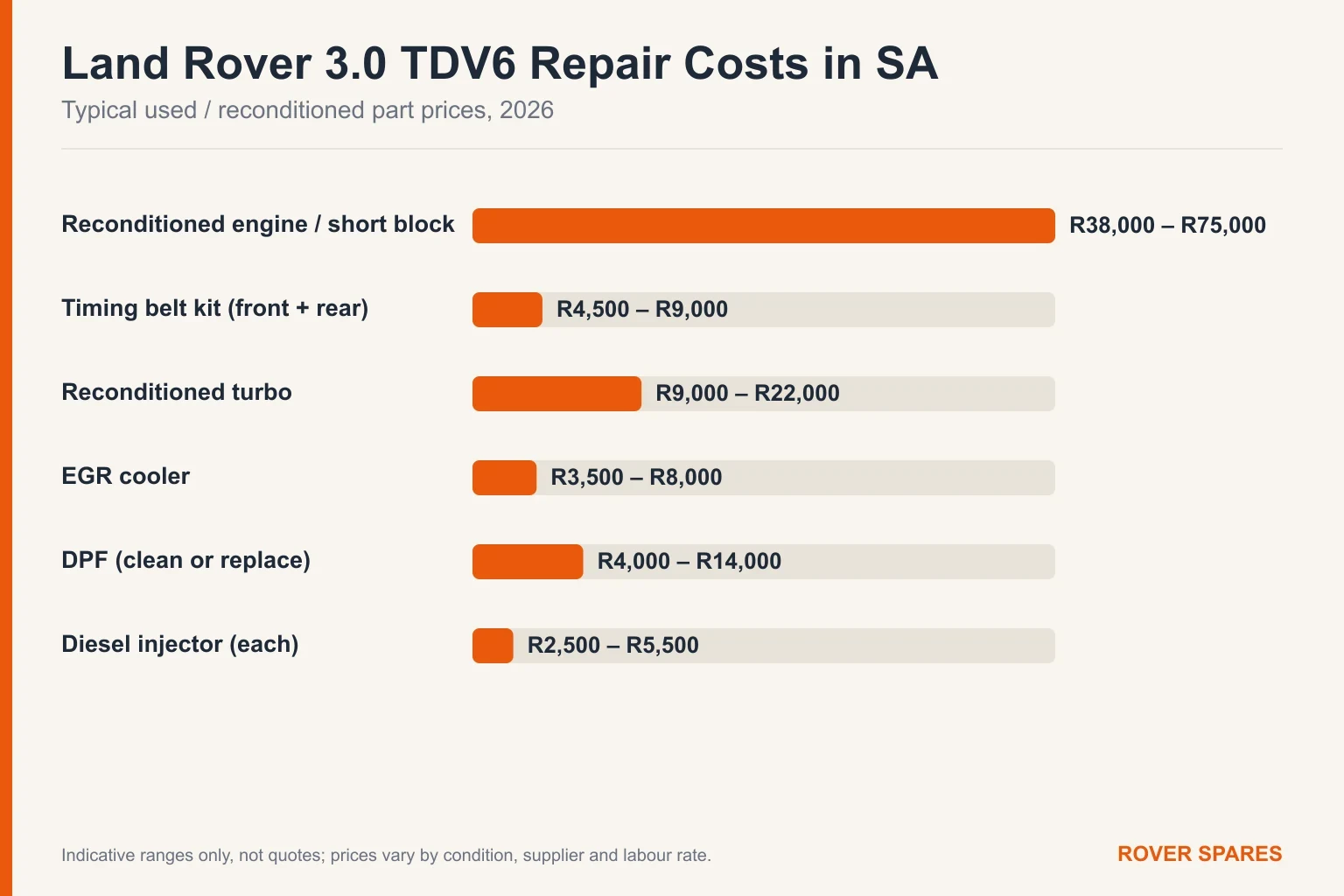
Here is a realistic guide to what these repairs run using quality used or reconditioned parts at an independent workshop — not dealer pricing. Actual figures depend on your exact model, condition and labour rates; these are indicative ranges only, not quotes.
| Repair | Typical part price (used / recon) | Notes |
|---|---|---|
| Reconditioned engine / short block | R38,000 – R75,000 | Vs dealer rebuild pricing |
| Timing belt kit (front + rear) | R4,500 – R9,000 | Do belts, tensioners, idlers together |
| Reconditioned turbo | R9,000 – R22,000 | Actuator often cheaper |
| EGR cooler | R3,500 – R8,000 | Do EGR valves at same time |
| DPF (clean or replace) | R4,000 – R14,000 | Clean far cheaper than new |
| Diesel injector (each) | R2,500 – R5,500 | Replace as a set |
Before you buy parts
A 3.0 TDV6 is a job you sequence, not a shopping list you work through one item at a time. If the timing belts are anywhere near due, plan that work around anything else coming off the front of the engine, because the labour overlaps heavily and you only want to pay for the strip-down once. And never fit a turbo without establishing why the last one went; the condition of the oil feed and drain decides whether the replacement survives. Owners who fix the cause and combine the jobs spend far less than those who chase symptoms.
Need 3.0 TDV6 parts? Get a quote.
We supply used and reconditioned Land Rover 3.0 TDV6 parts across South Africa — reconditioned engines, timing belt kits, turbos, EGR coolers and DPFs — with nationwide delivery. Send us your VIN and the part you need.
Frequently asked questions
Is the Land Rover 3.0 TDV6 a reliable engine?
It can be very reliable if it has been looked after. The 3.0 TDV6 is strong and torquey, but it rewards oil discipline and punishes neglect. Its known items — crankshaft bearings, timing belts, turbos, EGR coolers and the DPF — are well documented and manageable if you stay ahead of them.
A 3.0 TDV6 with a full service history and those items attended to is a dependable long-distance and towing engine. One run on stretched oil intervals is a gamble.
What is the most serious 3.0 TDV6 problem?
Crankshaft bearing wear leading to bottom-end failure is the most serious, because it is expensive and can be terminal for the engine. It is strongly linked to hard use and poor oil maintenance, and Land Rover acknowledged it in a technical service bulletin. The good news is that frequent oil changes with the correct specification and never ignoring an oil-pressure warning dramatically reduce the risk.
How often should the 3.0 TDV6 timing belt be changed?
Treat it as scheduled preventative work rather than waiting for a symptom. Because the 306DT is an interference engine, a snapped front belt typically destroys the engine, so replacing both the front and rear belts with their tensioners and idlers on schedule is essential. If you buy one with no belt-change record, do the belts straight away — it is cheap insurance against a five-figure repair.
Are 3.0 TDV6 parts expensive in South Africa?
New dealer parts are expensive, but that is not your only option. Quality used and reconditioned parts cut the cost dramatically: a reconditioned turbo for around R9,000 to R22,000, an EGR cooler for a few thousand rand, or a professionally cleaned DPF instead of a new one. Buying from a specialist that tests its stock is the key to running a 3.0 TDV6 affordably.
Can a blocked DPF be cleaned instead of replaced?
Often, yes. Many 3.0 TDV6 DPFs can be professionally cleaned and restored rather than replaced, which is far cheaper. The important thing is to find and fix whatever caused the blockage first — a tired turbo, a leaking EGR cooler or a lazy injector — otherwise a new or cleaned filter will simply block again. A regular sustained motorway run is the best preventative habit.
How many kilometres can a 3.0 TDV6 do?
A well-maintained 3.0 TDV6 will comfortably pass 300,000 km, and many do more. The engine itself is capable of high mileage; what ends most of them early is deferred maintenance — skipped oil changes, an overdue timing belt or an ignored oil-pressure warning — rather than the design. Stay on top of the known items with quality parts and it will keep going.
Sources
- Haynes — Land Rover Discovery 4 (2009–2016) common problems: uk.haynes.com
- Honest John — Land Rover Discovery 4 owner-reported good & bad points: honestjohn.co.uk