
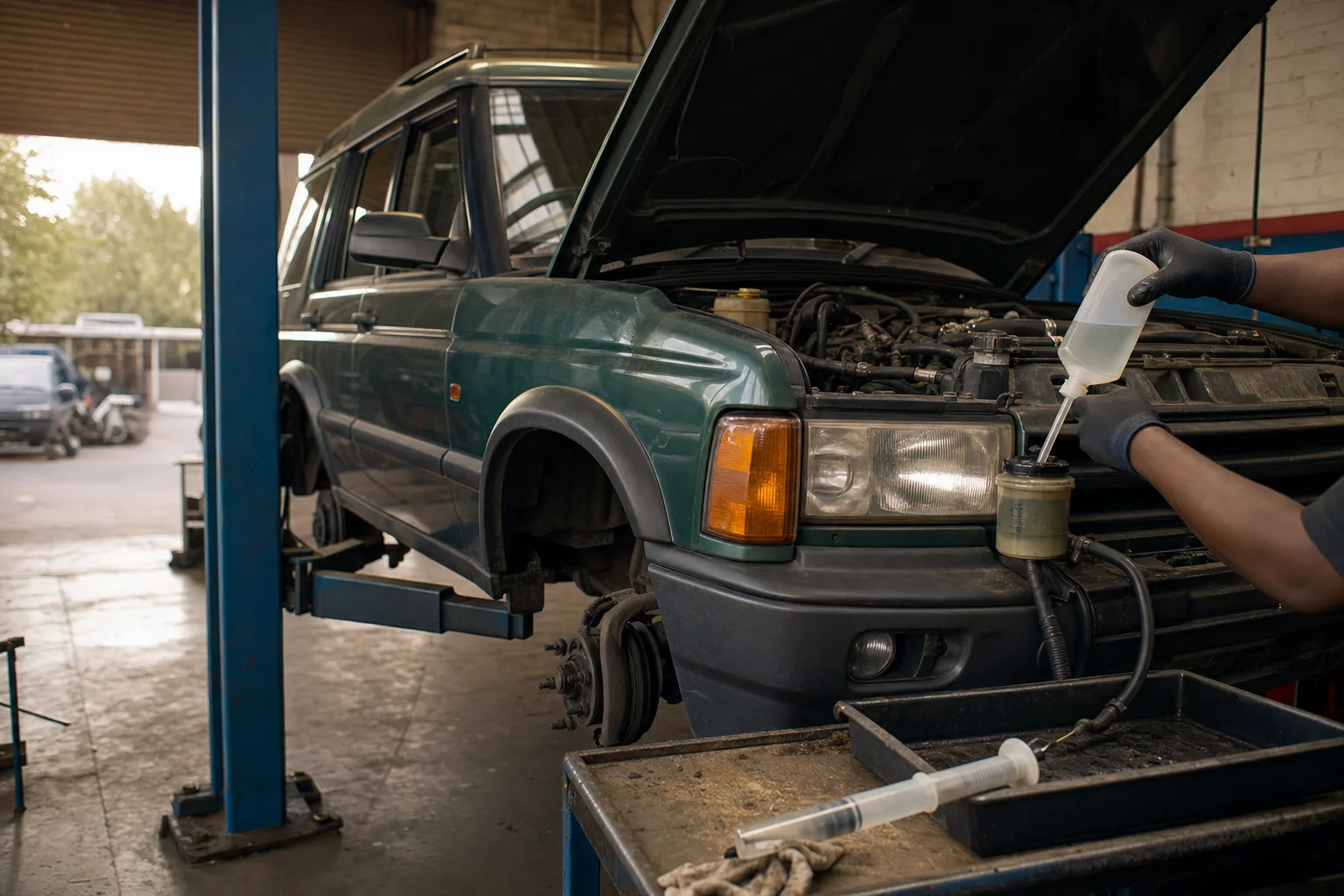

Replacing the power steering fluid on a Land Rover is one of the cheapest, highest-value jobs you can do in your own driveway, and most owners leave it far too long. Done properly with the turkey-baster method it costs the price of a bottle of fluid and an hour of your Saturday, and it can head off a leaking rack or a groaning pump that would otherwise cost thousands.
The one thing that trips people up is the spec: get the wrong fluid in a Land Rover PAS system and you can wreck the pump and seals. Below is how the job is done, which fluid your model needs, and what the parts cost here in South Africa.
- Most Land Rovers use a hydraulic power-assisted steering (PAS) pump that shares fluid with the ride, so the correct spec is critical — get it wrong and you damage seals.
- The DIY turkey-baster method (drain the reservoir, refill, bleed, repeat) refreshes the fluid without disconnecting a single hose — no ramps, no mess.
- Bleeding is simple: with the wheels off the ground, turn the steering slowly lock to lock several times with the engine idling to purge trapped air.
- Budget roughly R120–R450 for fluid; a leaking PAS pump or high-pressure hose is the real cost if you neglect the job.
- A whine that rises with revs, foamy fluid, or a stiff wheel when cold usually means air, low fluid, or the wrong grade — not always a dead pump.
Which power steering fluid does a Land Rover need?
This is the part you cannot guess at. Land Rover hydraulic PAS systems are fussy, and the right fluid depends on your model and year. Most Defenders, Discovery 1 and 2, Freelander 1 and the classic Range Rovers run an ATF-type fluid to Dexron II or III specification, or Land Rover's own PAS fluid where specified.
Later cars with the ZF servotronic rack, including many Discovery 3 and 4 and Range Rover models, call for a specific green CHF (central hydraulic fluid) such as CHF 11S or Pentosin — and mixing that with ATF is asking for trouble. Always check the cap, the handbook, or your VIN before you buy.
The safe rule: never top up a Land Rover with a generic bottle just because it says "power steering fluid" on the front. If the cap is green or marked CHF, buy CHF; if it specifies ATF or Dexron, use that. When you are unsure, send us your VIN and we will confirm the exact grade before you buy a drop.
What you'll need
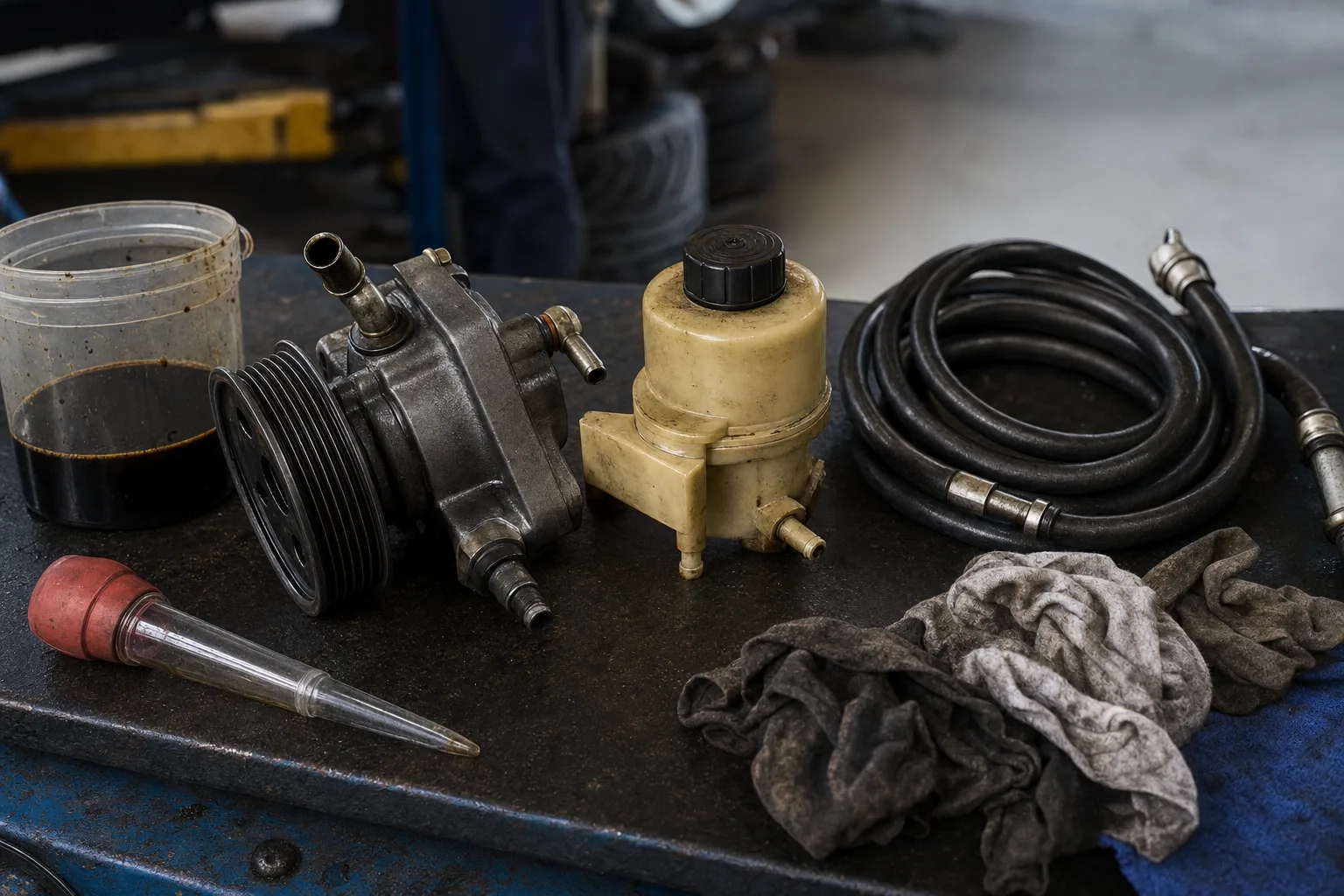
You need very little to do this job well, which is why it is such good value. Gather the correct fluid for your model (buy an extra bottle for a couple of drain-and-fill cycles), a clean turkey baster or fluid syringe, some rags, a drain container, and a trolley jack with axle stands if you want the front wheels off the ground for easier bleeding.
A torch helps you read the min and max marks on the reservoir, which are hard to see on a hot engine.
If your fluid comes out dark brown, smells burnt, or has a milky, foamy look, that is your sign the change is overdue. While you are under there, glance at the high-pressure hose and the rack boots for weeping — catching a steering and suspension leak early is far cheaper than replacing a pump that has run dry.
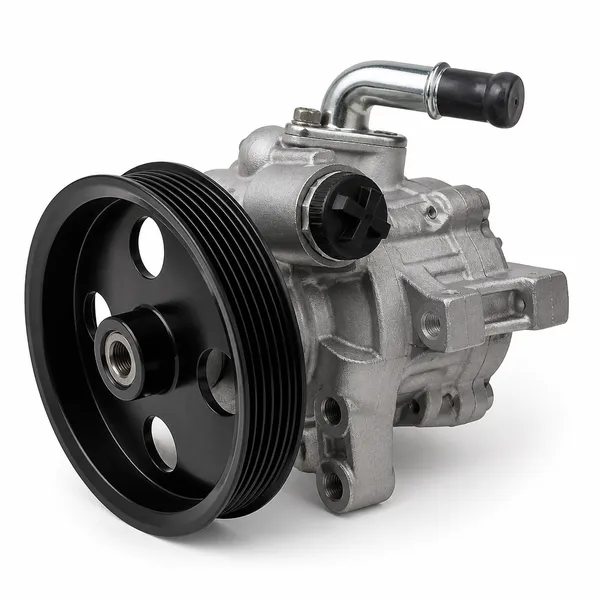
Land Rover PAS Pump & Reservoir
Tested reconditioned power steering pumps and reservoirs for Defender, Discovery and Range Rover. If your fluid keeps going low or the pump whines, we will match the exact unit to your VIN.
Get a QuoteStep-by-step: the turkey-baster fluid change
This method refreshes most of the fluid without cracking a single union, so there is no risk of introducing air into the high-pressure side. Work with the engine cold and take your time.
- Find and open the reservoir. Locate the PAS reservoir (usually near the pump on the front of the engine), wipe the cap clean so no grit falls in, and unscrew it.
- Suck out the old fluid. Using a clean turkey baster or syringe, draw out as much old fluid as you can from the reservoir and empty it into your drain container. Get right down to the bottom where the sludge settles.
- Refill with the correct fresh fluid. Top the reservoir back up to the MAX mark with the exact spec for your model — ATF/Dexron or green CHF as required. Do not overfill.
- Bleed by turning lock to lock. With the front wheels off the ground, start the engine and let it idle. Slowly turn the steering fully left, then fully right, several times. This circulates fresh fluid through the rack and pushes trapped air back to the reservoir.
- Recheck and repeat. Switch off, let the foam settle, and re-check the level. Suck out and refill again, then bleed again. Two or three cycles replaces most of the old fluid without ever disconnecting a hose.
- Final level and leak check. Set the level to MAX with the engine off and fluid settled, refit the cap, and check underneath for any weeping at the pump, hose and rack after a short test drive.
If, after bleeding, the wheel is still heavy or the pump groans, you likely still have air in the system or a genuine fault — re-bleed first before condemning the pump.
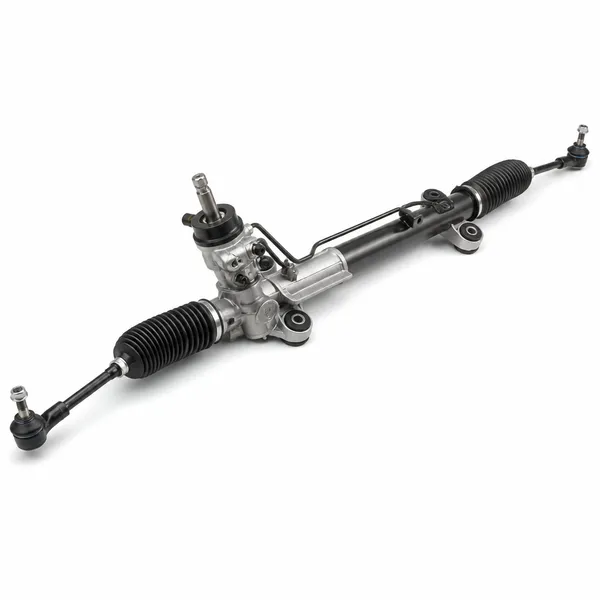
Steering Racks & High-Pressure Hoses
Reconditioned steering racks and new high-pressure PAS hoses for the whole Land Rover range. Stop chasing a leak — send us your model and year and we will quote the right part.
Get a QuoteHow much does it cost in SA?
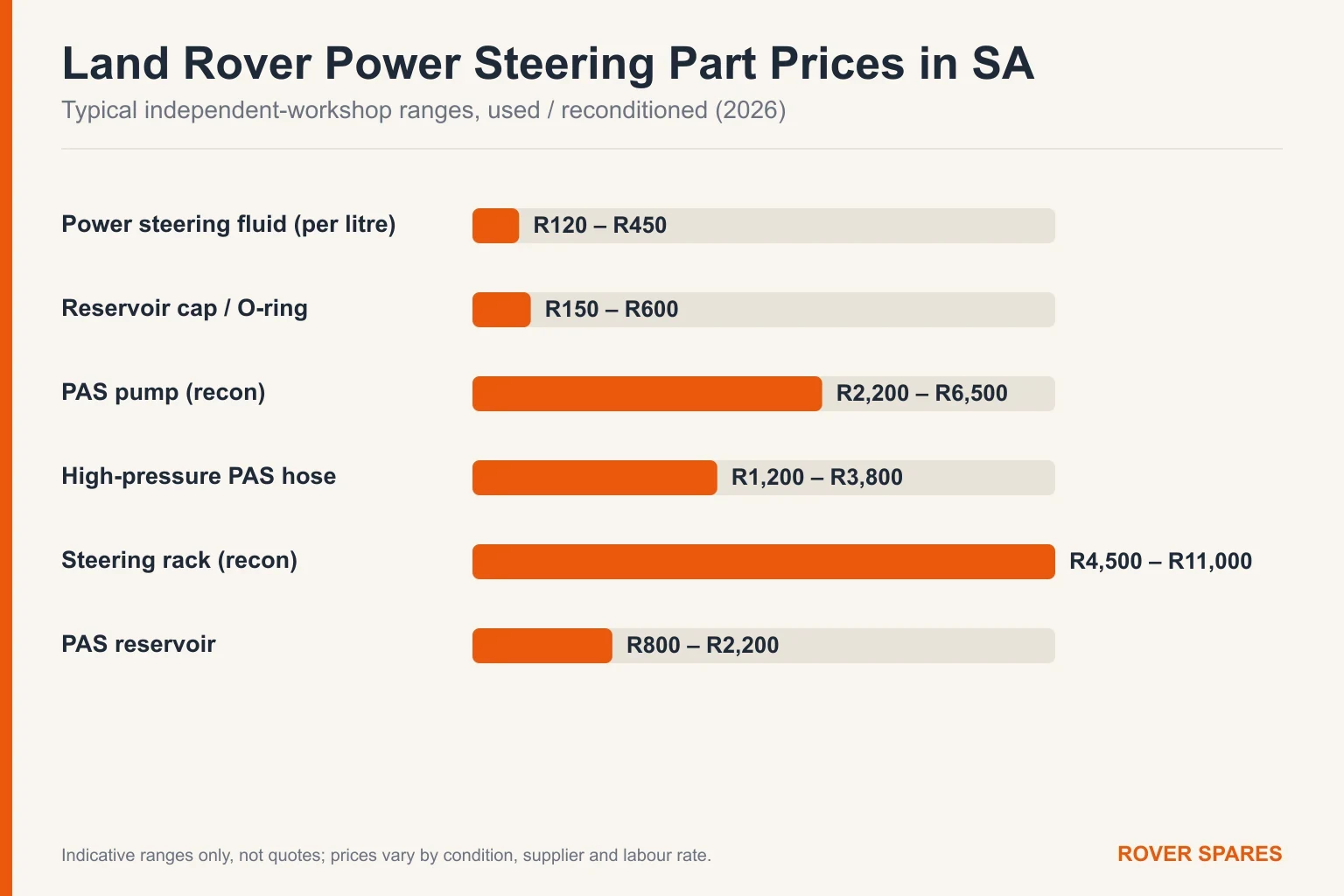
The fluid change itself is pocket money; the parts around it are where the numbers climb if you have left a problem to fester. Here is what these items typically run in 2026 using quality used or reconditioned parts at an independent workshop rather than dealer pricing. Actual figures depend on your exact model, condition and labour rates.
| Item | Typical price (used / recon) | Notes |
|---|---|---|
| Power steering fluid (per litre) | R120 – R450 | CHF costs more than ATF |
| Reservoir cap / O-ring | R150 – R600 | Cheap insurance if perished |
| PAS pump (recon) | R2,200 – R6,500 | Vs dealer new pricing |
| High-pressure PAS hose | R1,200 – R3,800 | Common leak point |
| Steering rack (recon) | R4,500 – R11,000 | Depends on model |
| PAS reservoir | R800 – R2,200 | Often reused if clean |
Tips, warnings and common mistakes
The most expensive mistake is the wrong fluid. Pouring ATF into a system that wants green CHF (or the reverse) swells or shrinks the seals and can kill the pump in short order — there is no cheap way back from that, so double-check before you pour. The second mistake is running the pump dry while bleeding: never let the reservoir drop below MIN with the engine running, because a PAS pump hates being starved even for a few seconds.
A few workshop tips that make the job cleaner. Do the change cold so the fluid is not scalding, and turn the wheel slowly while bleeding rather than snatching it, which just whips air into foam.
If the whine persists after two proper bleeds and the level is correct, budget for a reconditioned pump for the Land Rover Discovery range or your specific model rather than throwing more fluid at it. If you are also freshening the brakes this weekend, our guide to bleeding the brake lines uses much the same patience, and the same tidy drain-and-fill discipline applies to a transmission fluid change.
Before you buy parts
Power steering noise is a fluid problem far more often than it is a pump problem. The usual story is a top-up done with whatever was on the shelf, generic ATF poured into a system that wants a specific fluid, followed by a whine and steering that fights back until it warms through. Flush the system properly with the correct fluid and check the reservoir filter before anyone condemns the pump. If the pump really is past saving, a tested reconditioned unit filled with the right fluid does the job without the dealer outlay.
Need Land Rover steering parts? Get a quote.
We supply used and reconditioned Land Rover power steering parts across South Africa — PAS pumps, reservoirs, high-pressure hoses and steering racks — with nationwide delivery. Send us your VIN and the part you need.
Frequently asked questions
What power steering fluid does my Land Rover take?
It depends on the model and year. Many Defenders, Discovery 1 and 2, Freelander 1 and classic Range Rovers use an ATF-type fluid to Dexron II or III, while later cars with the ZF rack (much of Discovery 3, Discovery 4 and later Range Rovers) need a specific green CHF such as CHF 11S or Pentosin. Check the reservoir cap and your handbook, or send us your VIN and we will confirm the exact grade before you buy.
Can I change the power steering fluid myself?
Yes. The turkey-baster method — suck the reservoir dry, refill with the correct fluid, bleed lock to lock, and repeat two or three times — needs no special tools and does not disconnect any hoses. It is one of the safest DIY jobs on a Land Rover, provided you use the right fluid and never run the pump dry.
How do I bleed the power steering after topping up?
With the front wheels off the ground and the engine idling, turn the steering slowly all the way left, then all the way right, several times. This circulates fresh fluid and pushes trapped air back to the reservoir. Let the foam settle, top up to MAX, and repeat until the level stays steady and the whine goes quiet.
Why does my Land Rover power steering whine or groan?
A whine that rises with engine revs is usually low fluid, trapped air, or the wrong grade of fluid — not always a dead pump. Bleed the system properly and check the level first. If it still groans with the correct fluid at the right level, the pump is likely worn and a reconditioned unit is the sensible fix.
How often should I change Land Rover power steering fluid?
Land Rover does not always list a fixed interval, but as a rule of thumb we refresh it every 60,000 to 100,000 km, or sooner if the fluid looks dark, smells burnt, or foams. On a hard-working Discovery or Defender that tows, doing it more often is cheap protection for an expensive pump and rack.
Is a leaking power steering rack worth fixing on an old Land Rover?
Usually yes. A reconditioned rack or high-pressure hose costs a fraction of a new dealer part, and a weeping rack that runs the pump low will eventually take the pump with it. Fixing the leak early with a good used or reconditioned part protects the whole system and keeps the car steering safely.
Sources
- Haynes — how to check and top up power steering fluid: haynes.com