
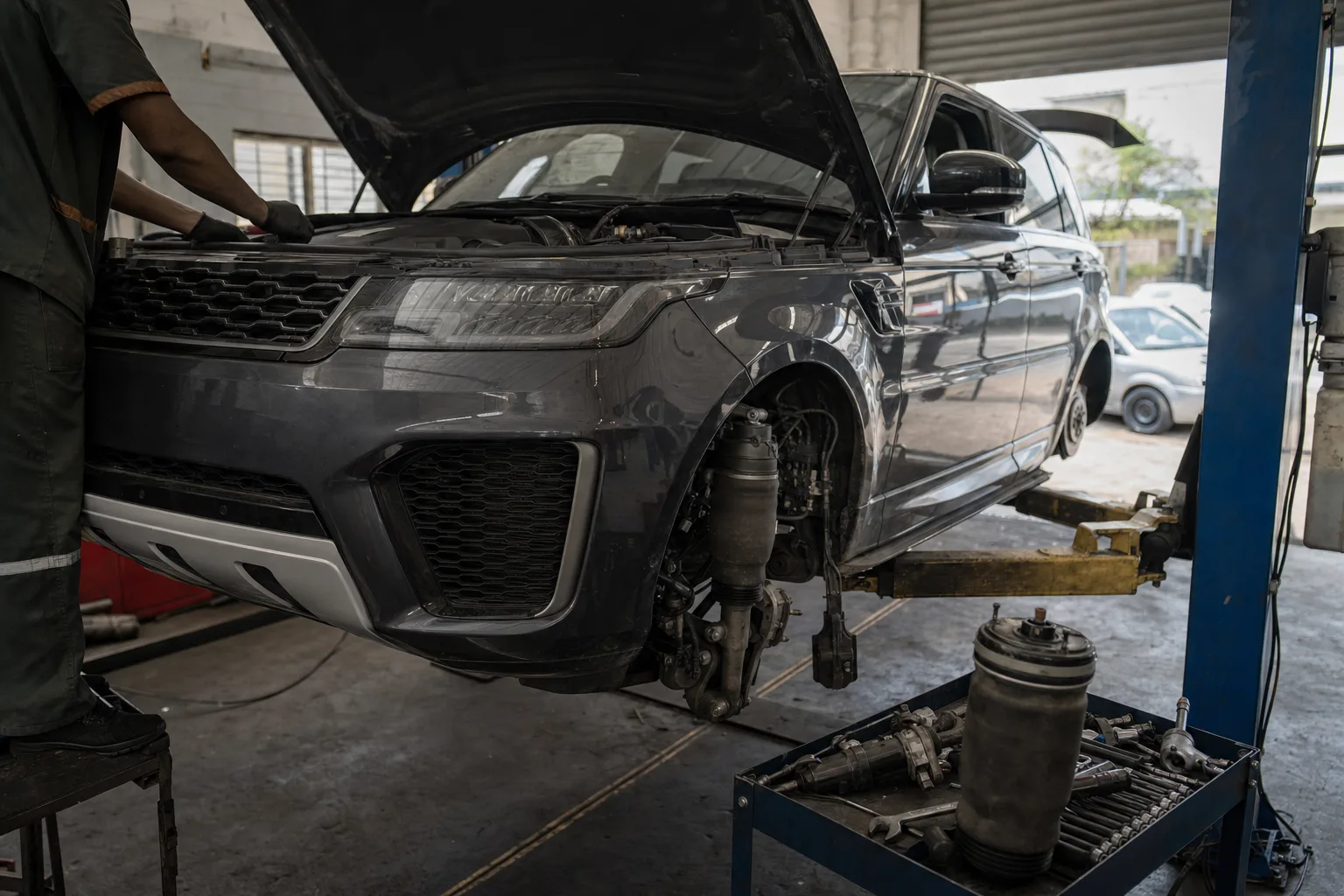

The second-generation Range Rover Sport (the L494, built 2013–2022) is a superb thing to drive and own — fast, comfortable and genuinely capable — but it is not a car to buy on badge alone.
On the popular 3.0 SDV6 and 4.4 SDV8 diesels the headline worry is the bottom end: crankshaft and timing-chain wear that, if ignored, ends in a very expensive engine. Add the usual air suspension, infotainment and cooling niggles and you can see why a neglected one frightens people.
The reassuring part is that every common L494 fault is well documented, and — as with its smaller sibling, where Range Rover Velar parts follow the same pattern — the components are widely available used and reconditioned here in South Africa at a fraction of main-dealer pricing. Below are the six problems our workshop sees most on the L494, what they cost to sort, and how to spot a good one.
- The L494's most serious risk is crankshaft and timing-chain wear on the SDV6/SDV8 diesels — a cold-start rattle or chain noise is a warning you must not ignore.
- Air suspension is a wear item, not a lifetime part — a car "sitting low" overnight or throwing a suspension fault is the classic symptom.
- The InControl Touch infotainment, electronic parking brake and coolant system are the other repeat offenders on higher-mileage cars.
- Most repairs are far cheaper with quality used or reconditioned parts: an air compressor runs roughly R5,500–R11,000 fitted versus R18,000+ at a dealer.
- A pre-purchase diagnostic scan (engine, EAS, ABS, parking brake, infotainment) plus a cold-start listen tells you more than any quick test drive.
1. Crankshaft and timing-chain wear on the SDV6/SDV8 diesels
This is the big one, and it is why you never buy an L494 diesel without a cold-start listen and a service history. The 3.0 SDV6 and 4.4 SDV8 diesels can suffer crankshaft wear and, separately, timing-chain stretch as the kilometres climb.
The early warning is a rattle or chatter from the front of the engine on a cold start that settles as oil pressure builds, sometimes with a chain-related fault code. Left alone, chain stretch throws the valve timing out, and in the worst cases owners have reported catastrophic crankshaft failure with little notice.
The lesson is prevention and honesty. If a car has full service history, fresh oil at the right intervals and a clean cold start, the risk drops sharply. If it has none of those, budget accordingly — or walk away.
When an engine is genuinely tired, a tested reconditioned unit or a good used low-kilometre engine is far cheaper than a dealer rebuild. Browse our Land Rover engine parts or send us the fault codes and we will tell you honestly what the car actually needs.
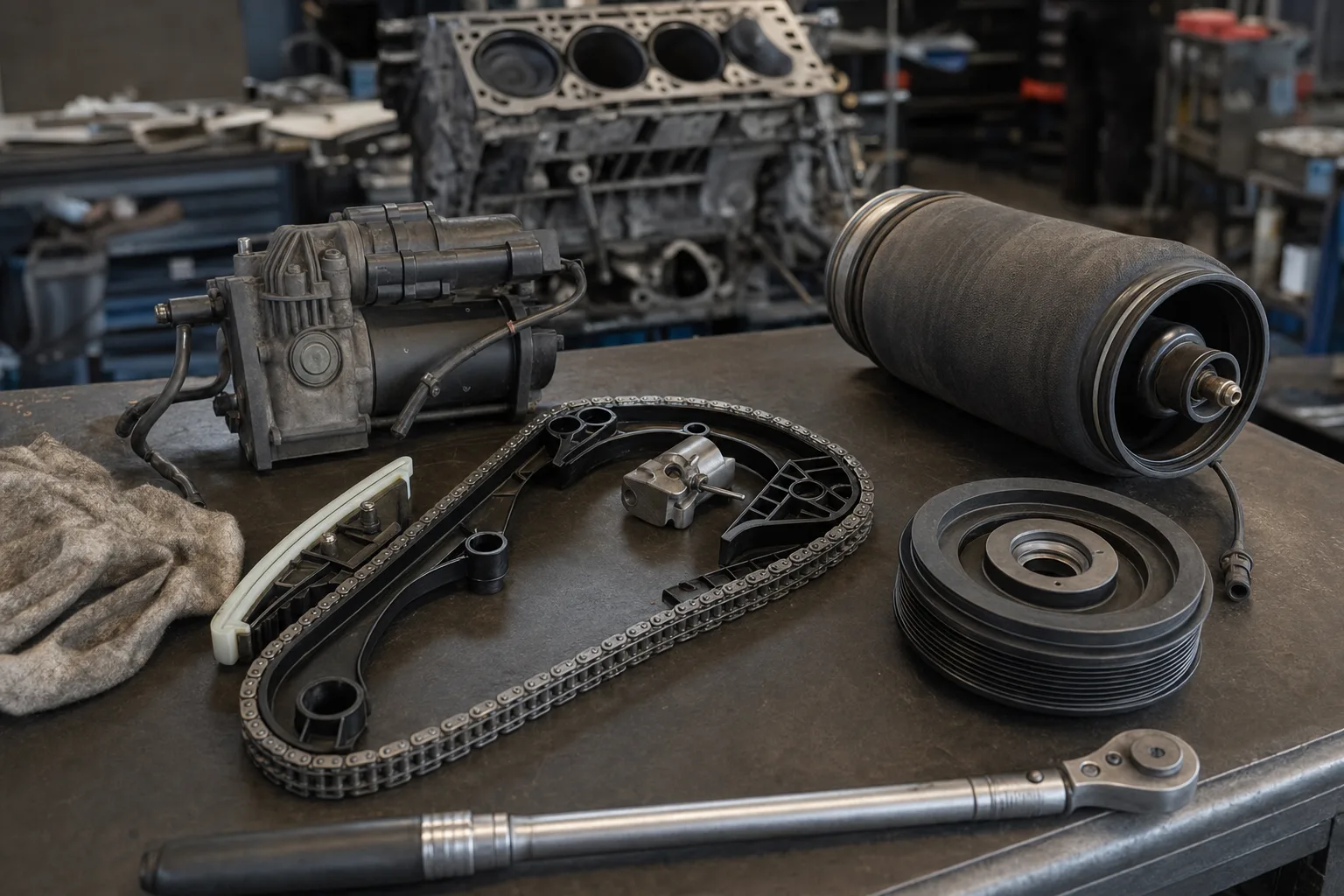
L494 SDV6 / SDV8 Engine Parts
Timing chain kits, crankshaft pulleys, tested used engines and reconditioned long blocks for the L494 diesels — the parts that fix a cold-start rattle before it becomes a catastrophe. Send us your VIN and we will match the exact spec.
Get a Quote2. Air suspension failure (the "sitting low" fault)
Like every modern Range Rover, the L494 rides on four air springs fed by an electric compressor, and the whole system is a wear item rather than a lifetime part.
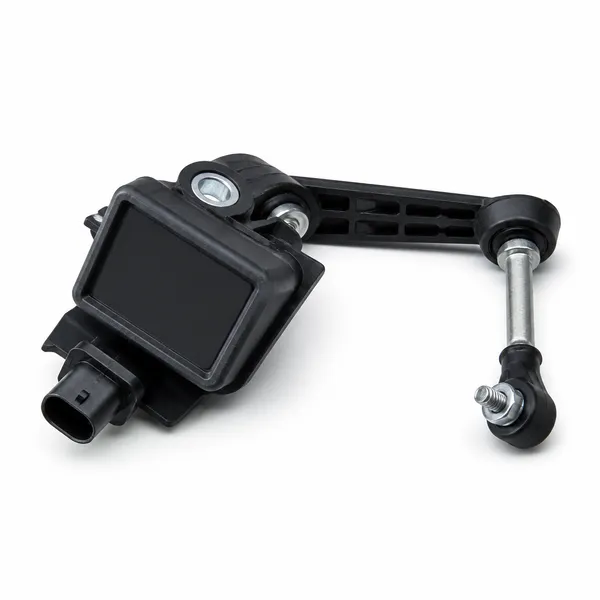
The tell-tale signs are the car sitting low on one corner or nose-down after standing overnight, a "suspension fault" or "vehicle too low" message, or the compressor running for ages and never quite lifting the car to normal height. Causes range from a perished air spring leaking air, to a tired compressor that can no longer hold pressure, to a failed height sensor feeding the module bad data.
The good news is that this is repairable corner by corner, not a whole-car disaster. A single air spring is inexpensive; the compressor is the bigger ticket. Fitting quality reconditioned air suspension parts keeps the ride exactly as Land Rover intended without dealer pricing.
Avoid cheap coil-conversion kits unless you fully understand the trade-off — you lose the adjustable ride height and access mode that make the Sport so usable. Always confirm the suspension raises and holds height on a test drive.
3. Coolant leaks, thermostat and EGR cooler faults
The diesel L494 runs hot when it is working, and the cooling system is where age shows first. Plastic coolant pipes and the thermostat housing go brittle, the EGR cooler can seep or crack, and radiator and intercooler hoses harden and weep.
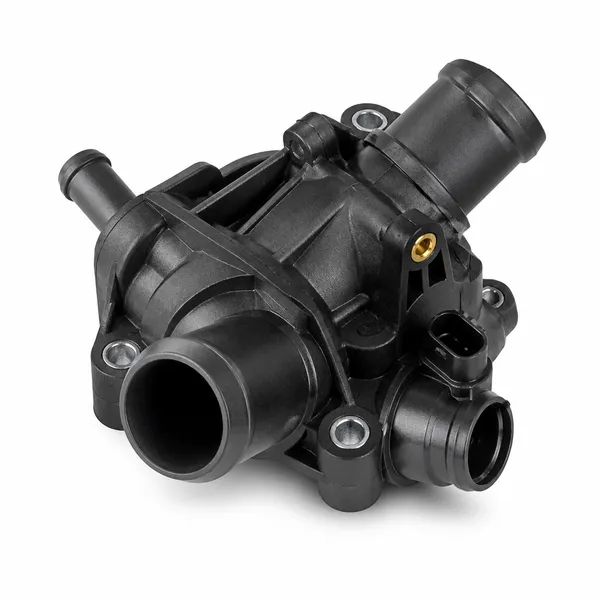
Symptoms are a slow coolant loss with no obvious puddle, a sweet smell, occasional overheating warnings when towing or crawling in traffic, and sometimes white vapour if an EGR cooler is leaking coolant into the exhaust. On a heavy diesel that runs hot, cooling-system health matters a great deal — overheating an SDV6 is not something you want to do twice.
The sensible fix is preventative. When you have the front of the engine apart for other work, replace tired coolant pipes, hoses, the thermostat housing and a suspect EGR cooler as a batch rather than chasing one leak at a time. It is the classic reset on a higher-mileage L494 and far cheaper than a warped head or a hydro-locked cylinder later. Good used and reconditioned cooling parts make doing it properly genuinely affordable.
4. InControl Touch infotainment glitches and screen faults
The L494's InControl Touch and later Touch Pro infotainment systems are a common gripe. Owners report the central screen freezing or going blank, slow boot-up, the reversing camera dropping out, Bluetooth and media faults, and occasional random reboots.
Sometimes it is a software issue that a proper update clears; sometimes the screen unit, the head unit or a media module has genuinely failed and needs replacing. The touchscreen also controls climate and vehicle settings, so a dead screen is more than a nuisance — it affects how you use the whole car.
Before spending money, a diagnostic scan and a software update are the right first steps, because plenty of "faults" are cured that way. When hardware has genuinely failed, a tested used or reconditioned screen or head unit is a fraction of dealer cost.
These sit among our electronic module and electrical parts. As with the rest of the car, buy from a specialist who tests the unit and can confirm it is the right part number for your exact build and software level.
5. Electronic parking brake and brake faults
The L494 uses an electronic parking brake with a motor and cable module packaged under the rear of the vehicle. Water, mud, road salt and age take their toll, and the module or its cables corrode — giving you a "park brake fault" warning, a brake that will not release, or an alarming grinding noise as it engages.
It is a common complaint on cars that have done coastal, farm or genuine off-road duty, exactly the kind of use a Sport is bought for.
The repair is usually a replacement parking-brake actuator module and, sometimes, new cables. It is an electrical-plus-mechanical job rather than a bank-breaker, and a reconditioned module is a sensible buy.
As with the suspension, a pre-purchase scan will flag a stored parking-brake code even if the warning light is not showing on the day you view the car. If you are cross-shopping the closely related full-size model, the same electronics logic applies to the L405 Range Rover, which shares much of this architecture.
6. Oil consumption and injector faults
Two smaller but well-known items round out the list. The supercharged 3.0 and 5.0 petrol V6/V8 L494s can drink oil as they age, so on a petrol car check the level religiously and watch for a low-oil warning between services.
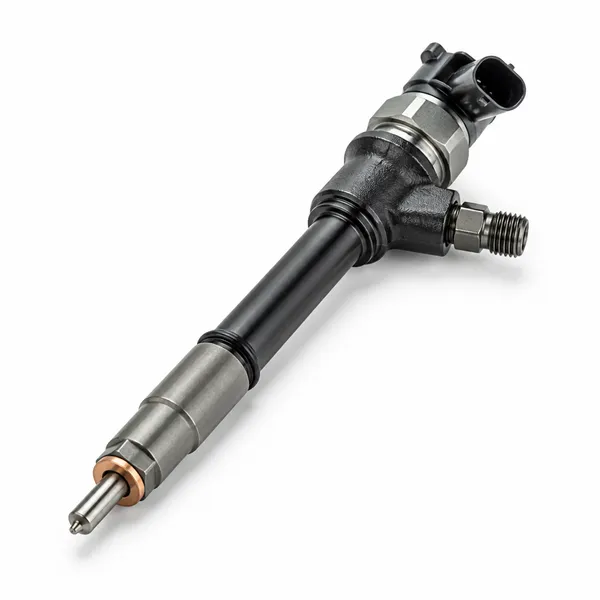
On the diesels, fuel injectors can foul or fail, giving a rough idle, a misfire, a smoky start, poor economy or an engine warning light — often just one injector rather than the whole set. Neither fault means the car is scrap, but both are worth catching early before they cause secondary damage.
For the petrols, disciplined oil checks and topping up with the correct grade go a long way; persistent heavy consumption points to worn seals or rings and deserves a proper inspection. For the diesels, a diagnostic scan usually isolates the offending injector so you replace one, not six.
Whether you need a single reconditioned injector, a full set, or advice on a thirsty supercharged V8, send us the details and we will point you to the right, tested part rather than the dearest one.
How much do Range Rover Sport L494 repairs cost in SA?
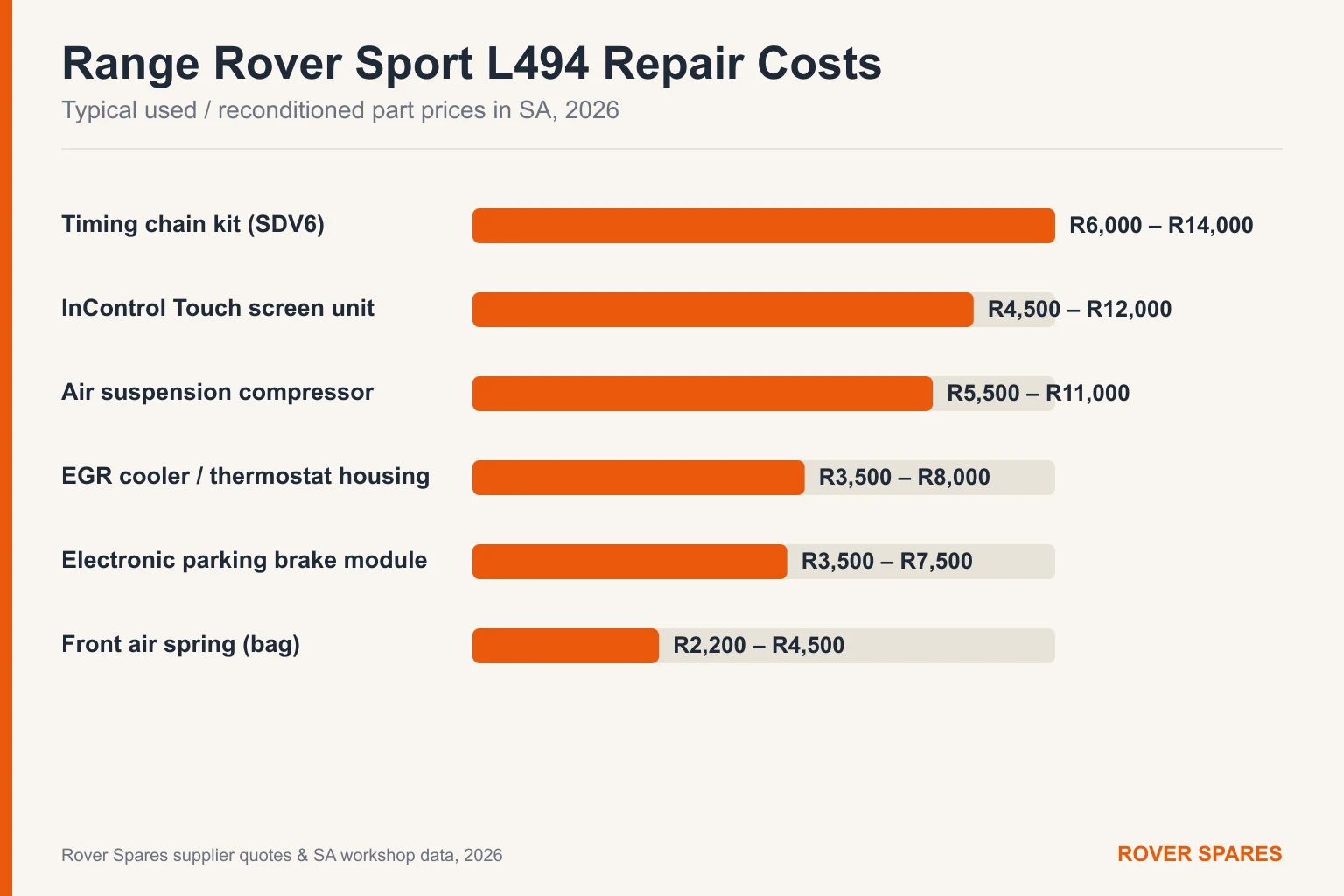
Here is a realistic guide to what these repairs run using quality used or reconditioned parts at an independent workshop — not dealer pricing. Actual figures depend on your exact engine, condition and labour rates, but this is the ballpark our suppliers quote in 2026.
| Repair | Typical part price (used / recon) | Notes |
|---|---|---|
| Timing chain kit (SDV6) | R6,000 – R14,000 | Do at first cold-start rattle |
| Air suspension compressor | R5,500 – R11,000 | Vs R18,000+ new at dealer |
| Front air spring (bag) | R2,200 – R4,500 | Per corner |
| EGR cooler / thermostat housing | R3,500 – R8,000 | Do cooling as a batch |
| InControl Touch screen unit | R4,500 – R12,000 | Try software update first |
| Electronic parking brake module | R3,500 – R7,500 | Plus cables if corroded |
L494 Air Suspension Parts
Reconditioned compressors, new air springs and height sensors for the second-generation Range Rover Sport — the parts that fix the "sitting low" fault. Tell us your VIN and we will match the exact unit.
Get a QuoteWhat we see in the workshop
Owners of a newer Sport often assume the parts have to come through a dealer. They do not. These are common enough on South African roads that the breakers' supply of tested air struts, compressors, valve blocks and modules is genuinely good, and the gap against a franchise quote is where this repair is won or lost. What deserves more scrutiny is the diagnosis, not the parts. Height sensors and a leaking valve block throw much the same symptoms as a failing compressor and cost far less to put right, so ask what was actually measured before signing off a replacement.
Need Range Rover Sport L494 parts? Get a same-day quote.
We supply tested used and reconditioned Range Rover Sport parts across South Africa — SDV6 and SDV8 engine parts, air suspension, infotainment and electronics — with nationwide delivery. Send us your VIN and the part you need.
Frequently asked questions
Is the Range Rover Sport L494 reliable?
The L494 has a mixed reputation, and it earns it. Its faults — crankshaft and timing-chain wear on the SDV6/SDV8 diesels, air suspension, cooling leaks, infotainment glitches and the electronic parking brake — are well documented and mostly repairable.
A well-maintained L494 with full service history and those known items checked is a rewarding, dependable vehicle. A neglected one, especially a diesel with no history, can be an expensive mistake. Buy on condition and history, not just price, and budget for a couple of catch-up repairs in the first year.
What is the most serious Range Rover Sport L494 problem?
Crankshaft and timing-chain wear on the diesel engines, without question. A cold-start rattle or chain noise on an SDV6 or SDV8 is the warning you must never ignore, because ignored chain stretch or crank wear can end in catastrophic engine failure. It is why a cold-start listen and a full service history matter more than anything else when buying an L494 diesel. The air suspension is more common, but far cheaper and less serious to fix.
Which engine is best in the L494?
For South African conditions the 3.0 SDV6 diesel is the sensible all-rounder — strong torque for towing and good economy for the size. The 4.4 SDV8 is muscular but thirstier and dearer to feed, and the supercharged petrol V6/V8s are wonderful but heavy on fuel and can drink oil as they age. Whichever you choose, check the diesels for cold-start rattle and the petrols for oil consumption first, and remember diesel parts tend to be more plentiful and affordable here.
Are Range Rover Sport L494 parts expensive in South Africa?
New dealer parts are expensive, yes — but that is not your only option. Quality used and reconditioned parts cut the cost dramatically: an air compressor for around R5,500–R11,000 instead of R18,000+, or an infotainment screen for a fraction of dealer money. Buying from a specialist that tests its stock and confirms the correct part number for your exact build is the key to keeping an L494 affordable to run.
Should I buy an L494 diesel with no service history?
Be very careful. On the SDV6 and SDV8 diesels the crankshaft and timing chain depend on regular oil changes with the correct grade, so a car with no proof of servicing carries real risk.
If you love a particular car with thin history, get a pre-purchase diagnostic scan, do a cold-start listen for chain rattle, and price in a timing-chain job as insurance. If the numbers still work, it can be a bargain — but go in with your eyes open.
How does the L494 compare to the older L320 Sport?
The L494 is lighter, faster and more refined than the first-generation L320, with a nicer cabin and better economy, but it is also more complex electronically. The older L320 Range Rover Sport has its own well-known faults but is simpler in places. For most buyers the L494 is the better car to live with day to day, provided you respect the diesel engine's servicing needs and budget for the known items.
Sources
- Wikipedia — Range Rover Sport (L494) model overview, engines and specifications: en.wikipedia.org
- Honest John — Land Rover Range Rover Sport (2013–) owner-reported good & bad points: honestjohn.co.uk
- RepairPal — Land Rover Range Rover Sport reliability ratings and common repairs: repairpal.com