
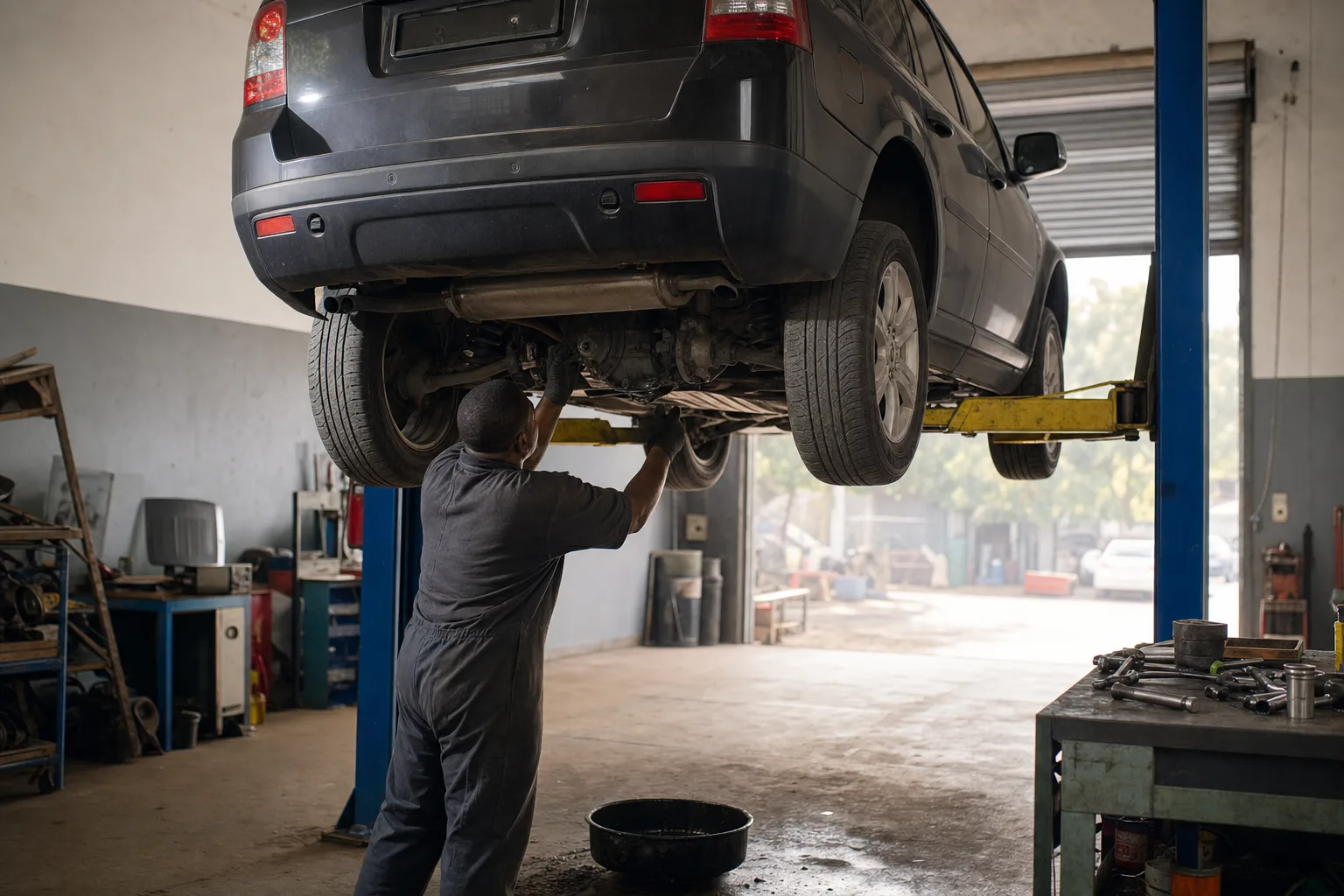

The Land Rover Freelander 2 (the LR2, built 2006–2014) is one of the best-value used SUVs in South Africa — comfortable, genuinely capable in the rough, and far cheaper to buy than a Discovery. But it earns its Land Rover reputation in a few well-known ways, and the diesel models in particular have a handful of faults every buyer should know about.
The good news is that none of them are mysteries. The rear differential, the Haldex four-wheel-drive coupling, the 2.2 diesel's timing chain and the EGR cooler are the big four, and every one of them is repairable with quality used or reconditioned Land Rover parts at a fraction of dealer money.
Below are the seven problems that come up most on the Freelander 2, what they cost to sort in rand, and how to spot a good one from a money pit.
- The Freelander 2's most talked-about fault is the rear differential (RDU) whine on 2007–2011 cars — a hum or drone from the back that gets louder with speed.
- On the four-wheel-drive models the Haldex coupling and its pump need servicing Land Rover never scheduled — skip it and the pump dies from sludged oil.
- The 2.2 TD4/SD4 diesel timing chain can suffer when failed DPF regens dilute the oil with fuel — check service history carefully.
- Most repairs are far cheaper with used or reconditioned parts: a reconditioned rear diff runs about R6,000–R14,000 versus dealer money north of R25,000.
- A pre-purchase scan plus a listen for rear-end whine tells you more than any showroom test drive.
1. Rear differential (RDU) whine and failure
If a Freelander 2 owner has a horror story, it is usually the rear differential. On 2007–2011 cars the rear diff unit (RDU) is prone to a whine, hum or drone from the back of the car that starts around 30–40 km/h and gets louder as you speed up.
The root cause is a pinion bearing that was over-tightened at the factory and wears prematurely, and Land Rover linked the damage to the way the Haldex coupling loads the diff when pulling away and manoeuvring slowly. It can appear even on relatively low-mileage cars, though it is most common past about 110,000 km.
Left alone, the whine becomes a rumble and eventually the diff fails outright. The sensible fix is a tested reconditioned rear diff unit rather than a used one of unknown history — a rebuilt RDU with fresh bearings solves it properly. On a test drive, take the car up to a steady 80–100 km/h on a quiet stretch and simply listen: a healthy Freelander 2 is quiet at the back. Any hum that rises with road speed is your warning.
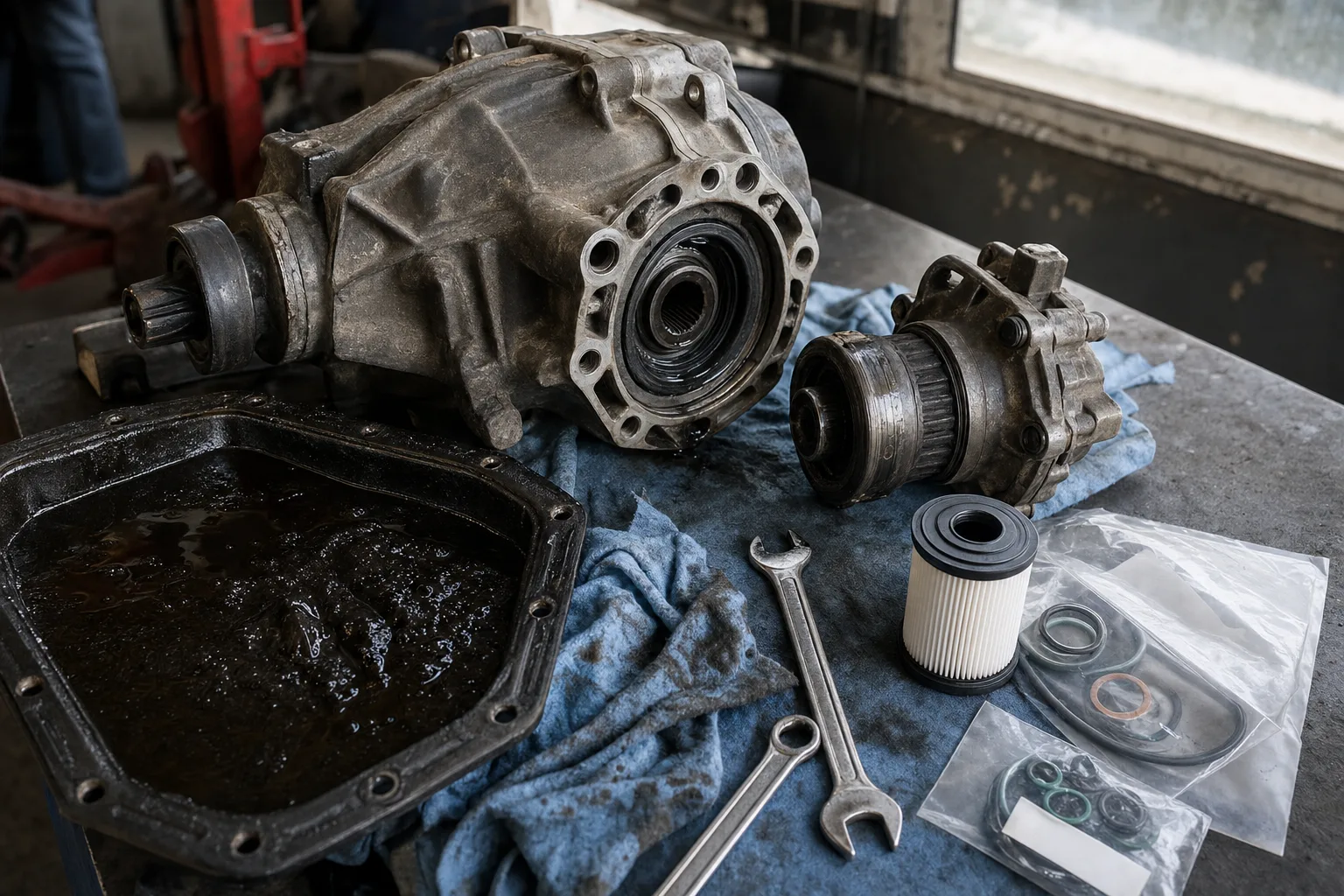
Freelander 2 Rear Diff & Haldex Parts
Reconditioned rear differential units (RDU), Haldex couplings, pumps and service kits for the LR2 — the parts that cure the rear-end whine and driveline faults. Send us your VIN and we'll match the exact unit.
Get a Quote2. Haldex coupling and pump failure (4WD models)
The Freelander 2's four-wheel-drive system relies on a Haldex coupling at the rear that feeds drive to the back wheels when the fronts start to slip. Land Rover famously said the unit was sealed for life, but the same Haldex family in VW and Volvo cars gets regular oil changes — and the Freelander 2's does too, in the real world.
Skip it and the oil turns to sludge, the gauze filter on the pump pick-up clogs, and the Haldex pump dies from oil starvation. You'll get a four-wheel-drive fault message and drive reverting to front-wheel drive only.
The fix depends on how far it has gone. Caught early, a Haldex oil and filter service is cheap insurance. Once the pump has failed, you're looking at a replacement pump or coupling.
Because the Haldex shares its oil with the rear diff, a leak from the coupling seals is also common — a puddle under the back of the car is the tell. Service the Haldex every two to three years and you avoid nearly all of this. We cover the wider driveline in our guide to the original Freelander's known weak spots, which shares the same viscous-versus-Haldex lesson.
3. Timing chain and oil-dilution on the 2.2 diesel
The 2.2-litre TD4 and SD4 diesel uses a timing chain rather than a belt, which sounds like good news — but it has a specific weakness. When the diesel particulate filter (DPF) tries to regenerate and the cycle is interrupted by lots of short, stop-start trips, unburnt fuel washes past the rings and dilutes the engine oil.
That thinned oil loses its lubricating quality and accelerates wear on the timing chain, tensioners and sprockets. Land Rover issued software updates to improve the regen behaviour, but a neglected car with the wrong oil and a town-only life is the classic candidate for a rattly chain.
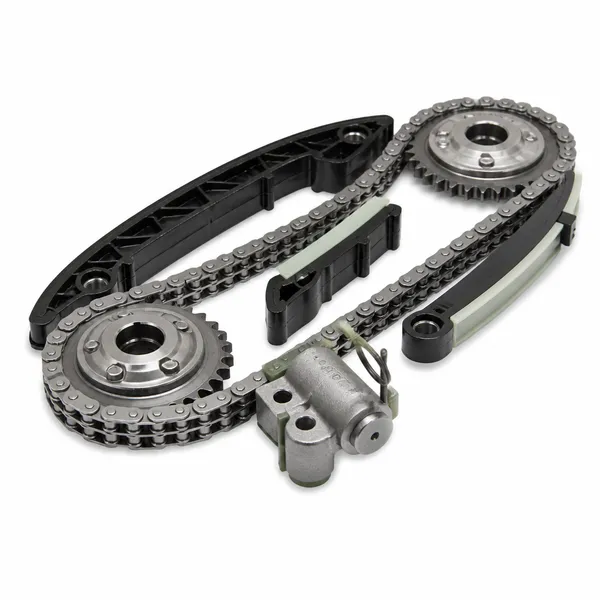
The warning sign is a chain rattle on cold start-up. If you hear it, budget to replace the chain, tensioners and guides as a kit, and fix the underlying regen or oil issue at the same time so it doesn't return. Sticking rigidly to the correct low-SAPS oil and its service interval is the best prevention. Browse our Freelander 2 diesel engine parts or send us the symptoms and we'll tell you honestly what the engine actually needs.
4. EGR cooler and valve faults (coolant loss)
The 2.2 diesel breathes exhaust gas back through the EGR system, and two things go wrong here. First, the EGR valve and inlet clog with oily carbon over years of short-trip driving, giving you rough running, hesitation and a warning light.
Second, and more specific to the Freelander 2, the EGR cooler itself can crack from vibration and leak coolant — the first you know of it is often a "low coolant level" message with no obvious puddle, because the coolant is disappearing into the exhaust.
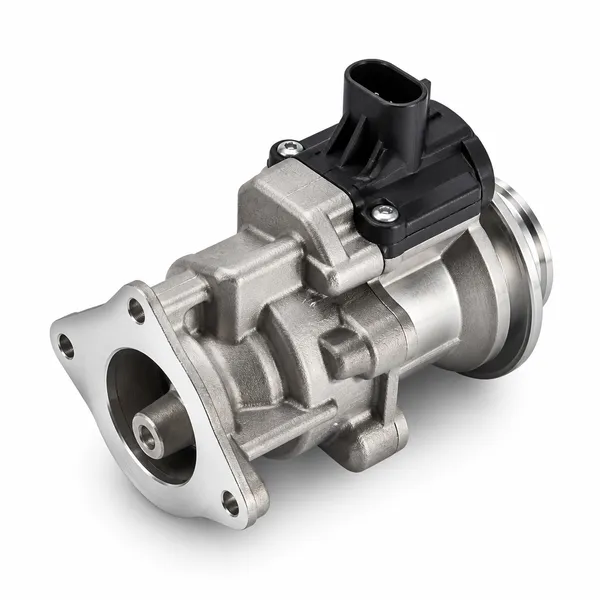
A clogged valve can sometimes be cleaned, but a fractured EGR cooler must be replaced, ideally with the later upgraded part that resists cracking. Don't ignore a slow coolant loss on a 2.2 diesel — running it low risks overheating, which on any diesel is an expensive mistake.
This is a common thread on later Land Rovers too, and the same diagnosis-first approach applies to the Discovery 3's EGR and cooling niggles. Confirm whether it's the valve or the cooler before you buy parts.
5. Tailgate lock and boot electrics
A very common Freelander 2 gripe is the tailgate that won't open, won't lock, or behaves erratically. The culprit is almost always the micro-switch inside the tailgate release handle. The shape of the Freelander 2's rear end draws road water and dirt straight up onto the handle, and over time moisture corrodes the switch contacts or shorts them out. You'll press the boot release and nothing happens, or the central locking throws a wobbly and reports the tailgate as open.
It's an annoying fault but not an expensive one. The fix is usually a new tailgate release switch or handle assembly, sometimes with a clean-up of the corroded wiring at the same time. It's worth sorting properly rather than living with it, because a boot that won't latch also upsets the alarm and central locking.
If you're viewing a car to buy, open and close the tailgate a few times from both the handle and the key fob and make sure it behaves every time.
6. Handbrake adjustment and holding faults
Freelander 2s of the 2008–2009 model years are known for a parking-brake cable that drifts out of adjustment. The result is either a handbrake that won't hold the car on a slope, or, less often, one that won't fully release and drags on the rear drums. On a hilly South African driveway a handbrake that doesn't hold is more than an inconvenience, so it's worth checking on any Freelander 2 you're considering.
The repair is usually an adjustment or a new cable rather than anything dramatic, and it pairs naturally with a rear-brake service since the parking brake works inside the rear drums. When you're inspecting a car, park it nose-up on a slope, apply the handbrake firmly and make sure it holds without needing a huge number of clicks. A brake that needs the lever pulled to its limit is due for adjustment or a fresh cable — budget accordingly.
7. Front lower control arm bushes and suspension knocks
Rounding out the list is the front suspension, which develops the knocks and clonks you'd expect of any hard-worked SUV. The front lower control arm bushes wear, and on some cars the captive nuts that hold the arm to the subframe work loose or shear, allowing play at the lower ball joint and a knock over bumps and rough ground.
A looser rattle over speed bumps is often just a stabiliser-link nut that has worked loose — a cheap fix — so it's worth diagnosing before assuming the worst.
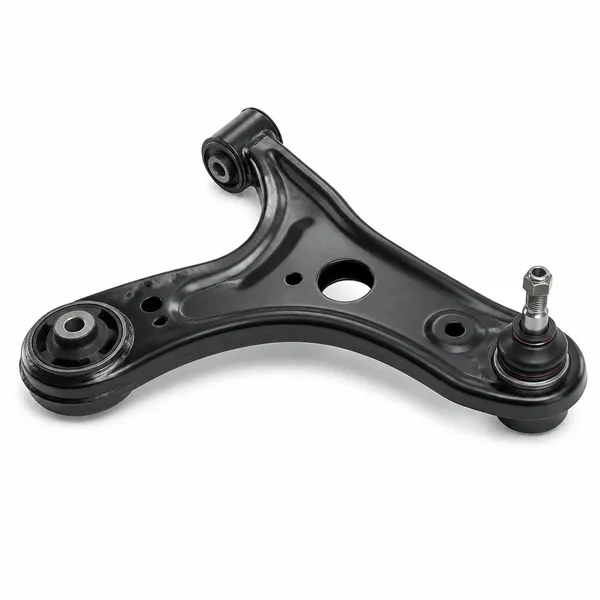
The proper cure is new front lower control arms or bushes, and it's sensible to do both sides together so the car sits and steers evenly. Fresh Freelander 2 suspension parts transform how the car feels over our patchy roads. If you want to keep the whole car healthy, quality used and reconditioned parts for the Land Rover Freelander range make it genuinely affordable to run one properly instead of nursing it from one bodge to the next.
How much do Freelander 2 repairs cost in SA?
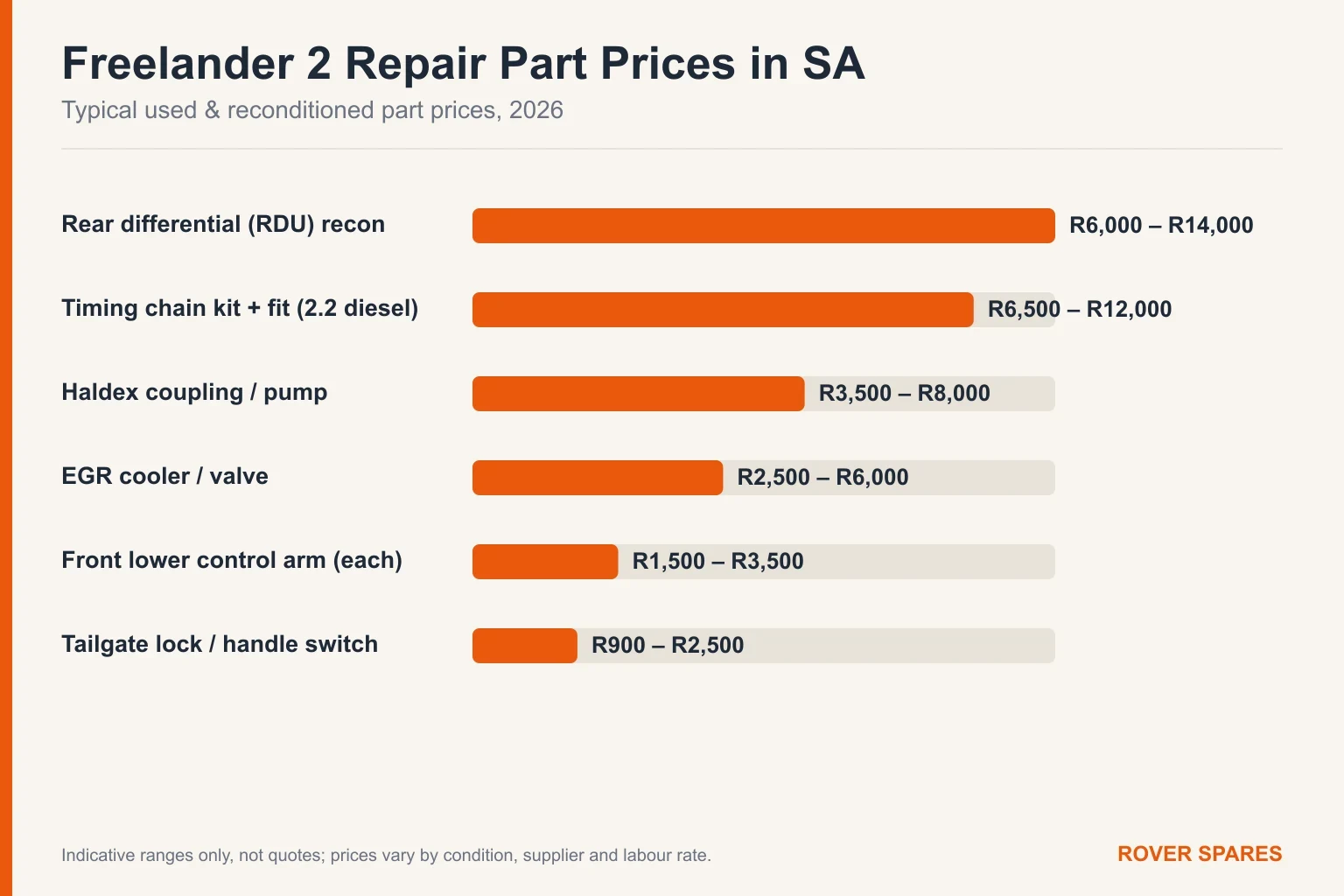
Here's a realistic guide to what these repairs run using quality used or reconditioned parts at an independent workshop — not dealer pricing. Actual figures depend on your exact model, condition and labour rates; these are indicative ranges only, not quotes.
| Repair | Typical part price (used / recon) | Notes |
|---|---|---|
| Rear differential (RDU) recon | R6,000 – R14,000 | Vs R25,000+ dealer replacement |
| Timing chain kit + fit (2.2 diesel) | R6,500 – R12,000 | Do chain, tensioners & guides together |
| Haldex coupling / pump | R3,500 – R8,000 | Service early to avoid it |
| EGR cooler / valve | R2,500 – R6,000 | Upgraded cooler resists cracking |
| Front lower control arm (each) | R1,500 – R3,500 | Do both sides together |
| Tailgate lock / handle switch | R900 – R2,500 | Corroded micro-switch is usual cause |
Before you buy parts
Freelander 2 owners are often convinced the whole car is on its way out after one expensive quote for a driveline or differential job. The reality is narrower. This model has a short list of known weak points, and a lot of what gets blamed on the four-wheel drive system turns out to be a single rear driveline component that can be supplied reconditioned rather than new. Work out which part is actually making the noise before authorising anything. On this vehicle the parts bill is where the repair is won or lost, not the labour.
Need Freelander 2 parts? Get a quote.
We supply used and reconditioned Land Rover Freelander 2 parts across South Africa — rear diffs, Haldex couplings, 2.2 diesel engine parts, EGR coolers, suspension and electrics — with nationwide delivery. Send us your VIN and the part you need.
Frequently asked questions
Is the Land Rover Freelander 2 reliable?
The Freelander 2 is more dependable than its badge suggests, provided the known items are sorted. Its faults — the rear differential whine, the Haldex coupling, the 2.2 diesel timing chain and the EGR cooler — are all well documented and repairable.
A Freelander 2 with a service history and those items addressed makes a genuinely solid family SUV. A neglected one, especially a town-only diesel, will cost you. Buy on condition and history, not just price, and budget for a catch-up repair or two in the first year.
What is the most common Freelander 2 problem?
The rear differential whine on 2007–2011 cars, by a distance. A pinion bearing wears early and gives a hum or drone from the back that rises with speed. It's the single most talked-about Freelander 2 fault, but it's fixable with a reconditioned rear diff unit, so it shouldn't scare you off — just listen for it at a steady 80–100 km/h before you buy.
Does the Freelander 2 Haldex really need servicing?
Yes, despite Land Rover originally treating it as sealed for life. The same Haldex family in other cars gets regular oil changes, and in the real world the Freelander 2's does too. Service the Haldex oil and filter every two to three years and you avoid the sludge that clogs the pump filter and kills the pump. It's cheap insurance against a much bigger four-wheel-drive repair.
Are Freelander 2 parts expensive in South Africa?
New dealer parts are expensive, but that's not your only option. Quality used and reconditioned parts cut the cost dramatically — a reconditioned rear diff for around R6,000–R14,000 instead of R25,000-plus, or an EGR cooler for a couple of thousand rand rather than dealer money. Buying from a specialist that tests its stock is the key to running a Freelander 2 affordably.
Petrol or diesel Freelander 2 for South Africa?
The 2.2 diesel is the popular choice here for its torque and economy, but it carries the timing-chain and EGR-cooler risks, so a full service history matters more. The 3.2 i6 petrol is smoother and avoids the diesel-specific faults, but it's thirstier and rarer. Whichever you choose, the rear diff and Haldex checks apply to both four-wheel-drive versions.
How many kilometres can a Freelander 2 do?
A well-maintained Freelander 2 will comfortably pass 250,000 km, and many do more. The engines are tough; what ends most of them is deferred maintenance on the driveline — rear diff, Haldex — and the diesel's regen and oil discipline, not the bottom end. Keep on top of the known items with quality parts and it will keep going.
Sources
- Haynes — Land Rover Freelander Mk2 common problems (2006–2015): uk.haynes.com
- Honest John — Land Rover Freelander 2 owner-reported good & bad points: honestjohn.co.uk