
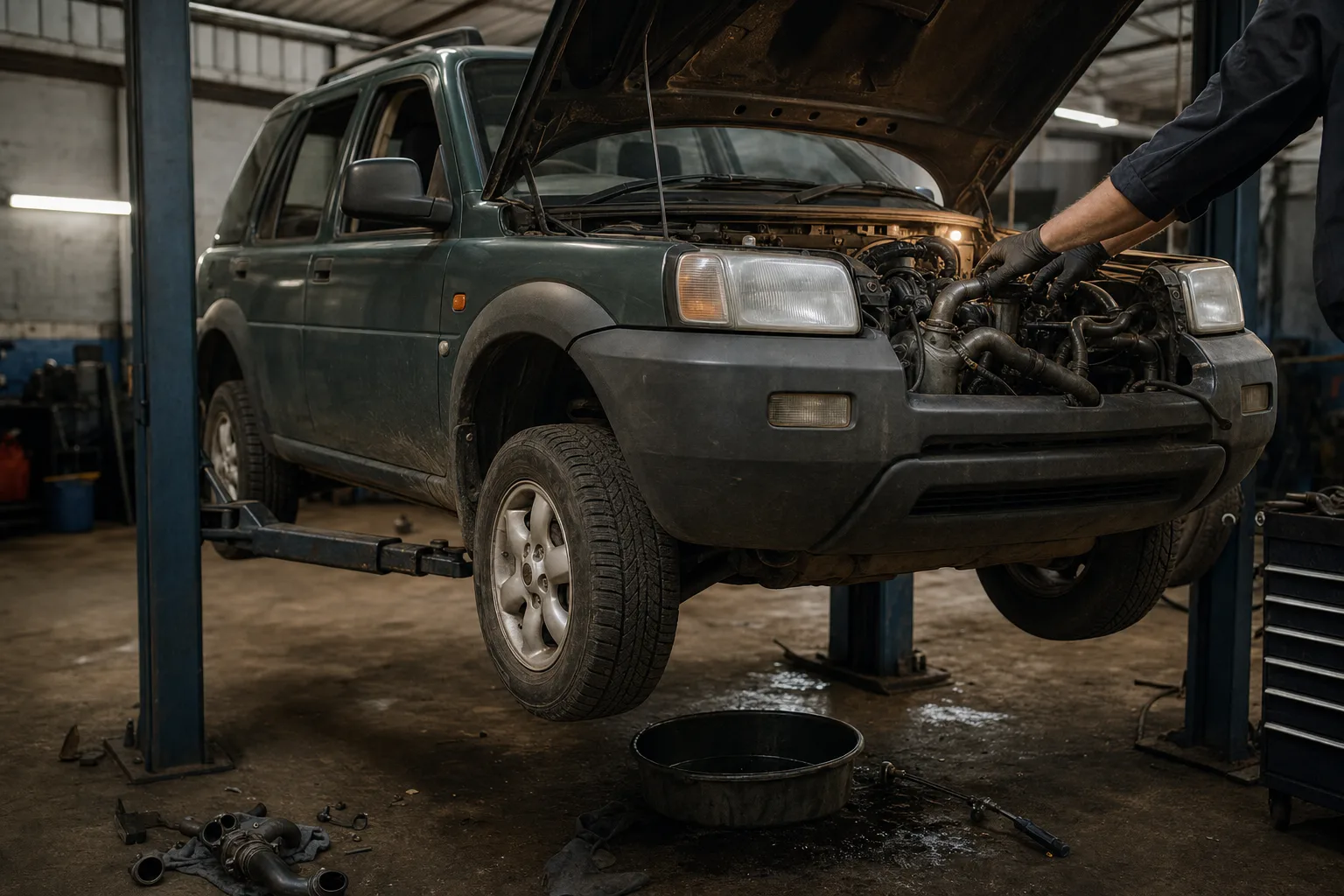

The original Land Rover Freelander (the Freelander 1, built 1997–2006) is a cheap way into a compact 4x4, but it earned a hard reputation for a reason. Two faults define this car: the 1.8 petrol's K-series head gasket, and the four-wheel-drive system's VCU and IRD wearing out and eating the rest of the drivetrain.
Get past those and it's a willing little car. The good news for South African owners is that every one of these faults is well understood, and quality used and reconditioned parts cost a fraction of what a franchise dealer charges.
Below are the six problems that come up most on the Freelander 1, what they cost to sort here in 2026, and how to spot a bargain from a money pit before you hand over cash.
- The Freelander 1's two headline weaknesses are the 1.8 K-series head gasket (petrol) and the VCU and IRD in the four-wheel-drive system — check both before you buy.
- A blown head gasket caught early is a gasket job; ignored, it warps the head and becomes an engine job — the difference is thousands of rand.
- The 2.0 Td4 diesel (a BMW engine) is the tougher choice, but its EGR must be kept clean or it can pump the oil out and wreck itself.
- Most repairs are far cheaper with quality used or reconditioned parts — a recon IRD unit runs roughly R6,000–R12,000 fitted versus dealer money.
- None of these faults are reasons to avoid the Freelander 1 — they're reasons to buy on condition and budget for the known items.
1. K-series head gasket failure (1.8 petrol)
If a Freelander 1 has a reputation, this is why. The 1.8-litre K-series petrol engine is notorious for blowing its head gasket, sometimes surprisingly early in life. Two design quirks are to blame: the stretched cylinder block flexes slightly across the gasket face, and the cooling circuit lets a hot engine get flushed with cold water when the thermostat opens, stressing the joint.
The tell-tale signs are the temperature gauge creeping up, mayonnaise-like sludge under the oil cap, coolant vanishing with no obvious leak, or the heater blowing cold at idle.
The critical point is timing: caught early, it's a head gasket and a skim. Left to overheat, the alloy head warps and you're into a much bigger bill — which is why many owners fit an uprated multi-layer steel gasket and sort the cooling at the same time. Quality reconditioned K-series engine parts make the job affordable, and doing the plastic thermostat housing and coolant pipes as a batch stops you chasing the same overheat twice.
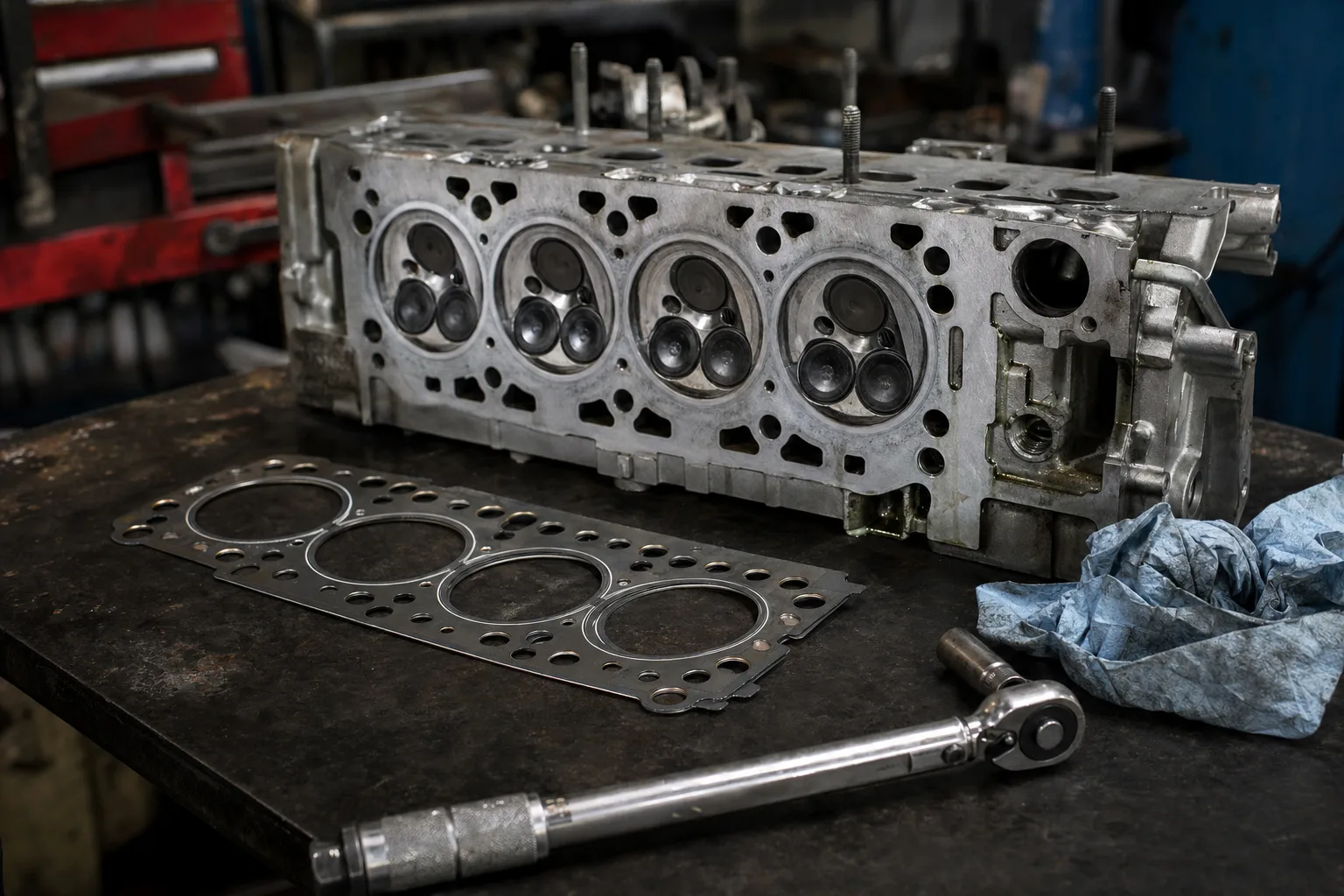
Freelander 1 K-Series Engine Parts
Uprated head gaskets, cylinder heads, thermostat housings and coolant pipes for the 1.8 K-series — the parts that fix the classic overheat. Tell us your VIN and we'll match the exact spec.
Get a Quote2. VCU and IRD failure (the four-wheel-drive killer)
This is the fault that quietly destroys Freelander 1s. Drive to the rear wheels runs through a viscous coupling unit (VCU) and an intermediate reduction drive (IRD). Over the years the VCU stiffens up, and a stiff VCU fights the drivetrain instead of freeing it — that extra strain wears out the IRD's bearings and gears, and can chew the rear differential too.
The warning signs are a whine or grumble that changes with speed, a wind-up shudder on tight turns, or uneven front tyre wear from the VCU dragging.
The killer is that people ignore the VCU because it's cheap, and then pay for the IRD and diff that it wrecked. A simple "one-wheel-up" test tells you if the VCU has seized. If it has, replace the VCU and inspect the IRD before it fails completely. Reconditioned IRD units and rear diffs are widely available — browse our Land Rover Freelander parts or send us the symptoms and we'll tell you honestly what you actually need first.
3. Td4 diesel EGR clogging and oil loss
The 2.0 Td4 diesel is a BMW M47 engine and is genuinely tougher than the K-series petrol, but it has one trap you must respect. Land Rover advised cleaning the EGR valve roughly every 20,000 km, because a blocked EGR can force oil out past the dipstick tube.
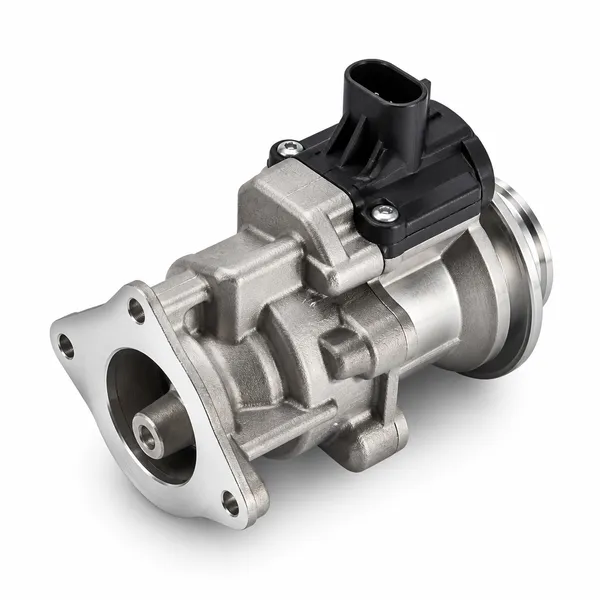
If you don't spot the oil on the block in time, the engine can run itself low and suffer serious damage. Symptoms of a clogging EGR are rough idle, hesitation, a smoky exhaust and oily residue creeping down the back of the engine.
Often a good clean and a fresh EGR valve sorts it — you don't always need the whole assembly. What matters is not ignoring it, because a Td4 that has been run low on oil hides a much more expensive problem underneath. The Td4 also shares the wider Freelander drivetrain, so the same VCU and IRD checks from the four-wheel-drive section apply just as much to the diesel.
4. Coolant loss and overheating (both engines, worst on the 1.8)
Even a Freelander 1 that hasn't blown its head gasket yet tends to lose coolant. The system holds very little water, the inlet manifold gasket weeps, and the plastic pipes and thermostat housing go brittle with age.
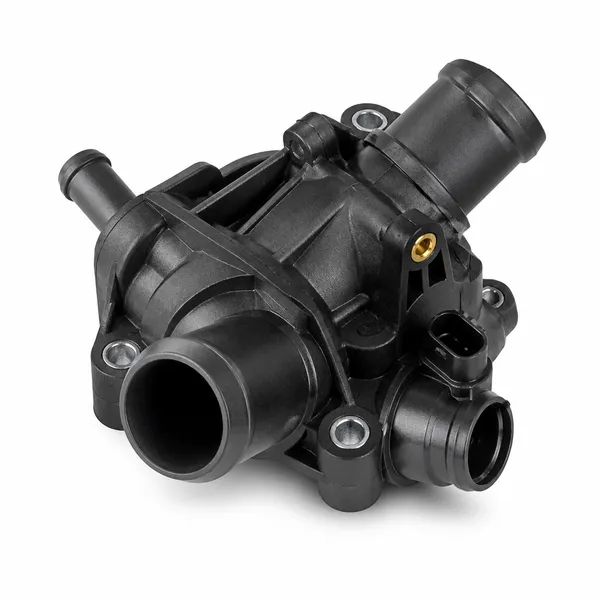
On the 1.8 that small coolant capacity is dangerous — a minor leak that goes unnoticed can push the engine into the overheat that then blows the gasket. So coolant loss is not a niggle on this car; it's the early warning you must act on.
The fix is preventative and cheap relative to a head job: renew the inlet manifold gasket, the plastic coolant pipes and the thermostat housing as a set, and bleed the system properly so there are no air locks.
Keeping the cooling system honest is the single biggest thing you can do to make a 1.8 Freelander last. If you're weighing this car up against the newer model, the same cooling discipline carries over to the Freelander 2 and its known weak spots.
5. Sunroof leaks, door seals and water in the boot
The Freelander 1 is a leaker. The twin sunroofs on higher-spec models block their drain tubes and dump water into the cabin, the rear door and tailgate seals perish, and the spare-wheel well in the boot collects rainwater. The result is damp carpets, a musty smell, fogged windows and, over time, corroded electrical connectors and rusty seatbelt mounts. On a car this age, wet interiors are the norm rather than the exception.
None of this is expensive to sort, but it does need doing, because standing water rots connectors and breeds electrical gremlins. Clear the sunroof drains, renew the tired rubber seals and door body and trim parts, and dry the car out fully. When you view a Freelander 1 to buy, lift the boot carpet and press the headlining — a wet car tells you how it's been looked after far better than the seller will.
6. Electrical gremlins, immobiliser and age-related niggles
Rounding out the list are the electrical faults every twenty-year-old Freelander develops, often made worse by the water leaks above. Dashboard warning lights that come and go, a car that won't start because of a sulky immobiliser or a dying key fob, failing window regulators, and instrument cluster quirks are all common. Because damp gets into connectors, an intermittent fault can be maddening to chase without a proper diagnostic scan.
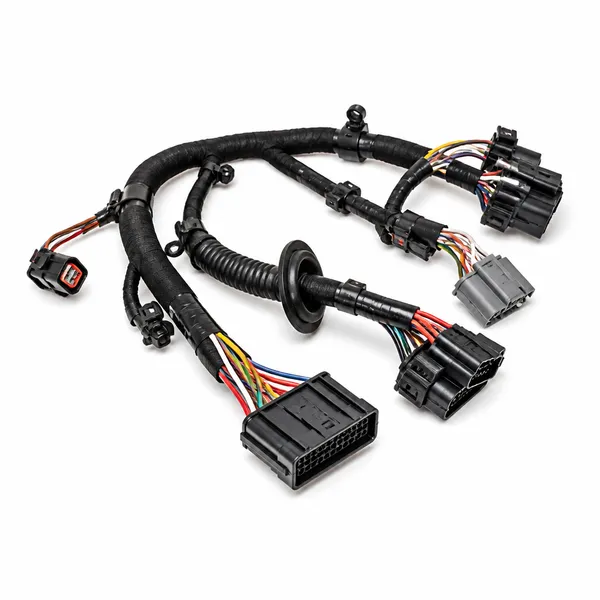
Most of these are individually cheap — a fob battery, a cleaned earth, a replaced window regulator or a reconditioned module. The trick is to fix the water ingress first so the electrics stay dry, then work through the faults methodically rather than throwing parts at them. If you're cross-shopping older Land Rovers, many of the same age-related electrical niggles show up on the first-generation Discovery too.
How much do Freelander 1 repairs cost in SA?
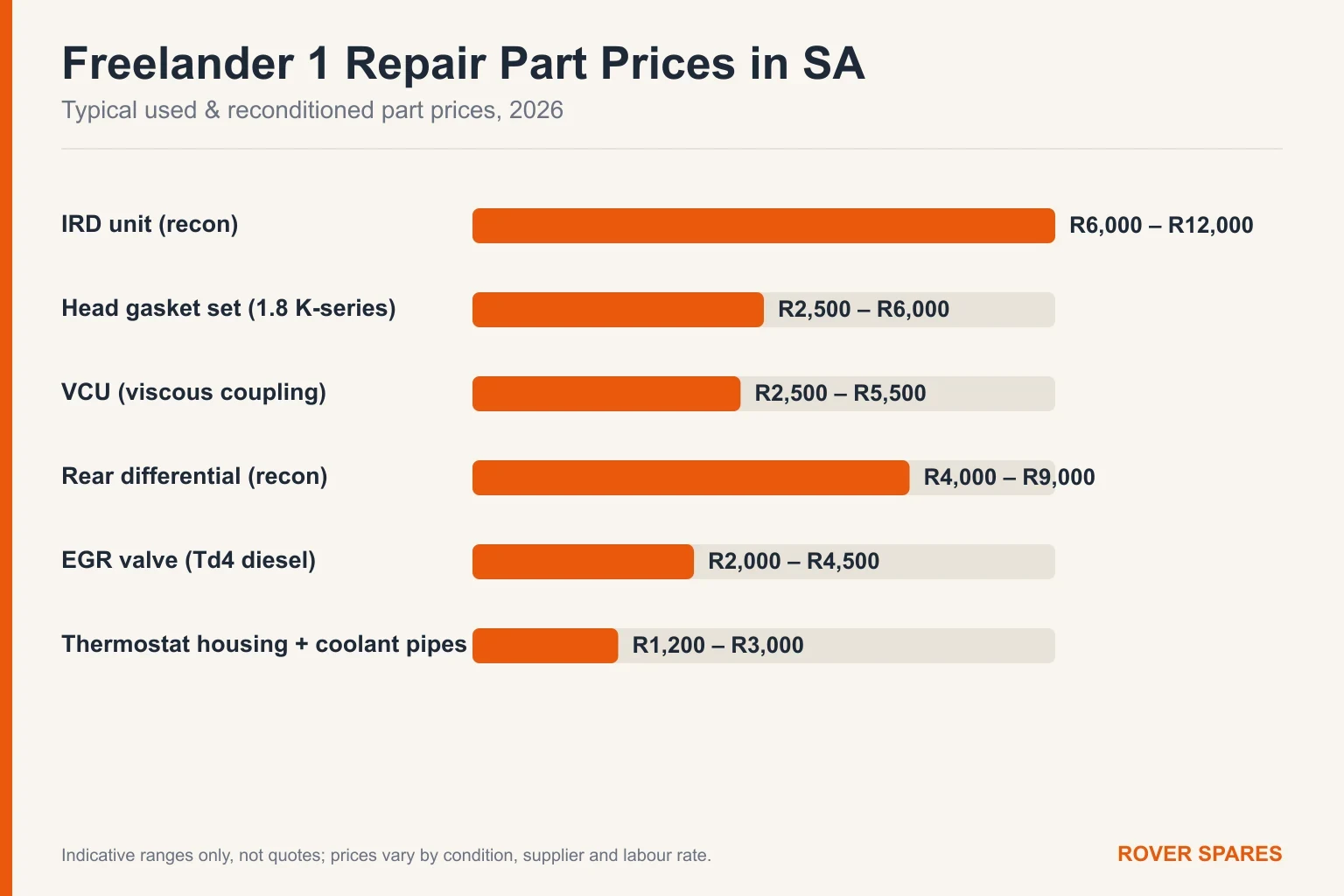
Here's a realistic guide to what these repairs run using quality used or reconditioned parts at an independent workshop — not dealer pricing. Actual figures depend on your exact model, condition and labour rates; these are indicative ranges only, not quotes.
| Repair | Typical part price (used / recon) | Notes |
|---|---|---|
| Head gasket set (1.8 K-series) | R2,500 – R6,000 | Uprated MLS gasket + skim |
| IRD unit (recon) | R6,000 – R12,000 | Do with VCU check |
| VCU (viscous coupling) | R2,500 – R5,500 | Replace before it kills the IRD |
| Rear differential (recon) | R4,000 – R9,000 | If VCU drag wore it |
| EGR valve (Td4 diesel) | R2,000 – R4,500 | Clean can be cheaper |
| Thermostat housing + coolant pipes | R1,200 – R3,000 | Do as a batch |
Before you buy parts
Approach a Freelander 1 on the basis that the cooling system is the job, not just the gasket. The K-series takes a head gasket failure quietly at first, showing nothing more than slow coolant loss and a temperature needle that creeps on a long highway run. Redo the gasket on its own and it will go again, because the thermostat housing, the plastic coolant pipes and a tired radiator are what let it overheat in the first place. Replace them together with an uprated gasket set, and check carefully for an earlier rushed attempt, since most survivors have had one.
Need Freelander 1 parts? Get a quote.
We supply used and reconditioned Land Rover Freelander 1 parts across South Africa — K-series head gaskets, IRD units, VCUs, Td4 engine parts and body seals — with nationwide delivery. Send us your VIN and the part you need.
Frequently asked questions
Is the Land Rover Freelander 1 reliable?
The Freelander 1 has a poor reputation, but the picture is more nuanced than the horror stories suggest. Its two big faults — the 1.8 K-series head gasket and the VCU/IRD drivetrain — are well documented and repairable.
A Freelander 1 that has had those items sorted, and whose cooling system is kept honest, is a cheap and cheerful small 4x4. A neglected one will nickel-and-dime you. Buy on condition and history rather than price alone, and the diesel Td4 is the tougher long-term bet.
What is the most common Freelander 1 problem?
On the 1.8 petrol it's the K-series head gasket, by a distance — overheating, coolant loss and mayonnaise under the oil cap are the classic signs. On the four-wheel-drive system it's the VCU stiffening and taking the IRD and rear diff with it. Both are check-before-you-buy items. Neither should scare you off if the parts are available and the car is priced accordingly.
Which is better, the 1.8 petrol or the Td4 diesel?
For durability the 2.0 Td4 diesel is the better choice — it's a BMW engine and avoids the K-series head gasket lottery entirely, plus it returns better economy for South African running costs. Its one discipline is keeping the EGR clean so it doesn't push oil out. The 1.8 petrol is fine if the gasket and cooling have been properly sorted, but it needs a watchful owner.
What is the IRD on a Freelander 1?
The IRD (intermediate reduction drive) is the unit that transfers drive from the gearbox towards the rear wheels through the viscous coupling. It's one of the Freelander 1's most common failure points, usually because a stiff, worn VCU overloads it. Replacing a tired VCU early is the cheapest way to protect the IRD and the rear differential from an expensive chain-reaction failure.
Are Freelander 1 parts expensive in South Africa?
New dealer parts are dear, but that's not your only option. Quality used and reconditioned parts cut the cost dramatically — a recon IRD for around R6,000–R12,000, a head gasket set for a couple of thousand rand rather than dealer money. Because the Freelander 1 sold in good numbers, breaker and recon stock is plentiful here. Buying from a specialist that tests its parts is the key to running one affordably.
Should I buy a Freelander 1 with a whining drivetrain?
Only if the price reflects a VCU and IRD repair. A whine or grumble that changes with speed, or a shudder on tight turns, points straight at a stiff VCU that may already have hurt the IRD. It's fixable with reconditioned parts, but factor the cost in. Never pay top money for a Freelander 1 with drivetrain noise on the test drive.
Sources
- Haynes — Land Rover Freelander common problems (1997–2006): uk.haynes.com
- Honest John — Land Rover Freelander (1997–2006) review and owner good & bad points: honestjohn.co.uk